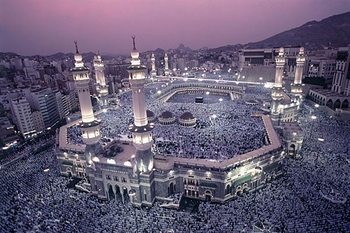
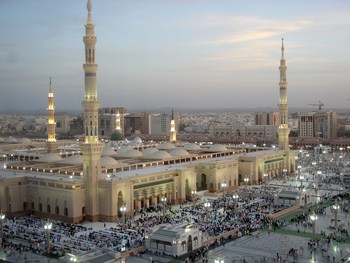
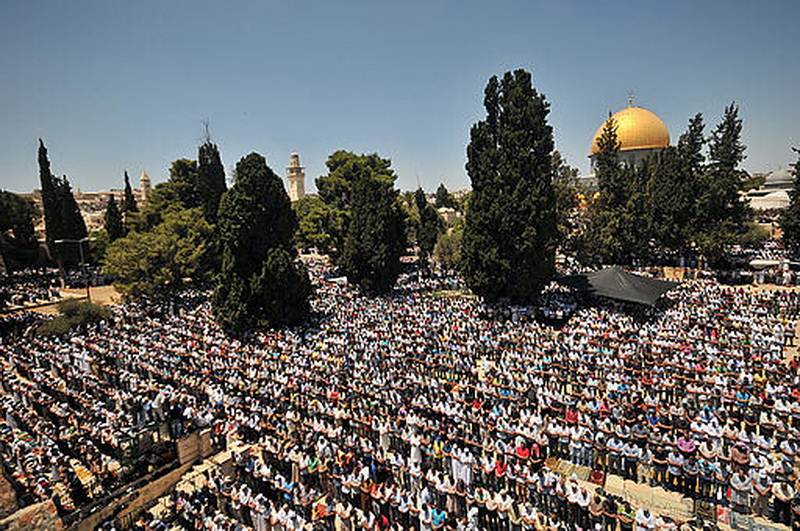
The Three Islamic Holiest Places of Worship


Al-Jazeerah
Al-Haram Mosque in Makkah The Prophet's Mosque in Madinah . Al-Aqsa Mosque Compound in Jerusalem


Islam: God's Message of Guidance to Humanity


By Hassan Ali El-Najjar


Table of Contents


I. Introduction: Basic Information


1. Islam: A Brief Introduction


2. Three Levels of Faith: Islam, Iman, and I'hsan 


3. The Scientific Evidence That God Exists and the Holy Qur'an Is His Message to Humanity 


4. Creation and Evolution in the Holy Qur'an


5. Humans, As God's Caliphs on Earth


6. Adam's Contest With the Angels, and Getting Out of Paradise


7. Worshippers By Choice Or Forced Slaves?  


8. The Relationship Between the Spiritual and the Physical Aspects of Islamic Teachings  


9. Mind, Self, Soul, Spirit, and Happiness from an Islamic Perspective 


10. Heart-Mind Relationship in the Holy Qur'an  


II. Islam: The Five Pillars of the Faith Structure


1. Islamic Proclamation of Faith


2. Performing Islamic Prayers


3. Giving Zakah (Charity)


4. Fasting and Ramadhan, Great Gifts from Allah to Muslims


5. Haj, Pilgrimage, the Fifth Pillar of Islam


III. Iman: Allah, His Angels, Messengers, Messages, Last Day, Qada and Qadar


1. Allah, As He Described Himself in the Holy Quran 


2. Angels


3. Noo'h, Noah, in the Holy Quran  


4. Ibrahim, Abraham, in the Holy Quran


5. Moussa, Moses, in the Holy Quran


6. 'Eissa, Jesus Christ, in the Holy Quran  


7. Muhammed in the Holy Quran


8. Prophet Muhammed's Night Journey and Ascent to Heavens, Al-Issra Wal Mi'raj


9. Latter Day (Day of Resurrection)


10. Qada and Qadar: God's Foreknowledge and His Decree


IV. I'hsan: Watching Allah in Speech and Deeds


1. Introduction to Islamic Law, Shari'a: Part I, Prohibition and Don't Do Commands in the Holy Quran


2. The No (La) Commands


3. The Imperative Commands 


***


Articles with Islamic Perspective:


Health Care Crisis in the US: An Islamic Perspective


"Terrorism" & "Islamo-Fascism" Propaganda Campaigns: An Interactive Lecture


Six Questions About Islam, Muslims and Jews


Five Islamic Issues: Predestination and choice, position toward other religions, angels, and the End of Days

Food Islamic Rules and Teachings


Are Muslim women second-class citizens  


The French Ban on Islamic Headscarf, an Interview with


Links to Islamic Topics 2007-2010


Links to Islamic Topics 2007


Links to Islamic topics 2006


Links to Islamic topics 2005


Links to Islamic topics 2004


Links to Islamic topics, 2003


2002 Links to Islamic topics


Book 4

Messengers of Allah to His Human Caliphs,

on the Earth

***


By Hasan Ali El-Najjar


1447 / 2026


*** 


Chapter 1:

Messengers, Prophets, Miracles, and Prophecies

***

أعوذُ باللهِ منَ الشيطانِ الرجيم

بِسْمِ اللَّـهِ الرَّحْمَـٰنِ الرَّحِيمِ

والصَّلَاةُ وَالسَّلَامُ عَلَى سَيِّدِنَا مُحَمَّدٍ ،

خَاتَمِ الأنْبِيَاءِ وَإمَامِ الْمُرْسَلِينَ


اللَّهُ يَصْطَفِي مِنَ الْمَلَائِكَةِ رُسُلًا وَمِنَ النَّاسِ ۚ إِنَّ اللَّهَ سَمِيعٌ بَصِيرٌ (الْحَجُّ ، 22: 75).


يَا مَعْشَرَ الْجِنِّ وَالْإِنسِ أَلَمْ يَأْتِكُمْ رُسُلٌ مِّنكُمْ يَقُصُّونَ عَلَيْكُمْ آيَاتِي وَيُنذِرُونَكُمْ ... (الأْنْعَامُ ، 6: 130).


وَمَا مُحَمَّدٌ إِلَّا رَسُولٌ قَدْ خَلَتْ مِن قَبْلِهِ الرُّسُلُ ۚ (آلُ عِمْرَانَ ، 3: 144).


I seek refuge with God from the stoned (cursed) Shaytan (Satan)

In the Name of Allah, the Beneficent, the Merciful

Peace and blessings be upon our Master, Mu’hammed, the Seal of Prophets and Imam of the Messengers


Allah chooses from the angels messengers and from the people. Indeed, Allah is Hearing and Seeing (Al-‘Hajj, 22: 75).

"O company of jinn and humans, did there not come to you messengers from among you, relating to you My verses and warning you …?" (Al-An’am, 6: 130).

Mu’hammed is not but a messenger. (Other) messengers have passed on before him (Al-i-‘Imran, 3: 144).

This fourth book (Messengers of Allah to His Human Caliphs on the Earth) contains nine chapters. It starts with a chapter the difference between Messengers of Allah and His Prophets, as well as the miracles and prophecies given to the Final Prophet, pbbuh. This is followed by a chapter about the Messengers of Allah and His Prophets, who were mentioned in the Holy Quran. The third chapter is about angels, who are the honored worshippers and messengers of Allah to His creations. Then, there are five chapters about the five human messengers, known for their determination and for the miracles they were provided with. These are Noo’h, Ibraheem, Moosa, ‘Eisa, and Mu’hammed (Noah, Abraham, Moses, Jesus, and Mu’hammed), peace and blessings of Allah be upon them. The ninth chapter is about the Night Journey and Ascent to heavens (Al-Isra Wal Mi’raj), which was a miracle, honoring the final Prophet of Allah. It was also a glad tiding to humans, that they can fly over the regions of the Earth, and through space to heavens, with permission of Allah. [1]


This first Chapter is divided into five sections. These are Continuity of God’s Messages of Guidance to Humanity, the Messengers of Allah, Prophets, and their followers are all Muslims, the Difference between Prophets and Messengers of Allah, Miracles and Prophecies Given to Prophet Mu’hammed, and Fifth, Stories of the Messengers and Prophets Mentioned in the Holy Quran and the Lessons Learned from them.


***


First, Continuity of God’s Messages of Guidance to Humanity


After the creation of humans on the Earth, Allah, praise to Him in His Highness (سُبْحَانَهُ وَتَعَالَى), has willed not to leave them lonely on it, without guidance to believe in Him. Therefore, He sent them His messages of guidance, through His messengers, peace and blessings of Allah be upon them all. As such, the belief in Allan, praise to Him, gives peace of mind to the believers, as they realize that they are not here by accident (Al-Muminoon, 23: 115), and they are not left lonely on this small planet, in God’s vast Dominion. [2]


أَفَحَسِبْتُمْ أَنَّمَا خَلَقْنَاكُمْ عَبَثًا وَأَنَّكُمْ إِلَيْنَا لَا تُرْجَعُونَ (الْمُؤْمِنُونَ ، 23: 115).


Did you think that We created you uselessly (without a purpose), and that to Us you would not be returned? (Al-Muminoon, 23: 115).


Out of His love and care, Allah, the Merciful and the Kind Creator, has completed His Messages of guidance to humanity by sending His final Message, through His final Messenger, Mu’hammed, peace and blessings of Allah be upon him (pbbuh). We do not know the total number of God’s Messengers and Prophets, or their names, except for the twenty-five, who are mentioned directly in the Holy Quran. However, there are some ‘Hadeeths mentioning that there were hundreds of Messengers and thousands of Prophets, but the ‘Hadeeth scholars have concluded that these are weak or even fabricated ‘Hadeeths. [3]


The Holy Quran mentions the names of twenty-five Messengers and Prophets, including the five major Messengers, known as “the Ones with Determination” (Ulul 'Azm): Noo’h, Ibraheem, Moosa, ‘Eisa, and Mu’hammed (Noah, Abraham, Moses, Jesus, and Mu’hammed), peace and blessings of Allah be upon all of them, as follows:  


آدمُ ، وإدريسُ ، ونوحُ ، وهود ُ، وصالحُ ، وإبراهيمُ ، ولوطُ ، وإسماعيلُ ، وإسحاقُ ، ويعقوبُ ، ويوسفُ ، وشعيبُ ، وأيوبُ ، وموسى ، وهارونُ ، وداودُ ، وسليمانُ ، ويونسُ ، وإلياسُ ، والْيَسَعُ ، وذو الكفلِ ، وزكريا ، ويحيى ، وعيسى ، ومحمدُ ، عليهمُ الصلاةُ والسلامُ أجمعينَ.


Adam, Idrees, Noo’h (Noah), Hood, Sali’h, Ibraheem (Abraham), Loot (Lot), Isma’eel (Ishmael), Is’haq (Isaac), Ya’qoob (Jacob), Yousuf (Joseph), Shu’ayb, Ayoob (Job), Moosa (Moses), Haroon (Aaron), Dawood (David), Sulayman (Solomon), Younus (Jonah), Elyas (Elias, Elijah), Elyasa’ (Elisha), Dthul Kifl (Ezekiel), Zakariya (Zacharia), Ya’hya (John), ‘Eisa (Jesus), and Mu’hammed, peace and blessings of Allah be upon them all.


Note that the above list of God’s Messengers and Prophets is based on the Arabic text of the Holy Quran, with the biblical names in parentheses. However, five of them are without biblical names because there is no agreement on them being mentioned in the Bible. These are Idrees, Hood, Sali’h, Shu’ayb, and Dthul Kifl. However, some authors identified them as Enoch (Enokh), Eber, Salah (Shelah), Jethro, and Ezekeil, respectively, but without evidence.  


***


Eighteen Prophets and Messengers were mentioned by name in verses 6: 83-86 of the Holy Quran, as follows:  


تِلْكَ حُجَّتُنَا آتَيْنَاهَا إِبْرَاهِيمَ عَلَىٰ قَوْمِهِ نَرْفَعُ دَرَجَاتٍ مَّن نَّشَاءُ إِنَّ رَبَّكَ حَكِيمٌ عَلِيمٌ ﴿٨٣﴾ وَوَهَبْنَا لَهُ إِسْحَاقَ وَيَعْقُوبَ كُلًّا هَدَيْنَا وَنُوحًا هَدَيْنَا مِن قَبْلُ وَمِن ذُرِّيَّتِهِ دَاوُودَ وَسُلَيْمَانَ وَأَيُّوبَ وَيُوسُفَ وَمُوسَىٰ وَهَارُونَ وَكَذَٰلِكَ نَجْزِي الْمُحْسِنِينَ ﴿٨٤وَزَكَرِيَّا وَيَحْيَىٰ وَعِيسَىٰ وَإِلْيَاسَ كُلٌّ مِّنَ الصَّالِحِينَ ﴿٨٥﴾ وَإِسْمَاعِيلَ وَالْيَسَعَ وَيُونُسَ وَلُوطًا وَكُلًّا فَضَّلْنَا عَلَى الْعَالَمِينَ ﴿٨٦ (الأنْعَامُ ، 6: 83-86).


And that was Our (conclusive) argument which We gave Ibraheem (Abraham) against his people. We raise by degrees whom We will. Indeed, your Lord is Wise and Knowing. (83)   


And We gave (to Ibrahim), Is’haq (Isaac) and Ya’qoob (Jacob) - both We guided. And Noo’h (Noah), We guided before; and among his descendants: Dawood (David), Sulayman (Solomon), Ayoob (Job), Yousuf (Joseph), Moosa (Moses), and Haroon (Aaron). Thus, We do reward the doers of good. (84)   


And Zakariya (Zachariah), Ya’hya (John), ‘Eisa (Jesus) and Elyas (Elias, Elijah) - all were of the righteous. (85)   


And Isma’eel (Ishmael), Elyasa (Elisha), Younus (Jonah), and Loot (Lot) - and all (of them) We preferred over the worlds. (86) (Al-An'am, 6: 83-86). 


The remaining seven Messengers and Prophets were Adam, Idrees, Hood, Sali’h, Shu'ayb, Dthul Kifl, and Mu’hammed, peace and blessings of Allah be upon them all. They were mentioned in the following five verses: 3: 33,21: 85, 11: 89, 7: 85, and 3:144. 


إِنَّ اللَّـهَ اصْطَفَىٰ آدَمَ وَنُوحًا وَآلَ إِبْرَاهِيمَ وَآلَ عِمْرَانَ عَلَى الْعَالَمِينَ (آلُ عِمْرَانَ ، 3: 33).   

وَإِسْمَاعِيلَ وَإِدْرِيسَ وَذَا الْكِفْلِ كُلٌّ مِّنَ الصَّابِرِينَ (الأنْبِيَاءُ ، 21: 85).

وَيَا قَوْمِ لَا يَجْرِمَنَّكُمْ شِقَاقِي أَن يُصِيبَكُم مِّثْلُ مَا أَصَابَ قَوْمَ نُوحٍ أَوْ قَوْمَ هُودٍ أَوْ قَوْمَ صَالِحٍ وَمَا قَوْمُ لُوطٍ مِّنكُم بِبَعِيدٍ (هُودُ ، 11: 89).

وَإِلَىٰ مَدْيَنَ أَخَاهُمْ شُعَيْبًا (الأعْرَافُ ، 7: 85).    

وَمَا مُحَمَّدٌ إِلَّا رَسُولٌ قَدْ خَلَتْ مِن قَبْلِهِ الرُّسُلُ (آلُ عِمْرَانَ ، 3: 144). 


Allah chose Adam, Noo’h, the family of Ibrahim, and the family of 'Imran, over the worlds (Aal-'Imran, 3: 33). 


Mu’hammed is not but a messenger, (other) messengers have passed on before him (Aal-'Imran, 3: 144). 


And to (the people of) Madyan (We sent) their brother Shu'ayb (Al-A'araf, 7: 85).  


And O my people! let not (your) dissension from me cause you to be struck by that similar to what struck the people of Noo’h or the people of Hood or the people of Sali’h. And the people of Loot are not from you far away (Hood, 11: 89).  


And (mention) Isma’eel, Idrees, and Dthul-Kifl; all were of the patient (Al-Anbiya, 21: 85).


***


Verses 4: 164-165 tell us that there are others who were not mentioned in God’s Book. Like the ones who were mentioned, they were sent with God’s messages to guide people, give them glad tidings, and warn them against wrongdoing. So, people don’t have an excuse when they meet their Creator, for accountability, in the Hereafter.


وَرُسُلًا قَدْ قَصَصْنَاهُمْ عَلَيْكَ مِن قَبْلُ وَرُسُلًا لَّمْ نَقْصُصْهُمْ عَلَيْكَ وَكَلَّمَ اللَّـهُ مُوسَىٰ تَكْلِيمًا (النِّسَاءُ ، 4: 164).  


رُّسُلًا مُّبَشِّرِينَ وَمُنذِرِينَ لِئَلَّا يَكُونَ لِلنَّاسِ عَلَى اللَّـهِ حُجَّةٌ بَعْدَ الرُّسُلِ وَكَانَ اللَّـهُ عَزِيزًا حَكِيمًا (النِّسَاءُ ، 4: 165). 


And (We sent) messengers about whom We had related (their stories) to you before, and messengers about whom We had not related to you. And Allah spoke to Moosa (Moses) with (direct) speech (Al-Nisa, 4: 164).   


(We sent) messengers as bringers of good tidings and warners, so that people will have no argument against Allah after the messengers. And ever is Allah Exalted in Might and Wise (Al-Nisa, 4: 165).  


***


Further, the Holy Quran tells us that Allah, praise to Him, sent Messengers and Prophets to guide people wherever they lived on the Earth. He further confirmed that He won’t punish a community without sending them His guidance and His warning first, as mentioned in verses 35: 24, 16: 36, and 17: 15.


وَإِن مِّنْ أُمَّةٍ إِلَّا خَلَا فِيهَا نَذِيرٌ (فَاطِرُ ، 35:24).


وَلَقَدْ بَعَثْنَا فِي كُلِّ أُمَّةٍ رَّسُولًا أَنِ اعْبُدُوا اللَّـهَ وَاجْتَنِبُوا الطَّاغُوتَ ۖ (النَّحْلُ ، 16: 36).


وَمَا كُنَّا مُعَذِّبِينَ حَتَّىٰ نَبْعَثَ رَسُولًا (الإسْرَاءُ ، 17: 15).


And there was no community but that there had passed within it a warner (Fatir, 35: 24).


And We certainly sent into every community a messenger (saying): "Worship Allah and avoid idol worship" (Al-Na’hl, 16: 36).


And We would never torment until We sent a messenger (Al-Isra, 17: 15).


***


Second, Messengers of Allah, His Prophets, and their followers are all Muslims  


There are many verses in the Holy Quran, which refer to previous Messengers of Allah, His Prophets, and their followers as Muslims (those who submit their will to Allah). The objective is to confirm that Islam is God’s message of guidance to humanity, which was revealed in different times, through different Messengers, as we learn from the verses 3: 19 (about Islam), 10: 72 (about Noo’h, Noah), 2: 131-133 (Ibrahim, Abraham, his children, and grandchildren), 12: 101 (Yousuf, Joseph), 5: 44 (the Prophets), 3: 52 (Disciples of ‘Eisa, Jesus), and 3: 20 (Mu’hammed), peace and blessings of Allah be upon them all, as follows. [4] 


إِنَّ الدِّينَ عِندَ اللَّـهِ الْإِسْلَامُ (آلُ عِمْرَانَ ، 3: 19).


فَإِن تَوَلَّيْتُمْ فَمَا سَأَلْتُكُم مِّنْ أَجْرٍ ۖ إِنْ أَجْرِيَ إِلَّا عَلَى اللَّـهِ ۖ وَأُمِرْتُ أَنْ أَكُونَ مِنَ الْمُسْلِمِينَ (يُونُسُ ، 10: 72).


إِذْ قَالَ لَهُ رَبُّهُ أَسْلِمْ ۖ قَالَ أَسْلَمْتُ لِرَبِّ الْعَالَمِينَ ﴿١٣١﴾ وَوَصَّىٰ بِهَا إِبْرَاهِيمُ بَنِيهِ وَيَعْقُوبُ يَا بَنِيَّ إِنَّ اللَّـهَ اصْطَفَىٰ لَكُمُ الدِّينَ فَلَا تَمُوتُنَّ إِلَّا وَأَنتُم مُّسْلِمُونَ ﴿١٣٢﴾ أَمْ كُنتُمْ شُهَدَاءَ إِذْ حَضَرَ يَعْقُوبَ الْمَوْتُ إِذْ قَالَ لِبَنِيهِ مَا تَعْبُدُونَ مِن بَعْدِي قَالُوا نَعْبُدُ إِلَـٰهَكَ وَإِلَـٰهَ آبَائِكَ إِبْرَاهِيمَ وَإِسْمَاعِيلَ وَإِسْحَاقَ إِلَـٰهًا وَاحِدًا وَنَحْنُ لَهُ مُسْلِمُونَ ﴿١٣٣﴾ (الْبَقَرَةُ ، 2: 131-133). 


رَبِّ قَدْ آتَيْتَنِي مِنَ الْمُلْكِ وَعَلَّمْتَنِي مِن تَأْوِيلِ الْأَحَادِيثِ ۚ فَاطِرَ السَّمَاوَاتِ وَالْأَرْضِ أَنتَ وَلِيِّي فِي الدُّنْيَا وَالْآخِرَةِ ۖ تَوَفَّنِي مُسْلِمًا وَأَلْحِقْنِي بِالصَّالِحِينَ (يُوسُفُ ، 12: 101).


إِنَّا أَنزَلْنَا التَّوْرَاةَ فِيهَا هُدًى وَنُورٌ ۚ يَحْكُمُ بِهَا النَّبِيُّونَ الَّذِينَ أَسْلَمُوا (الْمَائِدَةُ ، 5: 44).


فَلَمَّا أَحَسَّ عِيسَىٰ مِنْهُمُ الْكُفْرَ قَالَ مَنْ أَنصَارِي إِلَى اللَّـهِ ۖ قَالَ الْحَوَارِيُّونَ نَحْنُ أَنصَارُ اللَّـهِ آمَنَّا بِاللَّـهِ وَاشْهَدْ بِأَنَّا مُسْلِمُونَ (آلُ عِمْرَانَ ، 3: 52). 


فَإِنْ حَاجُّوكَ فَقُلْ أَسْلَمْتُ وَجْهِيَ لِلَّـهِ وَمَنِ اتَّبَعَنِ ۗ (آلُ عِمْرَانَ ، 3: 20).


Indeed, the religion in the sight of Allah is Islam (submission to God) (Aal-‘Imran, 3: 19). 


(Noo’h, Noah, said to his people): And if you turn away (from my advice), then no payment have I asked of you. My payment (reward); is only from Allah, and I have been commanded to be of the Muslims" (Younus, 10: 72).


When his Lord said to him, "Submit" (be a Muslim), he said "I have submitted (become a Muslim) to the Lord of the worlds." (131) And Abraham instructed his sons (to be Muslims) and (so did) Ya’qoob, Jacob, (who said): "O my sons, indeed, Allah has chosen for you this religion, so do not die except while you are Muslims." (132) Or were you witnesses when death approached Ya’qoob (Jacob), when he said to his sons: "What will you worship after me?" They said, "We will worship your God and the God of your fathers, Ibraheem, Isma’eel, and Is’haq - One God. And we are Muslims (in submission) to Him" (132) (Al-Baqara, 2: 131-133). 


(Yousuf, Joseph, said): My Lord, You have given me some sovereignty (power) and taught me of the interpretation of dreams. (O, You) Creator of the heavens and the Earth,

You are my protector in this life (world) and in the Hereafter. Cause me to die a Muslim and join me with the righteous" (Yousuf, 12: 101).


Indeed, We sent down the Torah, in which was guidance and light, for the Prophets who submitted (to Allah, were Muslims) to judge with … (Al-Ma-ida, 5: 44).


But when ‘Eisa (Jesus) felt (persistence in) disbelief from them, he said, "Who are my supporters for (the cause of) Allah?" The disciples said, "We are supporters for Allah. We have believed in Allah, and (you Jesus) bear witness that we are Muslims (submitting to Him) (Aal-‘Imran, 3: 52).


So, if they argue with you, say, "I have submitted myself to Allah (in Islam), and (so have) those who follow me" (Aal-‘Imran, 3: 20).


***


Third, the Difference between Prophets and Messengers of Allah 


The Holy Quran verses mentioned two categories of people who received communication from Allah, praise to Him, by inspiration, to tell it to people. Twenty-five of them were mentioned directly by name, including thirteen Messengers and twelve Prophets, who are different from each other in two major ways. First, a Messenger was a man who received inspiration and a new message from Allah, praise to Him, to tell it to people. However, a Prophet was a man who received inspiration from Allah to preach, educate, and remind people of a message sent through a previous Messenger. [5] 


In verse 3:19 (mentioned above), Allah, praise to Him, has stated that all His Messages to humanity constitute one religion, Islam. In verse 5: 3, He has further stated that He perfected the religion of Islam and completed it to humanity, with the revelation of the Holy Quran. Thus, there is no need for any more messengers, after Mu’hammed, pbbuh, as He promised, in verse 15: 9, that He would preserve His final Message intact.  


الْيَوْمَ أَكْمَلْتُ لَكُمْ دِينَكُمْ وَأَتْمَمْتُ عَلَيْكُمْ نِعْمَتِي وَرَضِيتُ لَكُمُ الْإِسْلَامَ دِينًا ۚ (الْمَائِدَةُ ، 5: 3).

إِنَّا نَحْنُ نَزَّلْنَا الذِّكْرَ وَإِنَّا لَهُ لَحَافِظُونَ (الْحِجْرُ ، 15: 9).


This day I have perfected for you your religion and completed My favor upon you and have approved for you Islam as religion (Al-Ma-ida, 5: 3).

Indeed, it is We, who sent down the Remembrance (the Holy Quran), and indeed, We will be preserving it (Al-‘Hijr, 15: 9).


Thus, Mu’hammed, pbbuh, was the last of God’s Messengers. He was also described as the last of the Prophets, in verse 33: 40. So, there will be no need for prophets to preach, educate, and teach people about God’s Book, like what Prophets did after Moosa (Moses), peace be upon him, as we are told by Verse 5: 44. This job will be maintained by the scholars, who are mentioned in verse 3: 18 with high regards, directly after mentioning Allah and the angels, as follows:


مَّا كَانَ مُحَمَّدٌ أَبَا أَحَدٍ مِّن رِّجَالِكُمْ وَلَـٰكِن رَّسُولَ اللَّـهِ وَخَاتَمَ النَّبِيِّينَ ۗ (الأحِزَابُ ، 33: 40).  


إِنَّا أَنزَلْنَا التَّوْرَاةَ فِيهَا هُدًى وَنُورٌ يَحْكُمُ بِهَا النَّبِيُّونَ الَّذِينَ أَسْلَمُوا (الْمَائِدَةُ ، 5: 44).


شَهِدَ اللَّـهُ أَنَّهُ لَا إِلَـٰهَ إِلَّا هُوَ وَالْمَلَائِكَةُ وَأُولُو الْعِلْمِ قَائِمًا بِالْقِسْطِ ۚ لَا إِلَـٰهَ إِلَّا هُوَ الْعَزِيزُ الْحَكِيمُ (آلُ عِمْرَانَ ، 3: 18).


Mu’hammed was not the father of (any) one of your men, but (he was) the Messenger of Allah and the last of the prophets (Al-A'hzab, 33: 40).   


We sent down the Towraah (Torah), in which (there) was guidance and light. The Prophets who submitted (themselves to Allah as Muslims) used to judge by it (Al-Ma-ida, 5: 44).   


Allah has witnessed, so have the angels and those of knowledge, that there is no other god except Him, and that He is maintaining (His Dominion) with justice. There is no other god except Him, the Exalted in Might, the Wise (Aal-'Imran, 3: 18).  


The second major difference between Prophets and Messengers of God is that the Messengers were supported with clear and strong physical miracles, to help them convince people that they were Messengers of Allah. Examples of these miracles were Noo’h's Arch, Salih's she-camel, rescuing Ibraheem from the fire, Moosa's stick (staff), 'Eisa's healing capability, and revealing the Holy Quran to Mu’hammed, peace and blessings of  Allah be upon them all. Moreover, the messages they told people included prophecies about future events, which would reinforce people’s faith when they happen.


Prophets were supported by their ability to prophesize (foretell about future events). As people saw these prophecies come true, they listened more attentively to the teachings of the Prophets about God’s previous messages.


Because Messengers of God also brought prophecies, part of the new messages revealed to them, they were both messengers and prophets. However, prophets were not messengers in the sense that they were not given new messages to tell people about. Thus, a messenger was also a prophet, but a prophet was not a messenger.


***


The second major difference between Messengers and Prophets is represented by the great physical miracles, which Allah, praise to Him, provided His Messengers with, in support for the believers, and to help them persuade people that they were truly His Messengers. Examples of such great physical miracles were Noo’h’s (Noah’s) Arch, Sali’h’s Camel, Saving Ibraheem (Abraham) from the fire, Moosa’s (Moses’) Staff, the medical miracles performed by ‘Eisa (Jesus), and the Holy Quran revealed to Mu’hammed, peace and blessings of Allah be upon them all. In addition, the Messages which they conveyed to people contained prophecies about future events, aiming at reinforcing the faith of believers when they occur.


Concerning the Prophets, Allah, praise to Him, also supported them with prophecies about future events, to persuade people to believe in them and follow their teachings, when they see that such prophecies came to pass before their eyes. However, the Messengers were also able to provide their followers with prophecies contained in the Messages of Allah revealed to them. Thus, they were Messengers and Prophets at the same time, while Prophets were not Messengers, in the sense that they did not receive new Messages to guide people with.


With regard to Prophet Sulayman (Solomon), pbuh, he asked Allah, praise to Him, to grant him powers which nobody would be given after him (Sad, 38: 35). So, he was enabled to understand ways of communication used by birds and insects (Al-Naml, 16: 17-18), as well as control the wind and the Jinn (Saba, 34: 12-14). These gifts were given to him in response to his request, not to persuade people to follow a new Message, as he was ruling over the Israelites with the rules of the Torah, revealed before to the Messenger of Allah, Moosa (Moses), pbuh.


قَالَ رَبِّ اغْفِرْ لِي وَهَبْ لِي مُلْكًا لَّا يَنبَغِي لِأَحَدٍ مِّن بَعْدِي ۖ إِنَّكَ أَنتَ الْوَهَّابُ (صَ ، 38: 35).


(Sulayman, Solomon) said: "My Lord, forgive me and grant me a kingdom such as will not belong to anyone after me. Indeed, You are the Bestower” (Sad, 38: 35).


***


Fourth, Miracles and Prophecies Given to Prophet Mu’hammed, pbbuh, in the Holy Quran


1. The Holy Quran


Allah, praise to Him, supported His Messenger, Mu’hammed, pbbuh, with the greatest miracle, the Holy Quran, the verses of which represent clear scientific facts people discover century after century. These are pieces of evidence that this Book is the Word of God, which does not contain any falsehood (41: 42), as demonstrated in the first book about Islam by this author, particularly in the third and fourth chapters. The Holy Quran is the greatest miracle because it is continuous in its existence intact, without any changes. It is God’s Message to the whole of humanity, across time. Other miracles, with which Allah supported His Messengers, aimed at influencing a particular group of people, who were alive at the time of the miracle incidence. Thus, such miracles did not target the whole of humanity and across time, as the Holy Quran does.


2. the Night Journey and Ascent to Heavens


Another miracle, Allah supported His Messenger with, was the Night Journey and Ascent to Heavens (Al-Isra Wal Mi’raj), which is the topic of Chapter 7 of this book. Allah, praise to Him, wanted to show His Messenger some signs of His capabilities. So, He had him flown from Makkah to Al-Quds (Jerusalem) and from there to the seven heavens, accompanied by the angel Jibril, peace be to him, and even beyond heavens. Then, He had him returned to his bed in Makkah, all that in a short time, during the last part of the night. People at that time, and for centuries, could not understand the feasibility of such a journey and such an ascent. However, both issues are perfectly understood, at our present time. It’s now a known fact that the distance between Makkah and Al-Quds (Jerusalem) can be flown in few minutes, using fast aircrafts, particularly the military planes which fly several times the sound speed. We have also been able to send spaceships and devices to explore other planets in our solar system, and even beyond it. Thus, the Prophet’s Journey and Ascent was a prophecy about human aviation on the Earth and in outer space, which is another piece of scientific evidence that the Holy Quran is God’s Message to humanity. [6]


3. The Roman victory over Persians


In addition, Allah, praise to Him, supported His Messenger, Mu’hammed, pbbuh, with many prophecies about future events, some of which were mentioned in the Holy Quran, and came true in few years, as reinforcement to the believers’ faith, and glad tidings for them, at that time. An example of such prophecies was of the Roman victory over Persians after few years from the Roman defeat, which was revealed in verse 30: 2-4. 


When the Persians defeated the Romans in 614-615 AD, Muslims were sad, because Romans were closer to them in faith, as they were considered among the People of the Book (Christians). Verses 30: 2-5 were revealed, giving glad tidings to the believers that the Romans would defeat the Persians in few (3-9) years. This Quran prophecy came true in about eight years, in 622-624 AD.


بِسْمِ اللَّـهِ الرَّحْمَـٰنِ الرَّحِيمِ

الم ﴿١﴾ غُلِبَتِ الرُّومُ ﴿٢﴾ فِي أَدْنَى الْأَرْضِ وَهُم مِّن بَعْدِ غَلَبِهِمْ سَيَغْلِبُونَ ﴿٣﴾ فِي بِضْعِ سِنِينَ ۗ لِلَّـهِ الْأَمْرُ مِن قَبْلُ وَمِن بَعْدُ ۚ وَيَوْمَئِذٍ يَفْرَحُ الْمُؤْمِنُونَ ﴿٤﴾ بِنَصْرِ اللَّـهِ ۚ يَنصُرُ مَن يَشَاءُ ۖ وَهُوَ الْعَزِيزُ الرَّحِيمُ ﴿٥﴾ (الروم ، 30: 1-5).


In the Name of Allah, the Beneficent, the Merciful


Alif, Lam, Meem (A, L, M, Arabic letters). (1) The Romans (Byzantines) have been defeated (2) In the lowest land. But they, after their defeat, will overcome. (3) Within some (three to nine) years. To Allah belongs the command, before and after. And on that day, the believers will rejoice, (4) for the support of Allah. He gives support to whom He wills, and He is the Exalted in Might, the Merciful. (5) (Al-Room, 30: 1-5).

Moreover, verse 30: 2 described the location of the battles, in which the Romans were defeated, as the “lowest land” (lowest part of the Earth), a term which was not correctly understood by Muslim scholars before the last few decades of the 19th Century. The battles took place on Al-Ghoar (low land) of Bilad Al-Sham (currently known as Syria, Jordan, and Palestine), where the Jordan River and the Dead Sea are located. It’s a well-known fact now that this is the lowest area on the Earth, as it is more than 400 meters below the sea level. Thus, this verse turned to be one among the scientific miracles of the Holy Quran, mentioned in the context of this prophecy. [7]


4. The corruption of the Earth twice by the Israelites, their domination on it, and their ultimate punishment


The Holy Quran told us that the Children of Israel would corrupt the Earth twice, dominate it, and would be punished for their corruption, as stated in verses 1-8 of Soorat Al-Isra (Chapter 17) of the Holy Quran. Likewise, according to what the People of the Book wrote in their Scriptures, the Israelites were punished because their kings showed their tyranny and transgression by killing many innocent people. They also worshipped other deities than Allah, disobeyed Him, and did not observe the statutes of His Covenant with their ancestors (as detailed in the three Appendixes of this “Introduction”).


أَعُوذُ بِاللهِ مِنَ الشَّيْطَانِ الرَّجِيمِ

بِسْمِ اللهِ الرَّحْمَـٰنِ الرَّحِيمِ

سُبْحَانَ الَّذِي أَسْرَىٰ بِعَبْدِهِ لَيْلًا مِّنَ الْمَسْجِدِ الْحَرَامِ إِلَى الْمَسْجِدِ الْأَقْصَى الَّذِي بَارَكْنَا حَوْلَهُ لِنُرِيَهُ مِنْ آيَاتِنَا ۚ إِنَّهُ هُوَ السَّمِيعُ الْبَصِيرُ ﴿١﴾‏ وَآتَيْنَا مُوسَى الْكِتَابَ وَجَعَلْنَاهُ هُدًى لِّبَنِي إِسْرَائِيلَ أَلَّا تَتَّخِذُوا مِن دُونِي وَكِيلًا ﴿٢﴾‏ ذُرِّيَّةَ مَنْ حَمَلْنَا مَعَ نُوحٍ ۚ إِنَّهُ كَانَ عَبْدًا شَكُورًا ﴿٣﴾ وَقَضَيْنَا إِلَىٰ بَنِي إِسْرَائِيلَ فِي الْكِتَابِ لَتُفْسِدُنَّ فِي الْأَرْضِ مَرَّتَيْنِ وَلَتَعْلُنَّ عُلُوًّا كَبِيرًا ﴿٤﴾‏ فَإِذَا جَاءَ وَعْدُ أُولَاهُمَا بَعَثْنَا عَلَيْكُمْ عِبَادًا لَّنَا أُولِي بَأْسٍ شَدِيدٍ فَجَاسُوا خِلَالَ الدِّيَارِ ۚ وَكَانَ وَعْدًا مَّفْعُولًا ﴿٥﴾ ثُمَّ رَدَدْنَا لَكُمُ الْكَرَّةَ عَلَيْهِمْ وَأَمْدَدْنَاكُم بِأَمْوَالٍ وَبَنِينَ وَجَعَلْنَاكُمْ أَكْثَرَ نَفِيرًا ﴿٦﴾‏ إِنْ أَحْسَنتُمْ أَحْسَنتُمْ لِأَنفُسِكُمْ ۖ وَإِنْ أَسَأْتُمْ فَلَهَا ۚ  فَإِذَا جَاءَ وَعْدُ الْآخِرَةِ لِيَسُوءُوا وُجُوهَكُمْ وَلِيَدْخُلُوا الْمَسْجِدَ كَمَا دَخَلُوهُ أَوَّلَ مَرَّةٍ وَلِيُتَبِّرُوا مَا عَلَوْا تَتْبِيرًا ﴿٧﴾‏ عَسَىٰ رَبُّكُمْ أَن يَرْحَمَكُمْ ۚ وَإِنْ عُدتُّمْ عُدْنَا ۘ وَجَعَلْنَا جَهَنَّمَ لِلْكَافِرِينَ حَصِيرًا ﴿٨﴾ (الإسْرَاءُ ، 17: 1-8).


I seek refuge with Allah, from the stoned (cursed) Shaytan (Satan)

In the Name of Allah, the Merciful, the Beneficent


Exalted is He who took His Worshipper (Mu’hammed) by night from Al-Masjid El-‘Haram (in Makkah) to Al-Masjid El-Aqsa (in Jerusalem), whose surroundings We have blessed, to show him of Our signs. Indeed, He is the Hearing (and) the Seeing. (1) And We gave Moosa (Moses) the Scripture and made it a guidance for the Children of Israel, that you do not take other than Me as Disposer of affairs, (2) O descendants of those We carried (in the ship) with Noo’h (Noah). Indeed, he was a grateful worshipper. (3) [8]


And We determined (and conveyed) to the Children of Israel in the Scripture that: "You will surely cause corruption [9] on the Earth twice, and you will (achieve) a great degree of domination (on it). (4) [10]


So, when the promised (time) for the first of them came, We sent against you worshippers of Ours, (who were) with great military might, and they ransacked (your) territories, and it was a promise fulfilled. (5) [11]


Then, We gave back to you a return victory over them. And We reinforced you with wealth, and sons, and made you more numerous in military readiness. (6) [12]

If you do good, you do good for yourselves; and if you do evil, (you do it) to yourselves. Then, when the latter promise comes, (your enemies will) sadden your faces, and enter the Masjid (temple), as they entered it the first time, and destroy what they had taken over, with (total) destruction (7). [13]

(If you repent and stop evil doing) your Lord may have mercy upon you. But if you return (to evil doing), We will return (to your punishment). And We have made Hell a containment for the disbelievers (8) (Al-Isra, 17: 1-8). [14]


***


5. The return of ‘Eisa (Jesus), the Son of Mary, pbuh, to the Earth


Among the Quran prophecies, which has not been achieved yet, is the return of ‘Eisa (Jesus), the Son of Mary, peace be upon him. This prophecy was revealed in verse 4: 159, which mentions that when he returns to the Earth, all people of the Book, including Jews and Christians (together with Muslims), will believe in him, as the Messiah. Then, he dies.


"وَإِن مِّنْ أَهْلِ الْكِتَابِ إِلَّا لَيُؤْمِنَنَّ بِهِ قَبْلَ مَوْتِهِ ۖ وَيَوْمَ الْقِيَامَةِ يَكُونُ عَلَيْهِمْ شَهِيدًا" (النساء ، 4: 159).


And all the People of the Scripture will surely believe in him (Jesus) before his death. And on the Day of Resurrection, he will be a witness against them (Al-Nisa, 4: 159).


Word by word translation:


And there is none from the People of the Scripture but that he will surely believe in (Jesus) before his death. And on the Day of Resurrection, he will be a witness on them (Al-Nisa, 4: 159).


The Holy Quran tells us, in verse 4: 157, that Jesus, peace be upon him, did not die, in his first mission on the Earth, as Allah lifted him to heavens. He will be there until he is commanded to descend to the Earth for his second mission, during which all People of the Book (including Jews) will believe in him. Then, he will die upon completing that second mission (This also was the interpretation of Al-‘Hasan, Al-Dha’hak, and Sa’eed Bin Jubair, as narrated by Al-Tabari).


وَقَوْلِهِمْ إِنَّا قَتَلْنَا الْمَسِيحَ عِيسَى ابْنَ مَرْيَمَ رَسُولَ اللَّـهِ وَمَا قَتَلُوهُ وَمَا صَلَبُوهُ وَلَـٰكِن شُبِّهَ لَهُمْ ۚ وَإِنَّ الَّذِينَ اخْتَلَفُوا فِيهِ لَفِي شَكٍّ مِّنْهُ ۚ مَا لَهُم بِهِ مِنْ عِلْمٍ إِلَّا اتِّبَاعَ الظَّنِّ ۚ وَمَا قَتَلُوهُ يَقِينًا (النساء ، 4: 157).


And their saying, "Indeed, we have killed the Messiah, ‘Eisa (Jesus), the Son of Mary, the Messenger of Allah." And they did not kill him, nor did they crucify him; but (another man) was made to resemble him to them. And indeed, those who differ over it are in doubt about it. They have no knowledge of it, except the following of assumption. And they did not kill him, for certain (Al-Nisa, 4: 157).


***


Fifth, Prophecies of Prophet Mu’hammed, pbbuh, in the ‘Hadeeth


Moreover, in his ‘Hadeeths (sayings), the Prophet, pbbuh, told his Companions many prophecies, about future events. Some of these prophecies have already come true and others are still to be seen in the future. Here are some examples of such ‘Hadeeth prophecies.


1. Muslims would defeat the Roman Byzantine and Persian empires


In one prophecy, the Prophet, pbbuh, told his Companions that Muslims would defeat the two dominant powers at that time, the Roman Byzantine and Persian empires. This in fact came true just few years after the Prophet’s death, when Muslims defeated the Romans in Al-Yarmouk battle, in 15 Hijriya (636 AD). Then, they defeated the Persians, in the battle of Al-Qadisiya, in the same year. These two victories resulted in that most people, who were ruled by the two empires in the Middle East, became Muslims. Here is the text of the ‘Hadith:


Companion Abu Hurayrah, may Allah be pleased with him (mAbpwh), said that the Messenger of Allah, pbbuh, said: “When Kisra (the Persian Emperor) is dead, there will be no other Kisra after him, and when Kaisar (the Roman Emperor) is dead, there will be no other Kaisar after him. By Allah, you are going to spend their treasures in the way that pleases God.” [15]


2. Bedouin Arabs would construct the highest of buildings


He prophesized that a day will come, on which the poor barefooted sheep herders are going to compete in constructing the highest buildings. This prophecy has come to pass in our time, by the construction of the Khalifa Tower, in Dubai, UAE, as the highest building in the World. This prophecy was included in the ‘Hadeeth, which was mentioned in Chapter 2, “Three Levels of Faith.” In that ‘Hadith, Jibril, peace be to him, asked the Prophet, pbbuh, about the events which should precede the “Hour.” He said: “You’ll see the barefooted, the poor, barefooted, naked, destitute (poor) sheep herders constructing the highest of buildings.”


Before the oil wealth, many people in the Arabian Gulf area were barefooted, poor, and sheep herders, which were three adjectives used in the ‘Hadeeth. While the fourth adjective, naked, does not apply to the Gulf Arabs, it applies to the naked population groups, such as the Yanomamo, who lived in the Amazon rain forest. After the discovery of oil and other raw materials there, many cities with high-rise buildings started to emerge, such as Manaus, Santarem, and Belem, in Brazil. [16] 


3. Six prophecies, five of which have come to pass


In a ‘Hadeeth narrated by Companion Abu Hurayrah, mAbpwh, the Prophet, pbbuh, mentioned six prophecies. He said: “The Hour (the start of the Last Day) will not come until the (religious) scholarship disappears, earthquakes increase, time is shortened, upheavals emerge, killing increases, and wealth increases among you until it exceeds the need.” [17]


Five of these prophecies have come true but the first one (disappearance of Islamic scholars and scholarship) has not happened yet. Actually, we are blessed with abundance of scholars, their writings, and their audio-visual contributions, as well as works of scholars from previous centuries. This has been made possible by the availability of the world-wide internet. The other five prophecies have been achieved at our time. There have been a lot of earthquakes; travel time has been shortened, as a result of our fast mediums of transportation and communication; there have been many upheavals, particularly in the Muslim countries; there has been a lot of killing, as a result of many wars; and wealth of nations has increased tremendously, reaching trillions of dollars, which is unprecedented in human history. This was made possible in some Muslim countries as a result of the oil wealth, and in the world as a whole, as a result of issuing currencies without the gold back up, selling and buying money as a commodity, and the ability of banks to increase their capital by a variety of ways, such as making profits on selling loan contracts, before even receiving interest on such loans. 


4. Arabia will return to be grasslands and rivers


In a ‘Hadeeth narrated by Companion Abu Hurayrah, mAbpwh, the Prophet, pbbuh, mentioned a prophecy about Arabia. He said: “The Hour (the start of the Last Day) will not come … until Arabia will return to be grasslands and rivers.” [18]


Actually, this ‘Hadith includes a newly discovered fact that current Arabian desert was once a lush paradise of rivers, grass, and woodlands, watered by torrential monsoon rains, about 23,000 years ago. NASA photos taken from space have shown the valleys of these dried rivers and the geological investigations have shown evidence of such vegetation. The prophecy will be achieved when the climate cycle of torrential monsoon rains comes back, as argued by geologists, or even before that by human intervention. We are now capable of pumping up the abundant underground water to turn the desert into gardens. We are also capable of desalinating the sea water and pumping it into huge pipelines, like rivers, which may turn the Arabian desert into green and grassland again. 


5. The big ten signs, before the Hour, start with the emergence of Al-Mahdi


Among the most important prophecies, which have not happened yet, are the big signs, which should take place before the coming of the Hour (before the start of the Last Day), such as the emergence of the Mahdi (the Guided One), descent of ‘Eisa (Jesus), pbuh, his fight with the Dajjal (the anti-Christ) and killing him. These are included in the following three ‘Hadeeths.


Companion Abu Sa’id Al-Khudri, mAbpwh, said the Messenger of Allah, pbbuh, said: “The Guided (Al-Mahdi) is one of my descendants. He will have a broad forehead and a hump nose (a little high in the middle). He will fill the Earth with justice, after a period of injustice and oppression. And he will rule for seven years.” [19] 


The importance of Al-Mahdi’s appearance is that it is an immediate precursor to the appearance of the fake messiah (the Anti-Christ), which will prompt the descent of the true Messiah (‘Eisa, Jesus, the Son of Mary) from Heavens. Then, Jesus will fight the fake messiah and kill him. The following ‘Hadeeth lists the ten big signs (prophecies):

Companion Hudhayfa Bin Aseed Al-Ghafari, mAbpwh, said that the Prophet, pbbuh, asked a group of his companions about the topic of their discussion. They said they were talking about the Hour. He said:


“It will not happen until you see ten signs happening before it. Then, he mentioned the smoke, the fake messiah, the beast, the sun rising from the west, descent of ‘Eisa (Jesus) peace be to him, Yajooj and Majooj (Gog and Magog), three eclipses in the east, west, and Arabia. Finally, a fire will be coming out from Yemen, which drives people (north) to their gathering place.” [20]


Finally, Companions Al-Nawwas Bin Sam’an and Abu Umama Al-Bahili, mAbpwt both, narrated a long ‘Hadith about the descent of ‘Esa (Jesus, the Messiah), peace be to him, from Heavens. The ‘Hadith mentions the place he descends to (Syria) and the time of his descent (during Al-Mahdi’s rule). He will pray with Muslims in Baytul Maqdis (House of Holy in Jerusalem). He will fight the fake messiah (the anti-Christ) and kill him. Then, he will rule by the Islamic law before his death. [21]


***


Conclusion


After the creation of humans on the Earth, Allah, praise to him, has willed not to leave them lonely on it. Therefore, He sent them His messages of guidance, through His messengers, peace and blessings of Allah be upon them all. He also tasked His Prophets to teach them about His commands and His Prohibitions, which He revealed to His Messengers, and rule by them. Thus, believers would gain the contentment of Allah and their faith would deepen, which would give peace to their minds, as they realize that their existence is not by accident, or in vain, on this small planet, in God’s vast Universe (23: 115).


أَفَحَسِبْتُمْ أَنَّمَا خَلَقْنَاكُمْ عَبَثًا وَأَنَّكُمْ إِلَيْنَا لَا تُرْجَعُونَ (الْمُؤمِنُونَ ، 23: 115).


Then, did you think that We created you uselessly (in vain), and that to Us you would not be returned? (Al-Muminoon, 23: 115).


Out of His love and care for His human creations, Allah, the Merciful and the Compassionate Creator, has completed His messages of guidance to them, by sending His Final Message, the Holy Quran, through His Final Messenger, Mu’hammed, pbbuh. He has willed to protect it, away from any attempted changes, to be the true guidance to people, and to assure them that it is His Book, through the prophecies and miraculous verses contained in it. Thus, contemplation about the prophecies of the Seal (Final) of the Prophets, pbbuh, which have come true, strengthens their faith and assures them that the rest of his prophecies will also come true.


=====================================================================================================================================


Appendix I

The Israelites Punished by Assyrians, for their Corruption

(2 Kings 17:1-23)


***


1. In the twelfth year of the reign of Ahaz over Judah, Hoshea son of Elah became king of Israel, and he reigned in Samaria nine years.

2. And he did evil in the sight of the LORD, but not like the kings of Israel who preceded him.

3. Shalmaneser king of Assyria attacked him, and Hoshea became his vassal and paid him tribute.

4. But the king of Assyria discovered that Hoshea had conspired to send envoys to King So of Egypt, and that he had not paid tribute to the king of Assyria as in previous years. Therefore, the king of Assyria arrested Hoshea and put him in prison.

5. Then, the king of Assyria invaded the whole land, marched up to Samaria, and besieged it for three years.

6. In the ninth year of Hoshea, the King of Assyria captured Samaria and carried away the Israelites to Assyria, where he settled them in Halah, in Gozan by the Habor River, and in the cities of the Medes.

7. All this happened because the people of Israel had sinned against the LORD their God, who had brought them out of the land of Egypt from under the hand of Pharaoh king of Egypt. They had worshiped other gods,

8. and walked in the customs of the nations that the LORD had driven out before the Israelites, as well as in the practices introduced by the kings of Israel.

9. The Israelites secretly did things against the LORD their God that were not right. From watchtower to fortified city, they built high places in all their cities.

10. They set up for themselves sacred pillars and Asherah poles on every high hill and under every green tree.

11. They burned incense on all the high places like the nations that the LORD had driven out before them. They did wicked things, provoking the LORD to anger.

12. They served idols, although the LORD had told them, “You shall not do this thing.”

13. Yet through all His prophets and seers, the LORD warned Israel and Judah, saying, “Turn from your wicked ways and keep My commandments and statutes, according to the entire Law that I commanded your fathers and delivered to you through My servants the prophets.”

14. But they would not listen, and they stiffened their necks like their fathers, who did not believe the LORD their God.

15. They rejected His statutes and the covenant He had made with their fathers, as well as the decrees He had given them. They pursued worthless idols and became worthless themselves, going after the surrounding nations that the LORD had commanded them not to imitate.

16. They abandoned all the commandments of the LORD their God and made for themselves two cast idols of calves and an Asherah pole. They bowed down to all the host of heaven and served Baal.

17. They sacrificed their sons and daughters in the fire and practiced divination and soothsaying. They devoted themselves to doing evil in the sight of the LORD, provoking Him to anger.

18. So, the LORD was very angry with Israel, and He removed them from His presence. Only the tribe of Judah remained,

19. and even Judah did not keep the commandments of the LORD their God but lived according to the customs Israel had introduced.

20. So, the LORD rejected all the descendants of Israel. He afflicted them and delivered them into the hands of plunderers, until He had banished them from His presence.

21. When the LORD had torn Israel away from the house of David, they made Jeroboam son of Nebat king, and Jeroboam led Israel away from following the LORD and caused them to commit a great sin.

22. The Israelites persisted in all the sins that Jeroboam had committed and did not turn away from them.

23. Finally, the LORD removed Israel from His presence, as He had declared through all His servants the prophets. So, Israel was exiled from their homeland into Assyria, where they are to this day.

Source: 2 Kings 17: 1-23, Hoshea the Last King of Israel (biblehub.com)


================================================================================================================================


Appendix II

Punishment of the Israelites on the Hands of the Babylonians

(2 Kings 24:1-20)


***


1. During Jehoiakim’s reign, Nebuchadnezzar King of Babylon invaded. So, Jehoiakim became his vassal for three years, until he turned and rebelled against Nebuchadnezzar.

2. And the LORD sent Chaldean, Aramean, Moabite, and Ammonite raiders against Jehoiakim in order to destroy Judah, according to the word that the LORD had spoken through His servants the prophets.

3. Surely, this happened to Judah at the LORD’s command, to remove them from His presence because of the sins of Manasseh and all that he had done,

4. and also for the innocent blood he had shed. For he had filled Jerusalem with innocent blood, and the LORD was unwilling to forgive.

5. As for the rest of the acts of Jehoiakim, along with all his accomplishments, are they not written in the Book of the Chronicles of the Kings of Judah?

6. And Jehoiakim rested with his fathers, and his son Jehoiachin reigned in his place.

7. Now the king of Egypt did not march out of his land again, because the king of Babylon had taken all his territory, from the Brook of Egypt to the Euphrates River.

8. Jehoiachin was eighteen years old when he became king, and he reigned in Jerusalem three months. His mother’s name was Nehushta daughter of Elnathan; she was from Jerusalem.

9. And he did evil in the sight of the LORD, just as his father had done.

10. At that time the servants of Nebuchadnezzar, King of Babylon, marched up to Jerusalem, and the city came under siege.

11. And Nebuchadnezzar, King of Babylon, came to the city while his servants were besieging it.

12. Jehoiachin, King of Judah, his mother, his servants, his commanders, and his officials all surrendered to the King of Babylon. So, in the eighth year of his reign, the King of Babylon took him captive.

13. As the LORD had declared, Nebuchadnezzar also carried off all the treasures from the house of the LORD and the royal palace, and he cut into pieces all the gold articles that Solomon, King of Israel had made in the temple of the LORD.

14. He carried into exile all Jerusalem—all the commanders and mighty men of valor, all the craftsmen and metalsmiths—ten thousand captives in all. Only the poorest people of the land remained.

15. Nebuchadnezzar carried away Jehoiachin to Babylon, as well as the king’s mother, his wives, his officials, and the leading men of the land. He took them into exile from Jerusalem to Babylon.

16. The King of Babylon also brought into exile to Babylon all seven thousand men of valor and a thousand craftsmen and metalsmiths—all strong and fit for battle.

17. Then, the King of Babylon made Mattaniah, Jehoiachin’s uncle, king in his place and changed his name to Zedekiah.

18. Zedekiah was twenty-one years old when he became king, and he reigned in Jerusalem eleven years. His mother’s name was Hamutal daughter of Jeremiah; she was from Libnah.

19. And Zedekiah did evil in the sight of the LORD, just as Jehoiakim had done.

20. For because of the anger of the LORD, all this happened in Jerusalem and Judah, until He finally banished them from His presence. And Zedekiah also rebelled against the king of Babylon.

Source: 2 Kings 24: 1-20, The Captivity of Jerusalem (biblehub.com)


=======================================================================================================================================


Appendix III

Nebuchadnezzar’s Good Treatment of Prophet Jeremiah and Poor Israelites

(Book of Jeremiah 39: 10-18)


10. But Nebuzaradan left behind in the land of Judah some of the poor people who had no property, and at that time he gave them vineyards and fields.

11. Now Nebuchadnezzar, King of Babylon had given orders about Jeremiah through Nebuzaradan captain of the guard, saying,

12. “Take him, look after him, and do not let any harm come to him; do for him whatever he says.”

13. So, Nebuzaradan captain of the guard, Nebushazbanf the Rabsaris, Nergal-sharezer the Rabmag, and all the captains of the king of Babylon.

14. had Jeremiah brought from the courtyard of the guard, and they turned him over to Gedaliah son of Ahikam, the son of Shaphan, to take him home. So, Jeremiah remained among his own people.

15. And while Jeremiah had been confined in the courtyard of the guard, the word of the LORD had come to him:

16. “Go and tell Ebed-melech the Cushite that this is what the LORD of Hosts, the God of Israel, says: ‘I am about to fulfill My words against this city for harm and not for good, and on that day they will be fulfilled before your eyes.

17. But I will deliver you on that day, declares the LORD, and you will not be delivered into the hands of the men whom you fear.

18. For I will surely rescue you so that you do not fall by the sword. Because you have trusted in Me, you will escape with your life like a spoil of war, declares the LORD.’”

Source: Jeremiah 39: The Fall of Jerusalem (biblehub.com)


***


Notes, Elaboration, and Authentication


***

Chapter 1: Messengers, Prophets, Miracles, and Prophecies


***


[1]  The Author’s note about the translation of the meanings of the verses and ‘Hadeeths mentioned in this book:


This author’s translation of the meanings of the verses and the ‘Hadeeths mentioned in this book is solely his responsibility though he consulted with several translations of the Holy Quran, such as Sahih International, Yusuf Ali, Hilali & Khan, as well as Qaribullah & Darwish, which are carried by www.quranexplorer.com and www.tanzil.net. The author also made use of the interpretations offered by the three renowned the Holy Quran (Al-Tabari, Al-Qurtubi, and Ibn Katheer).


Readers are advised that it is the meaning of the verses which is translated and interpreted here. It is a human effort that may be fallible and erroneous. Further, there are differences between a translator and another and between an interpreter and another due to differences in their linguistic, academic, and cultural backgrounds. There is no claim of ultimate accuracy in the translation, as verses of the Holy Quran can be best understood through the Arabic text of revelation.


Yahiya Emerick mentioned some of the above verses on pages 24-27 of his educational book, "What Islam Is All About." (1997). New York: IBTS.


Author’s note About the transliteration of the Arabic sounds:


There are three Arabic vowels and their three strong forms (Tanween, i.e. adding "N"). The first is the Fat'ha, which maybe expressed in English by the sound / a /, with its strong form of / an /. The second is the Kasra, which maybe expressed by the sound / i /, with its strong form of / in /. The third Arabic vowel is the Dhamma, which maybe expressed by the sound / u /, with its strong form of / un /.


Thus, following Arabic grammatical rules, the six vowel forms maybe illustrated in how a common noun, such as bab (door), maybe written and pronounced as baba, baban, babi, babin, babu, and babun.


While all these six vowel forms are written in the Arabic text of the Holy Quran, not all of them are pronounced in recitation, particularly at the end of each verse. However, they maybe pronounced when several verses are continuously recited.


Arabic written words are mainly composed of consonants; vowels are added as symbols over or under a letter, as in the case of the text of the Holy Quran. However, in books and written media, only basic consonants and essential vowels are written as letters. No vowel symbols are added, as it is expected from an average educated Arabic speaker to know how to pronounce the words without vowel symbols.


Underlined letters in the Quran and ‘Hadeeth transliteration


Some Arabic letters and sounds have no counterparts in the English alphabet and the English phonetic transcription. There are nine Arabic sounds which have no equivalence in the English alphabet. These are ( ح خُ صُ ضُ طُ ظُ عُ غُ قُ ). Some translators underline the closest English letters to these Arabic

158 Islam: A Scientific View of God’s Message to Humanity By Hassan Ali El-Najjar


letters, in order to tell readers that these are pronounced differently in Arabic. The closest sounds expressing the Arabic letters in parentheses, from right to left, are ( h, kh, s, dh, t, tdh, a, gh, q ). However, underlining them as ( h, kh, s, dh, t, tdh, a, gh, q ) conveys the message that these are different from the English sounds expressed by the letters of the English alphabet.


The Arabic letter and sound of Tha ( ث ) does not have an equivalent letter and sound in English. Therefore, it is transliterated by the two underlined English letters "th" to indicate that this is just one Arabic letter and sound. This is the case of the sound pronounced at the beginning of the English word "three."


Another examples is that of the Arabic letter and sound of Dhal ( ذ ), is transliterated by the two underlined English letters / dh / to indicate that this is just one Arabic letter and sound. This is the case of the sound pronounced at the beginning of the English word "that."


This author uses this same method of underlining these letters, with the exception of the two Arabic letters expressed by the / h / and / a / sounds. Instead of underlining them, he adds an apostrophe before the letter to become / 'h / and / 'a / respectively. Using an apostrophe instead of underling a letter is for practical reasons only. First, these two letters are more frequently used than the other letters in the list. Second, it is easier to use the apostrophe on keyboards than adding underlining after writing.


As an example, an apostrophe is used before the English letter / a / to express the eighteenth letter of the Arabic alphabet / 'ayn /, as in the case of the transliteration of the Good Name of God, Al-'Azeez, the tenth on the list.


An apostrophe is also used before the English letter / h / to express the sixth letter of the Arabic alphabet / 'ha /, as in the case of translating the Good Name of God, Al-A'had,

The above usage of an apostrophe to help express the Arabic sound / 'a / may not be enough if the sound occurs at the end of a word, such as in the case of the Good Name of God, number 30, "Al-Samee'u." This Good Name of God is pronounced as "Al-Samee' " without conjugation. However, because the sound / 'a / occurs at the end of the word, the pronunciation may become distorted as / as-samee'a / instead of / as-samee ' /. As a solution, this author is using the conjugated form of the noun as a subject to become / as-samee'u /, the closest to the Arabic pronunciation.


[2] Out of love and appreciation, whenever the name of Allah (the God) is mentioned, Muslims follow it with the words: “sub’hanahu wa Ta’ala” (praise to Him in His Highness). Whenever the name of Prophet Mu’hammed is mentioned, Muslims follow it with the words: “peace and blessings of Allah be upon him” (pbbuh). This also applies to all Prophets and Messengers of Allah. A Companion of the Prophet is honored with the words: “May Allah be pleased with him” (mAbpwh). Appreciation for Muslim scholars is expressed with the words: “May Allah reward him/them better for their work.”


[3] The imminent ‘Hadeeth scholar of the 20th Century, Shaikh Al-Albani, may Allah have mercy on his soul, authenticated as Sa’hee’h, the following ‘Hadeeth, which mentions that there were 315 Messengers:


عَنْ أبي أُمامَةَ الباهليِّ ، رَضيَ اللهُ عنهُ ، أنَّ رسولَ اللهِ ، صلَّى اللهُ عليهِ وسَلَّمَ ، قالَ: "كانَ آدَمُ نبيًّا مُكَلَّمًا ، كانَ بينَهُ و بينَ نُوحٍ عشرَةُ قُرُونٍ ، و كَانَتِ الرُّسُلُ ثلاثُمَّائةٍ و خمسةَ عشرَ (صَحَّحَهُ الألبانيُّ ، في السِّلْسِلَةِ الصَّحِيحَة: 2668).


Companion Abu Umama El-Bahili, may Allah be pleased with him (mAbpwh), said that the Messenger of Allah, pbbuh, said: “Adam was a spoken to Prophet. There were ten generations between him and Noo’h (Noah). The Messengers (of Allah) were 315 (This ‘Hadeeth was authenticated, as Sa’hee’h, by Al-Albani, in Al-Salsala Al-Sa’hee’ha: 2668).

In his interpretation of verse 4: 164 of the Holy Quran, Ibn Katheer discussed the ‘Hadeeths mentioning the number of God’s Messengers and Prophets, particularly the one in which it was mentioned that there were 124,000 Prophets and 313 Messengers. He reviewed opinions of the ‘Hadeeth scholars, all of whom concluded that it was a weak, and even a fabricated ‘Hadeeth. The same conclusion was reached concerning other ‘Hadeeths, which mentioned numbers of Prophets and Messengers. See more discussions about the topic, by Mu’hammed Sali’h Al-Munajjid, at:


https://islamqa.info/ar/answers/95747/هل-صح-في-عدد-الانبياء-والرسل-شيء


وَرُسُلًا قَدْ قَصَصْنَاهُمْ عَلَيْكَ مِن قَبْلُ وَرُسُلًا لَّمْ نَقْصُصْهُمْ عَلَيْكَ ۚ وَكَلَّمَ اللَّهُ مُوسَىٰ تَكْلِيمًا (النِّسَاءُ ، 4: 164).


And (We sent) Messengers about whom We have related (their stories) to you before, and Messengers about whom We have not related to you. And Allah spoke to Moosa (Moses) with (clear) speech (Al-Nisa, 4: 164).


[4] There are, at least, six verses of the Holy Quran, which refer to God’s religion (His messages to humanity) as Islam. These are 3: 19, 3: 85, 5: 3, 6: 125, 39: 22, and 61: 7.

There are also, at least, 27 verses of the Holy Quran, which refer to the previous Prophets, Messengers of Allah, and their followers as Muslims (those who submit their will to God). These are 2: 128, 2: 131, 2: 132, 2: 133, 3: 20, 3: 52, 3: 67, 3: 84, 5: 44, 5: 111, 6: 14, 6: 163, 7: 126, 10: 72, 10: 84, 11: 14, 12: 101, 27: 42, 27: 81, 27: 91, 28: 53, 29: 46, 39: 12, 40: 66, 46: 15, 51: 36, and 72: 14.


[5] The Holy Quran verses mention thirteen Messengers of Allah and twelve of His Prophets, by name. Here are the verses mentioning the thirteen Messengers, using the infinitive verb form /arsala/ (to send a messenger) or the noun /rasool/ (messenger):


1. We had certainly sent Noo’h (Noah) (as a messenger) to his people (Al-A’araf, 7: 59; Hood, 11: 25).


لَقَدْ أَرْسَلْنَا نُوحًا إِلَىٰ قَوْمِهِ (الأعْرَافُ ، 7: 59 ، هُودُ ، 11: 25).


2. When their brother Hood said to them, "Will you not fear Allah? (124) Indeed, I am to you a trustworthy messenger (125) (Al-Shu’ara, 26: 124-125).


إِذْ قَالَ لَهُمْ أَخُوهُمْ هُودٌ أَلَا تَتَّقُونَ ﴿١٢٤﴾ إِنِّي لَكُمْ رَسُولٌ أَمِينٌ ﴿١٢٥﴾ (الشُّعَرَاءُ ، 26: 124-125).


3. When their brother Sali’h said to them, "Will you not fear Allah? (124) Indeed, I am to you a trustworthy messenger (125) (Al-Shu’ara, 26: 124-125).


إِذْ قَالَ لَهُمْ أَخُوهُمْ صَالِحٌ أَلَا تَتَّقُونَ ﴿١٤٢﴾ إِنِّي لَكُمْ رَسُولٌ أَمِينٌ ﴿١٤٣﴾ (الشُّعَرَاءُ ، 26: 142).


4. And We have already sent Noo’h (Noah) and Ibraheem (Abraham) and placed in their descendants prophethood and scripture; and among them is he who is guided, but many of them are defiantly disobedient (Al-‘Hadeed, 57: 26).


وَلَقَدْ أَرْسَلْنَا نُوحًا وَإِبْرَاهِيمَ وَجَعَلْنَا فِي ذُرِّيَّتِهِمَا النُّبُوَّةَ وَالْكِتَابَ ۖ فَمِنْهُم مُّهْتَدٍ ۖ وَكَثِيرٌ مِّنْهُمْ فَاسِقُونَ (الْحَدِيدُ ، 57: 26).


5. And indeed, Loot (Lot) was among the messengers (Al-Saffat, 37: 133).


وَإِنَّ لُوطًا لَّمِنَ الْمُرْسَلِينَ (الصَّافَّاتُ ، 37: 133).


6. And mention in the Book, Isma’eel (Ishmael). Indeed, he was true to his promise, and he was a messenger and a prophet (Maryam, 19: 54).


وَاذْكُرْ فِي الْكِتَابِ إِسْمَاعِيلَ ۚ إِنَّهُ كَانَ صَادِقَ الْوَعْدِ وَكَانَ رَسُولًا نَّبِيًّا (مَرْيَمُ ، 19: 54).


7. Shu’ayb, peace be upon him (pbuh), was not mentioned as a Messenger of Allah, by text, in the Holy Quran. However, his story indicates that he was a Messenger, as it came in the context of the stories of four other Messengers before him. These were Noo’h (Noah), Hood, Sali’h, and Loot (Lot), peace and blessings of Allah be upon them. They were all disbelieved by the people whom they were sent to (Al-A’araf, 7: 59-84).


وَإِلَىٰ مَدْيَنَ أَخَاهُمْ شُعَيْبًا ۗ قَالَ يَا قَوْمِ اعْبُدُوا اللَّهَ مَا لَكُم مِّنْ إِلَٰهٍ غَيْرُهُ ۖ قَدْ جَاءَتْكُم بَيِّنَةٌ مِّن رَّبِّكُمْ ۖ فَأَوْفُوا الْكَيْلَ وَالْمِيزَانَ وَلَا تَبْخَسُوا النَّاسَ أَشْيَاءَهُمْ وَلَا تُفْسِدُوا فِي الْأَرْضِ بَعْدَ إِصْلَاحِهَا ۚ ذَٰلِكُمْ خَيْرٌ لَّكُمْ إِن كُنتُم مُّؤْمِنِينَ (الأعْرَافُ ، 7: 85).


And to (the people of) Madyan, (We sent) their brother Shu'ayb. He said, "O my people, worship Allah; you have no deity other than Him. There has come to you clear evidence from your Lord. So, fulfill the measure and weight and do not deprive people of their dues, and cause not corruption upon the Earth after its reformation. That is better for you, if you should be believers (Al-A’araf, 7: 85).


8. And Moosa (Moses) said, "O Pharaoh, I am a messenger from the Lord of the worlds (Al-A’araf, 7: 104).


وَقَالَ مُوسَىٰ يَا فِرْعَوْنُ إِنِّي رَسُولٌ مِّن رَّبِّ الْعَالَمِينَ (الأعْرَافُ ، 7: 104).


9. Go both (Moossa and Haroon, Moses and Aaron) to Pharaoh and say, 'We are a messenger of the Lord of the worlds (Al-Shu’ara, 26: 16).


So, go both to him (Pharaoh) and say, 'Indeed, we both are two messengers of your Lord. So, send with us the Children of Israel, and do not torment them (Ta Ha, 20: 47).


فَأْتِيَا فِرْعَوْنَ فَقُولَا إِنَّا رَسُولُ رَبِّ الْعَالَمِينَ (الشُّعَرَاءُ ، 26: 16).


فَأْتِيَاهُ فَقُولَا إِنَّا رَسُولَا رَبِّكَ فَأَرْسِلْ مَعَنَا بَنِي إِسْرَائِيلَ وَلَا تُعَذِّبْهُمْ ۖ (طَهَ ، 20: 47).


In verse 26: 16, both Moosa and Haroon (Moses and Aaron) were presented as one Messenger of Allah. However, in verse 20: 47, they were presented as two Messengers of Allah. Thus, the meaning is that they were two Messengers carrying one message, asking Pharaoh to allow the Israelites to leave Egypt. Actually, Allah chose Moosa to be His Messenger, but he asked his Lord to send his brother Haroon with him because he was more eloquent.


10. And indeed, Elyas (Elijah) was from among the messengers (Al-Saffat, 37: 123).


وَإِنَّ إِلْيَاسَ لَمِنَ الْمُرْسَلِينَ (الصَّافَّاتُ ، 37: 123).


11. And indeed, Yoonus (Jonah) was from among the messengers (Al-Saffat, 37: 139).


وَإِنَّ يُونُسَ لَمِنَ الْمُرْسَلِينَ (الصَّافَّاتُ ، 37: 139).


12. The Messiah, ‘Eisa (Jesus), the son of Mary, was but a messenger of Allah (Al-Nisa, 4: 171).


إِنَّمَا الْمَسِيحُ عِيسَى ابْنُ مَرْيَمَ رَسُولُ اللَّـهِ وَكَلِمَتُهُ أَلْقَاهَا إِلَىٰ مَرْيَمَ وَرُوحٌ مِّنْهُ ۖ  (النِّسَاءُ ، 4: 171).


13. Mu’hammed was not the father of (any) one of your men, but (he is) the messenger of Allah and last of the prophets (Al-A’hzab, 33: 40).


مَّا كَانَ مُحَمَّدٌ أَبَا أَحَدٍ مِّن رِّجَالِكُمْ وَلَـٰكِن رَّسُولَ اللَّـهِ وَخَاتَمَ النَّبِيِّينَ ۗ وَكَانَ اللَّـهُ بِكُلِّ شَيْءٍ عَلِيمًا (الأحْزَابُ ، 33: 40).


*** 

In addition to the thirteen Messengers of Allah, verses of the Holy Quran mentioned twelve other Prophets, as follows:

14. There is no clear reference to Adam, pbuh, in the Holy Quran, as a Prophet or a Messenger. However, he was mentioned as a Prophet by the Messenger of Allah, pbbuh, in the following authenticated (Sa’hee’h) ‘Hadeeth:

عَنْ أبي أُمامَةَ الباهليِّ ، رَضيَ اللهُ عنهُ ، أنَّ رسولَ اللهِ ، صلَّى اللهُ عليهِ وسَلَّمَ ، قالَ: "كانَ آدَمُ نبيًّا مُكَلَّمًا ، كانَ بينَهُ و بينَ نُوحٍ عشرَةُ قُرُونٍ ، و كَانَتِ الرُّسُلُ ثلاثُمَّائةٍ و خمسةَ عشرَ (صَحَّحَهُ الألبانيُّ ، في السِّلْسِلَةِ الصَّحِيحَة: 2668).


Companion Abu Umama El-Bahili, may Allah be pleased with him (mAbpwh), said that the Messenger of Allah, pbbuh, said: “Adam was a spoken to Prophet. There were ten generations between him and Noo’h (Noah). The Messengers (of Allah) were 315 (This ‘Hadeeth was authenticated, as Sa’hee’h, by Al-Albani, in Al-Salsala Al-Sa’hee’ha: 2668).


15. And mention in the Boo k, Idrees. Indeed, he was a man of truth and a Prophet (Maryam, 19: 56).


وَاذْكُرْ فِي الْكِتَابِ إِدْرِيسَ ۚ إِنَّهُ كَانَ صِدِّيقًا نَّبِيًّا (مَرْيَمُ ، 19: 56).


16-17. So, when he had left them and those they worshipped, other than Allah, We gave him Is’haq (Isaac) and Ya’coob (Jacob), and each (of them) We made a Prophet (Maryam, 19: 49).

فَلَمَّا اعْتَزَلَهُمْ وَمَا يَعْبُدُونَ مِن دُونِ اللَّهِ وَهَبْنَا لَهُ إِسْحَاقَ وَيَعْقُوبَ ۖ وَكُلًّا جَعَلْنَا نَبِيًّا (مَرْيَمُ ، 19: 49).


18. There is no clear reference to Yousuf, pbuh, in the Holy Quran, as a Prophet or a Messenger, as he was mentioned together with the Prophets and the Messengers who were mentioned in verse 6: 84. However, he was mentioned as a Prophet by the Messenger of Allah, pbbuh, in the following authenticated (Sa’hee’h) ‘Hadeeth:


وَوَهَبْنَا لَهُ إِسْحَاقَ وَيَعْقُوبَ ۚ كُلًّا هَدَيْنَا ۚ وَنُوحًا هَدَيْنَا مِن قَبْلُ ۖ وَمِن ذُرِّيَّتِهِ دَاوُودَ وَسُلَيْمَانَ وَأَيُّوبَ وَيُوسُفَ وَمُوسَىٰ وَهَارُونَ ۚ وَكَذَٰلِكَ نَجْزِي الْمُحْسِنِينَ (الأنْعَامُ ، 6: 84).

عَنْ أبي هُرَيْرَةَ ، رَضيَ اللهُ عنهُ ، أنَّهُ قد قِيلَ للنبيِّ ، صَلَّى اللهُ عليه وسلَّمَ: مَن أَكْرَمُ النَّاسِ؟ قالَ: "أَكْرَمُهُمْ أَتْقَاهُمْ." قالوا: يا نَبِيَّ اللَّهِ ، ليسَ عن هذا نَسْأَلُكَ. قالَ: "فأكْرَمُ النَّاسِ يُوسُفُ ، نَبِيُّ اللَّهِ ، ابنُ نَبِيِّ اللَّهِ ، ابْنُ نَبِيِّ اللَّهِ ، ابْنُ خَلِيلِ اللَّهِ ..." (أخرجَهُ البُخارِيُّ في صحيحِه: 3374).


And We gave to Ibraheem (Abraham), Is’haq (Isaac), and Ya’coob (Jacob), all (of them) We guided. And Noo’h (Noah), We guided before; and among his descendants, Dawood (David), and Sulayman (Solomon) and Ayoob (Job) and Yousuf (Joseph), and Moosa (Moses), and Haroon (Aaron). Thus, do We reward the doers of good (Al-An’am, 6: 84).

Companion Abu Hurayra, mAbpwh, said that the Prophet, pbbuh, was once asked: Who is the most honorable among people? He said: “The most honorable of them is the most righteous.” (Then, the Companions asked for a person’s name). So, he said: “The most honorable among people was Yousuf (Joseph), (as he was) the Prophet of Allah, the son of the Prophet of Allah, the son of the Friend of Allah … (Authenticated as a Sa’hee’h ‘Hadeeth by Al-Bukhari: 3374).


19. There is no clear reference to Ayoob (Job), pbuh, in the Holy Quran, as a Prophet or a Messenger, as he was mentioned together with other Prophets and Messengers, in verse 4: 163. However, the Messenger of Allah, Mu’hammed, pbbuh, said in an authenticated ‘Hadeeth that he was a Prophet, as follows:   


إِنَّا أَوْحَيْنَا إِلَيْكَ كَمَا أَوْحَيْنَا إِلَىٰ نُوحٍ وَالنَّبِيِّينَ مِن بَعْدِهِ ۚ وَأَوْحَيْنَا إِلَىٰ إِبْرَاهِيمَ وَإِسْمَاعِيلَ وَإِسْحَاقَ وَيَعْقُوبَ وَالْأَسْبَاطِ وَعِيسَىٰ وَأَيُّوبَ وَيُونُسَ وَهَارُونَ وَسُلَيْمَانَ ۚ وَآتَيْنَا دَاوُودَ زَبُورًا (النِّسَاءُ ، 4: 163).


Indeed, We have revealed to you, (O Mu’hammed), as We revealed to Noo’h (Noah) and the Prophets after him. And we revealed to Ibraheem (Abraham), Isma’eel (Ishmael), Is’haq (Isaac), Ya’coob (Jacob), the Descendants, ‘Eisa (Jesus), Ayoob (Job), Younus (Jonah), Haroon (Aaron), and Sulayman (Solomon); and to David We gave the book (of Psalms) (Al-Nisa, 4: 163).

عَنْ أنسٍ بنِ مالِكٍ ، رَضِيَ اللهُ عنهُما ، أنَّ رَسُولَ اللهِ ، صَلَّى اللهُ عليهِ وسَلَّمَ ، قال: "إنَّ نبيَّ اللهِ أيُّوبَ لَبِثَ بِهِ بَلاؤُهُ ثَمانيَ عَشرَةَ سنةً ، فَرَفَضَهُ الْقَرِيبُ والْبَعِيدُ ، إلَّا رَجُلَيْنِ مِنْ إخْوَانِهِ ، كانا يَغْدُوَانِ إلَيْهِ وَيَرُوحانِ ..." (صَحَّحَهُ الألبانيُّ ، في السلسلةِ الصحيحةِ: 17 ، وأخرجهُ البزارُ: 6333 ، وابن حِبان: 2898 ، والحاكمُ: 4115 ، باختلافٍ يسيرٍ).


Companion Anas Bin Malik, mAbpwh and his father, said that the Messenger of Allah, pbbuh, said: “The Prophet of Allah Ayoob (Job) stayed in his disease for eighteen years. He was abandoned by his close and far relatives, except two of his brothers, who continued to visit him …” (Authenticated as a Sa’hee’h ‘Hadeeth by Al-Albani, in Al-Salsala Al-Sa’hee’ha: 7. It was also narrated by El-Bazzar: 6333, Ibn ‘Hibban: 2898, and Al-‘Hakim: 4115, with few differences).


20-25. Verse 5: 44 of the Holy Quran mentions that those who ruled by the Torah, which was revealed to the Messenger of Allah Moosa (Moses), pbuh, until the advent of the Messenger of Allah ‘Eisa (Jesus), were Prophets of Allah, praise to Him.


إِنَّا أَنزَلْنَا التَّوْرَاةَ فِيهَا هُدًى وَنُورٌ ۚ يَحْكُمُ بِهَا النَّبِيُّونَ الَّذِينَ أَسْلَمُوا لِلَّذِينَ هَادُوا وَالرَّبَّانِيُّونَ وَالْأَحْبَارُ بِمَا اسْتُحْفِظُوا مِن كِتَابِ اللَّهِ وَكَانُوا عَلَيْهِ شُهَدَاءَ ... (الْمائدةُ ، 5: 44).


Indeed, We sent down the Torah, in which was guidance and light. The Prophets who submitted (to Allah) judged by it for the Jews, as did the rabbis and scholars by that with which they were entrusted of the Scripture of Allah, and they were witnesses thereto … (Al-Ma-ida, 5: 44).


***


This applies to Dawood (David), Sulayman (Solomon), Elyasa’ (Elisha), Zakariya (Zacharia), Ya’hya (John, the Baptist) (Al-An’am, 6: 83-86), and Dthul Kifl (Al-Anbiya, 21: 85), peace and blessings of Allah be upon them all.


Adam and Dawood (David), peace be to them, were unique, among Prophets, in that Allah sent them Words (2: 37) and Psalms (17: 55) to be recited in His praise, and for them to ask for His forgiveness and for His support. Verse 17: 55 mentioned adds that Dawood (David) was among the Prophets whom Allah favored.


فَتَلَقَّىٰ آدَمُ مِن رَّبِّهِ كَلِمَاتٍ فَتَابَ عَلَيْهِ ۚ إِنَّهُ هُوَ التَّوَّابُ الرَّحِيمُ (الْبَقَرَةُ ، 2: 37).


وَرَبُّكَ أَعْلَمُ بِمَن فِي السَّمَاوَاتِ وَالْأَرْضِ ۗ وَلَقَدْ فَضَّلْنَا بَعْضَ النَّبِيِّينَ عَلَىٰ بَعْضٍ ۖ وَآتَيْنَا دَاوُودَ زَبُورًا (الإسْرَاءُ ، 17: 55).


Then Adam received from his Lord Words, and He accepted his repentance (Al-Baqara, 2: 37).


And your Lord is most knowing of whoever is in the heavens and the earth. And We have made some of the prophets exceed others [in various ways], and to Dawood (David) We gave (the book of) Psalms (Al-Isra, 17: 55).


***


The five Determined Messengers of Allah (Ulul ‘Azm) were mentioned in the following two verses:


فَاصْبِرْ كَمَا صَبَرَ أُولُو الْعَزْمِ مِنَ الرُّسُلِ (الأحْقَافُ ، 46: 35).


شَرَعَ لَكُم مِّنَ الدِّينِ مَا وَصَّىٰ بِهِ نُوحًا وَالَّذِي أَوْحَيْنَا إِلَيْكَ وَمَا وَصَّيْنَا بِهِ إِبْرَاهِيمَ وَمُوسَىٰ وَعِيسَىٰ ۖ  (الشُّورَى ، 42: 13).


So, be patient (O Mu’hammed), as were those of determination among the messengers (Al-A’hqaf, 46: 35).

He has ordained for you of the religion what He enjoined upon Noo’h (Noah), and that which We have revealed to you (O Mu’hammed), and what We enjoined upon Ibraheem (Abraham), Moosa (Moses), and ‘Eisa (Jesus) (Al-Shoora, 42: 13).


[6] The calculated flying distance from Makkah (Mecca) to Al-Quds (Jerusalem) is equal to 769 miles and the current fastest human aircraft (NASA X-43) has a speed of 6,598 miles per hour. This means that the distance between Makkah and Al-Quds can be traveled in less than seven minutes (exactly 6 minutes and nine seconds). This is the current human capability, let alone the future progress, and not to mention the divine capability of Allah, Who assigned the one-with-power, Jibril (Gabriel’s), peace be upon him, for that job.


https://militarymachine.com/fastest-military-jets/


The calculated flying distance from Makkah to Jerusalem is equal to 769 miles.


https://www.distancecalculator.net/from-mecca-to-jerusalem


For information about the possible speed of human space travel, see:


http://www.bbc.com/future/story/20150809-how-fast-could-humans-travel-safely-through-space 


[7] See Zaghlool Elnaggar’s interpretation of verses 30: 1-5, at the following link:


http://www.elnaggarzr.com/pg/51 / غلبت الروم


See also: Holland, Cecilia. 2018. “Heraclius Brings Persia to Its Knees.” History Net, in which the author mentioned the Quran verse and the year the Romans were defeated by the Persians, i.e. 614.


http://www.historynet.com/heraclius-brings-persia-knees.htm


[8]  The first verse of Soorat Al-Isra (Chapter 17), of the Holy Quran, refers to the Night Journey (Al-Isra wal Mi’raj) of the Final Prophet, Mu’hammed, pbbuh, from the most revered Holy Masjid of Islam, in Makkah, to the third Holiest Masjid in Al-Quds (Jerusalem), Palestine, highlighting the continuity of God’s messages of guidance to humanity. Then, the Night Journey continues to the heavens and beyond, to honor the Messenger of Allah, pbbuh, by showing him some of  great signs of His vast Dominium.


The second verse reminds the Children of Israeli to follow the commands of Allah, given to them through His Messenger, Moosa (Moses), pbbuh.


The third verse reminds them that they descended from the believers, who were saved with Noo’h (Noah). This verse also is a response to the incorrect opinion of some interpreters who say that all humans are descendants of Noo’h (Noah), pbuh.


[9] The fourth verse of Soorat Al-Isra (Chapter 17), of the Holy Quran, informs humanity that Allah, praise to Him, due to His circumventing knowledge of the past, present, and future, has determined that the Children of Israel would corrupt the Earth twice and achieve a great degree of domination on it.


Al-Qurtubi explained the Arabic word ifsad  (corruption), in relation to the Israelites, as disobedience to Allah, by not following His commands, out of arrogance.

Ibn Katheer explained it as oppression of people, maintaining dominance over them, and using excessive force against them.


Likewise, the contemporary scholar Al-Tantawi, of Al-Waseet interpretation, explained it as arrogance, oppression, use of excessive force, and transgression. These acts were reflected in their distortion of the Torah, not following its rules, as well as killing prophets and reformers.


According to what the People of the Book wrote in their Scriptures, the Israelites were punished because their kings showed their tyranny and transgression by killing many innocent people. They also worshipped other deities than Allah, disobeyed Him, and did not observe the conditions of His Covenant with their ancestors (as detailed in the three Appendixes of this “Introduction”).


In the Holy Quran, there are many verses about the Israelite corruption of the Earth and God’s anger against them, as a result, as in verses 4: 116, 5: 32, 2: 61, and 2: 27, as follows:


إِنَّ اللَّهَ لَا يَغْفِرُ أَن يُشْرَكَ بِهِ وَيَغْفِرُ مَا دُونَ ذَٰلِكَ لِمَن يَشَاءُ ۚ وَمَن يُشْرِكْ بِاللَّهِ فَقَدْ ضَلَّ ضَلَالًا بَعِيدًا (الْمَائِدَةُ ، 4: 116).


مِنْ أَجْلِ ذَٰلِكَ كَتَبْنَا عَلَىٰ بَنِي إِسْرَائِيلَ أَنَّهُ مَنْ قَتَلَ نَفْسًا بِغَيْرِ نَفْسٍ أَوْ فَسَادٍ فِي الْأَرْضِ فَكَأَنَّمَا قَتَلَ النَّاسَ جَمِيعًا (الْمَائِدَةُ ، 5: 32).


وَبَاءُوا بِغَضَبٍ مِّنَ اللَّهِ ۗ ذَٰلِكَ بِأَنَّهُمْ كَانُوا يَكْفُرُونَ بِآيَاتِ اللَّهِ وَيَقْتُلُونَ النَّبِيِّينَ بِغَيْرِ الْحَقِّ ۗ ذَٰلِكَ بِمَا عَصَوا وَّكَانُوا يَعْتَدُونَ (الْبَقَرَةُ ، 2: 61).


الَّذِينَ يَنقُضُونَ عَهْدَ اللَّهِ مِن بَعْدِ مِيثَاقِهِ وَيَقْطَعُونَ مَا أَمَرَ اللَّهُ بِهِ أَن يُوصَلَ وَيُفْسِدُونَ فِي الْأَرْضِ ۚ أُولَٰئِكَ هُمُ الْخَاسِرُونَ (الْبَقَرَةُ ، 2: 27).


Indeed, Allah does not forgive taking partners with Him, but He forgives what is less than that, for whom He wills. And whoever takes other partners with Allah has certainly gone far astray (Al-Nisa, 4: 116).


Because of that, We decreed upon the Children of Israel that whoever kills a soul, unless for a soul, or for corruption in the land, it is as if he had killed humankind entirely (The Holy Quran, Al-Ma-ida, 5: 32).


And they returned with anger from Allah, because they used to disbelieve in the signs of Allah, and to kill the prophets without right, and to disobey, and to transgress (Al-Baqara, 2: 61).


Those who break the covenant of Allah, after contracting it, and sever that which Allah has ordered to be joined, and cause corruption on the Earth, those are the losers (Al-Baqara, 2: 27).


[10] The fourth verse, of Soorat Al-Isra (Chapter 17), of the Holy Quran, also informed humanity that that the Children of Israel would achieve a great degree of domination on the Earth. This started to be seen with the convention of their first World Zionist Conference in Basle, Switzerland, in 1897, which adopted the creation of Israel on the ruins of Palestine. To achieve that goal, the Zionist leaders, led by Herzl, tried to get the support of the Ottoman Sultan, ‘Abdul ‘Hameed, who rejected their project. So, they turned to Britain, whose government agreed to help them achieve their goal, by issuing the Balfour Declaration, in 1917, in return for the Zionist financial support for Britain and its allies in World War I. The United States adopted that Declaration and the mandate to apply it, as its own, in 1922. Ever since, the US and its European allies have become the main supporters of the Zionist project, of creating Israel and in achieving the Zionist global domination.


As a current example of the Zionist global domination is the total military and financial support by the US and the EU, particularly the UK, France, Germany, and Italy, for the Israeli occupation apartheid regime, during its two-year genocidal war on the Palestinian people, in the Gaza Strip, in 2023-2025. The Israeli regime also received important support from its neighboring states, providing it with food, logistics, information, and needed imports. The rest of the world governments watched the genocide perpetrated daily on the Palestinian children, women, elderly, and armless men, without any practical attempts to stop it. The number of martyred Palestinians, who were massacred, reached more than 71,500, and the injuries exceeded  171,365, by January 19, 2026. In addition, the Israeli massive destruction of all aspects of life in Gaza made the genocide survivors live in continuous suffering, due to the shortage of food, lack of fuel, and the spread of diseases, as a result of the Israeli blockade and restrictions on the entry of the needed humanitarian aid.


[11] The fifth verse, of Soorat Al-Isra (Chapter 17), of the Holy Quran, mentions the punishment of the Children of Israel for their first corruption on the Earth. This happened about 586/587 BC, by the Babylonian army, led by King Nebuchadnezzar II, who ransacked their territory in Palestine, destroyed their temple in Jerusalem, and took their King, Zedekiah, and his inner circle of leaders and clergy as captives to Babyl (For more information about the first Israelite corruption and punishment ee Appendix I and Appendix II at the end of this Introduction).


 The three renowned Muslim interpreters of the Holy Quran, Al-Tabari, Al-Qurtubi, and Ibn Katheer, may Allah reward them for their great works, had no problem identifying the Babylonian King Nebuchadnezzar II, whom they referred to as Bukhtnasr (بُختنَصْر), and his army as the worshippers (عِبَاد) of Allah, mentioned in the verse. So did the contemporary interpreter, Al-Tahir Bin ‘Aashoor, though he mentioned that the word worshippers (‘ibad) means humans in general, who are owned by Allah (slaves). He also attributed the second punishment of the Israelites to the Romans in the early first Christian Century, which is incorrect, as the Israelites back then did not achieve any global domination, like they do now.

Some contemporary scholars, like Shaikh Mutawalli El-Sha’rawi, had a problem with that interpretation, which considered the Babylonians as worshippers of Allah. Instead, Al-Sha’rawi said that Muslims, led by Caliph ‘Omar, mAbpwh, were the intended worshippers of Allah, which is incorrect, as Palestine was ruled by Christians at that time, not by the Israelites.

The Holy Quran and the Prophet’s Sunna, including his ‘Hadeeths, guide us to the right path, particularly in the case of such disagreement, as the Prophet, pbbuh, told us: “I have left two things for you, with which you will not be misguided: the Book of Allah and my Sunna. (They will be preserved, until they come to me at the River of Al-Kawthar, on the Last Day)” (This ‘Hadeeth was authenticated as Sa’hee’h by Al-Albani, in Sa’hee’h El-Jami’: 2937, 3232).


By looking at the evidence from the Holy Quran and the Prophet’s ‘Hadeeths, we find that the word ‘ibad (عِبَاد) means “worshippers,” as it is linked with the word ‘ibada (worship). Thus, the description of Allah, praise to Him, for those whom He sent to conquer Palestine and punish the first corrupt Israelite state, as ‘ibad (worshippers), means that they worshipped Him (But Allah knows better).


An example of such evidence is represented by the Arabic words ‘abd and ‘ibada, which are mentioned in verse 4: 172 of the Holy Quran. The two words show that they unequivocally mean worshipper and worship, respectively. Likewise, the word ‘abd in the ‘Hadeeth, narrated by Al-Mugheera Bin Shu’ba, mAbpwh,  means worshipper, as it is also linked to the act of worship (prayer in this case). However, when Allah, praise to Him, referred to a different meaning for the word ‘abd (a slave) in verse 16: 75, He said: “ ’abdan mamlookan” (عَبْدًا مَّمْلُوكًا: owned slave), to differentiate it from the word ‘abd, which means the one who worships Him, as follows:


لَّن يَسْتَنكِفَ الْمَسِيحُ أَن يَكُونَ عَبْدًا لِّلَّهِ وَلَا الْمَلَائِكَةُ الْمُقَرَّبُونَ ۚ وَمَن يَسْتَنكِفْ عَنْ عِبَادَتِهِ وَيَسْتَكْبِرْ فَسَيَحْشُرُهُمْ إِلَيْهِ جَمِيعًا (النِّسَاءُ ، 4: 172).


ضَرَبَ اللَّهُ مَثَلًا عَبْدًا مَّمْلُوكًا لَّا يَقْدِرُ عَلَىٰ شَيْءٍ (النَّحْلُ ، 16: 75).


عنِ المغيرة ِبنِ شعبةٍ ، رضيَ اللهُ عنهُ ، أنهُ روى عن أمِّ المؤمنينَ عائشةَ ، رضيَ اللهُ عنها ، أنها قالتْ: "قامَ النَّبيُّ ، صلَّى اللَّهُ علَيهِ وسلَّمَ ، حتَّى تورَّمَت قدماهُ. فقيلَ لَهُ: قد غَفرَ اللَّهُ لَكَ ما تقدَّمَ من ذنبِكَ وما تأخَّرَ. قالَ: "أفلا أَكونُ عَبدًا شَكورًا" (صححهُ الألباني ، في صحيحِ الترغيبِ: 619 ، وأخرجه البخاري: 4836 ، ومسلم: 2819 ، والنسائي: 1644 ، واللفظ له ، وابن ماجه: 1419 ، وأحمد: 18198 ، والترمذي: 412 ، باختلافٍ يسير. وفي روايةِ مسلم: 2820 ، أنَّ أمَّ المؤمنينَ عائشةَ ، رضيَ اللهُ عنها ، هيَ التي سألتهُ).


ضَرَبَ اللَّهُ مَثَلًا عَبْدًا مَّمْلُوكًا لَّا يَقْدِرُ عَلَىٰ شَيْءٍ (النَّحْلُ ، 16: 75).


Never would the Messiah disdain to be a worshipper of Allah, nor would the angels close (to Him). And whoever disdains His worship and is arrogant, He will gather them to Himself all together (Al-Nisa, 4: 172).


Allah presents an example: an owned slave, (who) is unable to do a thing … (Al-Na’hl, 16: 75).


Companion Al-Mugheera Bin Shu’ba, mAbpwh, said that the Mother of the Believers, ‘Aysha, mAbpwh, said: “The messenger of Allah once stood (in prayer for too long) until his feet swelled. (So, he was asked why are you doing that when) Allah has forgiven your past and future sins? He said: “Shouldn’t I be (for that) a grateful worshipper (abdan shakoora)?”

This ‘Hadeeth was authenticated as Sa’hee’h by Al-Albani, in Sa’hee’h El-Targheeb: 619. It was also recorded by Al-Bukhari: 4836, Muslim: 2819, Al-Nisa-i: 1655 (his version), Ibn Maja: 1419, Ahmed: 1898, and Al-Tirmidthi: 412, with few differences. In the Muslim: 2820 version of the ‘Hadeeth, the Mother of the Believers, ‘Aysha, mAbpwh, was the one who asked him).


***


Evidence from history shows that Babylonians believed in some of the Islamic teachings, mentioned in the Holy Quran and earlier Scriptures.

The Babylonian King. Nebuchadnezzar II, and his army, who destroyed the first Israelite state, represented the last stage of the Babylonian civilization, which started more than a millennium and a half years earlier, when King Urukagina used the first code of laws.


Half of a millennium later, 'Hammurabi (1795 to 1750 BC) ruled Babylon using a set of laws, which became associated with his name. These laws were based on the principle of equal punishment, thus resembling the same Islamic principle, found in verses 16: 126 and 5: 45.


وَإِنْ عَاقَبْتُمْ فَعَاقِبُوا بِمِثْلِ مَا عُوقِبْتُم بِهِ ۖ وَلَئِن صَبَرْتُمْ لَهُوَ خَيْرٌ لِّلصَّابِرِينَ (النَّحْلُ ، 16: 126).


وَكَتَبْنَا عَلَيْهِمْ فِيهَا أَنَّ النَّفْسَ بِالنَّفْسِ وَالْعَيْنَ بِالْعَيْنِ وَالْأَنفَ بِالْأَنفِ وَالْأُذُنَ بِالْأُذُنِ وَالسِّنَّ بِالسِّنِّ وَالْجُرُوحَ قِصَاصٌ ۚ فَمَن تَصَدَّقَ بِهِ فَهُوَ كَفَّارَةٌ لَّهُ ۚ وَمَن لَّمْ يَحْكُم بِمَا أَنزَلَ اللَّهُ فَأُولَٰئِكَ هُمُ الظَّالِمُونَ (الْمَائِدَةُ ، 5: 45).


And if you punish, punish with an equivalent (harm) from which you were punished. But if you are patient, it is better for those who are patient (Al-Na’hl, 16: 126).


And We ordained for them (the Children of Israel) therein: a life for a life, an eye for an eye, a nose for a nose, an ear for an ear, a tooth for a tooth, and for wounds is legal retribution. But whoever gives up (his right to punish, it is) a charity and an expiation for him. And whoever does not judge (rule) by what Allah has revealed, then it is those who are the wrongdoers (Al-Ma-ida, 5: 45).


[12] The sixth verse, of Soorat Al-Isra (Chapter 17), of the Holy Quran, mentions that the Children of Israel will have a future return victory over their enemies. This happened as follows:

From 1897 to the present (2026), the World Zionist Movement, representing the Children of Israel, managed to achieve a global domination, which enabled it to create the Israeli occupation apartheid regime in Palestine, and to establish hegemony in the Middle East.


This return victory over the Middle Eastern nations, descendants of the Babylonian Empire nations, included usurping Palestine (1917-1948), using the 1947 Partition Resolution, the 1948 Nakba war, and expanding Israel’s borders, through the armistice agreements, in 1949.


Then, using the US-EU support, the Israeli regime launched successive wars throughout the Middle East, to weaken all of the region’s nations, for the purpose of achieving the Zionist dream of establishing greater Israel, from the Nile to the Euphrates, with hegemony over the rest of the region’s nations.


These Israeli wars were launched in 1956 on Egypt and Gaza, 1967 on Egypt, Gaza, Jordan, and Syria, 1978 on South Lebanon, 1982 on Lebanon, 1987-1993 (on the first peaceful intifadha), 2000-2004 (on the second intifadha), 2006 on Lebanon, as well as in 2007-2008, 2014, 2021, and the genocidal war on the Palestinian people in the Gaza Strip in 2023-2025.


At the same time, the Israeli occupation apartheid regime launched wars on Iran, Lebanon, and Yemen, during its genocidal war on the Gaza Strip. Meanwhile, a minor Israeli war has been waging against the Palestinian people in the West Bank, killing, injuring, and abducting thousands of them, destroying their homes, particularly in Jineen, Toulkarm, and Nablus, and annexing their lands, to build more of the illegal Israeli settlements therein.


In addition, the Israeli occupation apartheid regime conducted numerous assassinations and air strikes on Lebanon, Syria, Iraq’s nuclear reactor, Yemen, Sudan, Tunesia, and Qatar.


[13] The seventh verse of Soorat Al-Isra (Chapter 17), of the Holy Quran, tells the Children of Israel that Allah, praise to Him, has given them a chance, when they achieve dominance on the Earth, to do good to themselves and others, by doing good deeds, which benefit humanity. If they do that, it will come back to them, in the form God’s contentment and people’s love for them. However, if they do evil to themselves and others, by doing evil deeds, then they will bring the wrath of Allah and hatred of people to themselves.


Because of the evil deeds they committed, in the form of corrupting the Earth, waging wars, shedding the blood of innocent people, and the destruction of what people have constructed, Allah, praise to Him, has decreed that they will be punished in this life, before the hereafter. This will be done by their enemies, who will defeat them, humiliate them, and destroy the riches and possessions, which they illegally disowned God’s good worshippers of.

[14] The eighth verse of Soorat Al-Isra (Chapter 17), of the Holy Quran, warns the Children of Israel not to return to the corruption of the Earth after the destruction of their state and ending their dominance therein. If they try to  you return to the corruption of the Earth, Allah, praise to Hi, will return to their punishment. Thus, this verse tells us that the destruction of the corrupt entity, which the Children of Israeli have established, does not lead to the events of the Last Day. It is not one of the Big Sings of the Hour (End of Days), as claimed by some biblical scholars.


[15] The prophecy of the total defeat of the Persian empire on the hands of Muslims came true during the rule of Caliph ‘Uthman, mAbpwh, in 651 (AD). The Byzantine empire was totally defeated by Muslims during the rule of Caliph Mu’hammed II, the Conqueror (Al-Fat’h), who conquered its capital, Constantinople (Istanbul), in 1453 AD.

The ‘Hadeeth, about the fate of the Persian emperor (Kisra) and the Roman emperor (Kaisar), was authenticated as Sa’hee’h by Al-Albani, based on Sa’hee’h Al-Tirmidthi: 2216. It was also authenticated as Sa’hee’h by Al-Bukhari: 3120 and Muslim: 2918.

Here is the Arabic text of the ‘Hadeeth:


فعن أبي هريرة ، رضي الله عنه ، أن رسُول اللهِ ، صَلَّى اللهُ عليهِ وَسَلَّمَ ، قال: "إِذَا هَلَكَ كِسْرَى فَلَا كِسْرَى بَعْدَهُ ، وَإِذَا هَلَكَ قَيْصَرُ فَلَا قَيْصَرَ بَعْدَهُ ، وَالَّذِي نَفْسِي بِيَدِهِ لَتُنْفَقَنَّ كُنُوزُهُمَا فِي سَبِيلِ اللَّهِ" (صححه الألباني ، عن صحيحِ الترمذيِّ: 2216. كما صححهُ البخاريُّ : 3120 ، ومُسلمُ: 2918).


For more information about the meanings of the ‘Hadeeth, see the article written by Mu’hammed Ibraheem Al-Sa’di, at the following link: 


حديث: «إذا هلك قيصر فلا قيصر» بيان ورفع إشكال | مركز سلف للبحوث والدراسات (salafcenter.org)


[16] The ‘Hadeeth about sheep herders erecting the highest buildings was mentioned in full at the beginning of Chapter 2 (The Three Levels of Faith: Islam, Iman, and I’hsan) of the first book by this author about Islam (Islam: A Scientific View of God’s Message to Humanity).


The Arabic text, English translation, and authentication of the ‘Hadeeth is as follows:


"أن ترى الحفاة العراة العالة رعاء الشاء يتطاولون في البنيان."


(A day will come, on which you see) “the poor, barefooted, naked, sheep herders are competing in (constructing) the highest buildings.”

This ‘Hadeeth was authenticated as Sa’hee’h by Al-Albani, in Sa’hee’h Al-jami’: 2672, Muslim: 8, Abu Dawood: 4695, Al-Tirmidthi: 2610, Al-Nisa-i: 4990, Ibn Maja: 63, and A’hmed: 367, with few differences, and Ibn Manda: 2.


This prophecy can also be applied to the “naked” population groups which used to live in the Amazon forests of South America. After the discovery of oil and other minerals over there, in the second half of the twentieth Century, big cities with high-rise buildings had started to emerge, such as the Brazilian cities of Manaus, Santarem, and Belem. Many of these “naked” population groups moved out of the forest, to live in such cities. The general meaning of this prophecy is that construction and advanced technology will spread to various regions of this planet, even the poorest of them. 


The other part of the prophecy: (A day will come, on which you see) “the slave woman gives birth to her female owner” is explained in www.dorar.net as a prophecy which had come true in the past, when slavery was practiced all over the world. An example of that was when a little girl would become a slave as a result of kidnapping or war. Then, she may become a free woman by accepting Islam. As time passes, her biological mother may be brought as a slave too. She may buy her not knowing that she was her mother.


[17] The ‘Hadeeth which includes the six prophecies was authenticated as Sa’hee’h by Al-Bukhari: 1036 and Muslim: 157 It was also authenticated as Sa’hee’h by Al-Albani, in Sa’hee’h Al-Jami’: 7428, but with five prophecies, without mentioning the last one (until the wealth increases, to be a surplus).

The Arabic text of the ‘Hadith is as follows:


عن أبي هريرة ، رضي الله عنه ، قال: قال النبي ، صلى الله عليه وسلم: "لا تقوم الساعة حتى يُقبَض العلم ، وتَكثُر الزلازل ، ويتقارَب الزمان ، وتظهر الفِتن ، ويَكثُر الهرَج (وهو القتل) ، حتى يَكثر فيكم المال ، فيَفيض" (رواه البخاري: 1036 ، ومُسلمُ: 157. وصححه الألباني ، في صحيحِ الجامعِ: 7428 ، ولكن بخمس نبوءات ، أي بدون ذكر النبوءة الأخيرة: حتى يَكثر فيكم المال ، فيَفيض).


[18] The ‘Hadeeth which includes the prophecy that “The Hour (the start of the Last Day) will not come … until Arabia will return to be grasslands and rivers  was authenticated as Sa’hee’h by Muslim: 157, Al-Bukhari: 1412, and Al-Albani, in Sa’hee’h Al-Jami’: 7429.

The Arabic text of the ‘Hadith is as follows:


فعن أبي هريرة ، رضي الله عنه ، عن رسول الله ، صلى الله عليه وسلم ، أنه قال: "لَا تَقُومُ السَّاعَةُ ... حَتَّى تَعُودَ أَرْضُ الْعَرَبِ مُرُوجًا وَأَنْهَارًا" (أخرجه مُسلمُ: 157 ، في صحيحِهِ ، والبخاريُّ: 1412 ، والألبانيُّ ، في صحيحِ الجامعِ: 7429).


For details about Arabia’s past lush paradise of rivers, grass, and woodlands, which were watered by torrential monsoon rains, see:


Parton, Ash et al. 2015. “Alluvial fan records from southeast Arabia reveal multiple windows for human dispersal.” Geology, 43 (4): 295-298.


https://pubs.geoscienceworld.org/gsa/geology/article-abstract/43/4/295/131827/alluvial-fan-records-from-southeast-arabia-reveal?redirectedFrom=fulltext


See Marshall’s article, in which he summarized Parton’s main findings about Arabia’s rivers and grasslands, 23,000 years ago:

 Marshall, Michael. 2015. “Arabia was once a lush paradise of grass and woodlands.” BBC (February 23).


http://www.bbc.com/earth/story/20150223-arabia-was-once-a-lush-paradise


See also an explanation, in Arabic, for the ‘Hadith about Arabia’s past rivers and vegetation, by Zaghlool El-Naggar, at:  


http://www.elnaggarzr.com/pg/483/أرض%20العرب%20مروجا%20وأنهارا.html


[19] The ‘Hadeeth, which includes the prophecy about the appearance of Al-Mahdi (the guided one) was authenticated as Sa’hee’h by Abu Dawood: 4285, Al-‘Haakim: 8670, and by Al-Albani, in Sa’hee’h Al-Jami’: 6736.


The Arabic text of the ‘Hadeeth is as follows:


عن أبي سعيد الخُدري ، رضي الله عنه ، قال: قال رسول الله ، صلى الله عليه وسلم: "المهدي مني ، أجْلى الجَبهة ، أقْنَى الأنف ، يَملأ الأرض قسطًا وعدلاً ، كما مُلِئتْ جَورًا وظلمًا ، ويَملِك سبع سنين" (رواه أبو داود: 4285 ، والحاكم: 8670 ، وصحَّحه الألباني ، في صحيح الجامع: 6736).


[20] The ‘Hadeeth, which includes the ten prophecies, which are considered among the big signs before the Hour, including the descent of the Messiah, peace be upon him, was authenticated as Sa’hee’h by Muslim: 2901, Abu Dawood: 4311, but with a different order, and was also authenticated as Sa’hee’h by Al-Albani, in Sa’hee’h Al-Jami’: 1635, based on Sa’hee’h Ibn Maja: 3282, 3294, and Sa’hee’h Al-Tirmidthi: 2183.


The Arabic text and the authentication of the ‘Hadeeth is as follows:


عن حذيفة بن أَسيد الغفاري ، رضي الله عنه ، قال: اطَّلع النبي ، صلى الله عليه وسلم ، علينا ونحن نتذاكر، فقال: "ما تَذاكرون؟" قالوا: نذكر الساعة. قال: "إنها لن تقوم حتى ترونَ قبلها عشر آيات. فذكَر الدُّخان والدجَّال ، والدابَّة ، وطلوع الشمس من مغربها ، ونزول عيسى ابن مريم ، صلى الله عليه وسلم ، ويأجوج ومأجوج ، وثلاثة خسوفٍ: خسف بالمشرق ، وخسْف بالمغرب ، وخسْف بجزيرة العرب. وآخر ذلك نار تَخرج من اليمن تَطرد الناس إلى مَحشرهم" (أخرجُه مسلمُ: 2901 ، وأبو داودَ: 4311 ، ولكنْ بترتيبٍ مختلفٍ للنبوءاتِ ، وصححهُ الألبانيُّ ، في صحيحِ الجامعِ: 1635 ، وعن صحيحِ ابنِ ماجه: 3282 ، 3294 ، وصحيحِ الترمذيِّ: 2183.).


[21] The ‘Hadeeth, which includes the appearance of the Mahdi, coming out of the Dajjal (anti-Christ), and the descent of ‘Eisa (Jesus) and his rule on Earth was narrated by Al-Nawwas Bin Sam’an and  Abu Umama Al-Bahili, mAbpwt both. It was authenticated as Sa’hee’h by Muslim: 2937, Al-Albani, in Sa’hee’h Al-Jami’: 7875, Abu Dawood: 4322, briefly, and Ibn Maja: 4077, with few differences.


The three-prophecy ‘Hadiths were mentioned and explained in the following three articles. The first article is written by Mu’hammed Bin Abdul Salam, in Arabic, titled “The Prophet’s Prophecies are True (2013), which can be accessed on the following link:


https://www.alukah.net/sharia/0/50918/


See also "Prophecies of the Prophet, pbbuh,” at:


http://www.alsiraj.net/prophecy/html/page00.html


See also "Prophecies of the Nobel Prophet, pbbuh,” (2008), at:


https://rasoulallah.net/ar/articles/article/3864  


See also the book, written about the subject, by Abdul Sattar Al-Shaikh, in four volumes (2,064 pages), titled, “Prophecies of the Messenger, pbbuh: Lessons and Parables,” which was issued by the Qatari Ministry of Endowment and Islamic Affairs, in 1433 Hijriya, 2012. 


"نبوءات الرسول ، صلى الله عليه وسلم: دروس وعبر" ، تأليف عبد الستار الشيخ  (1433\2012) ، من إصدار وزارة الأوقاف والشئون الإسلامية ، في قطر.


https://www.moswrat.com/books_view_27593.html

***


Opinions expressed in various sections are the sole responsibility of their authors and they may not represent Al-Jazeerah's.

editor@aljazeerah.info