www.aljazeerah.info
2026 News
Archives
Mission & Name
Conflict Terminology
Editorials
Gaza Holocaust
Gulf War
Isdood
Islam
News
News Photos
Opinion Editorials
US Foreign Policy (Dr. El-Najjar's Articles)
www.aljazeerah.info
|
Editorial Note: The following news reports are summaries from original sources. They may also include corrections of Arabic names and political terminology. Comments are in parentheses. |
***
486 Lebanese People Killed, 1,313 Injured, and 450,000 Forced Out of their Cities and Villages by the Israeli Air Strikes and Artillery Fire, Using White Phosphorus in the South
March 2-9, 2026
***
 |
 |
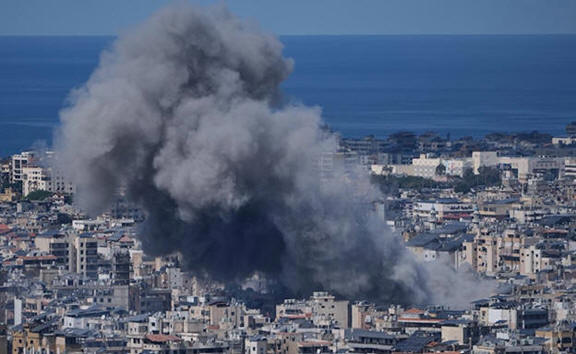
| Smoke rising as a result of the Israeli air strikes on the southern district of the Lebanese capital of Beirut, known as Al-Dha'hiya, on March 9, 2026. |
The Israeli military deployed artillery-fired internationally-forbidden white phosphorus munitions over residential areas in the southern Lebanese town of Yo'hmor, on March 3, 2026. |
 |
 |
| 486 Lebanese people were killed, 1,313 were injured, and 450,000 were forced out of their cities and villages by the Israeli air strikes and artillery fire, on March 2-9, 2026. | About 450,000 Lebanese people and about 250,000 Syrians were forced out of the Lebanese cities and villages by the Israeli air strikes and artillery fire, on March 2-9, 2026. |
 |
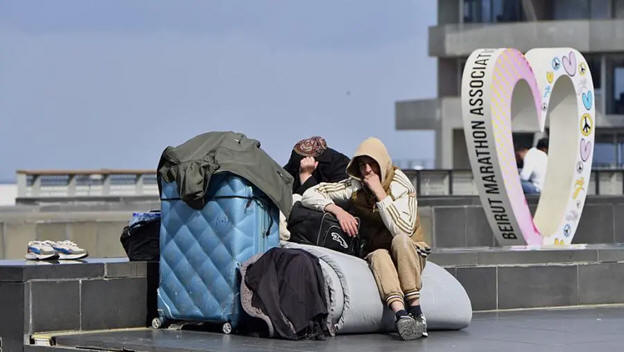 |
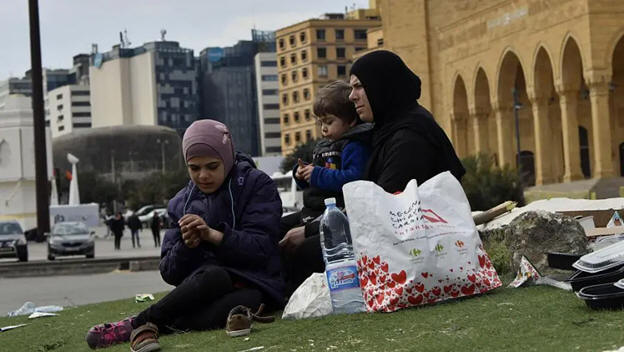
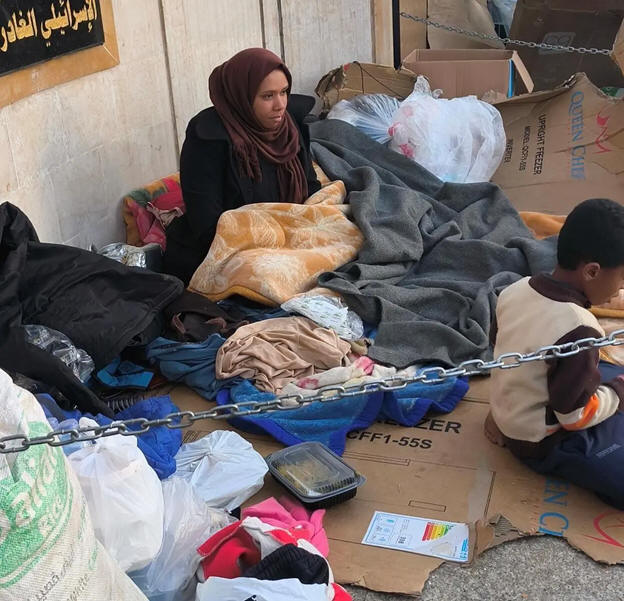
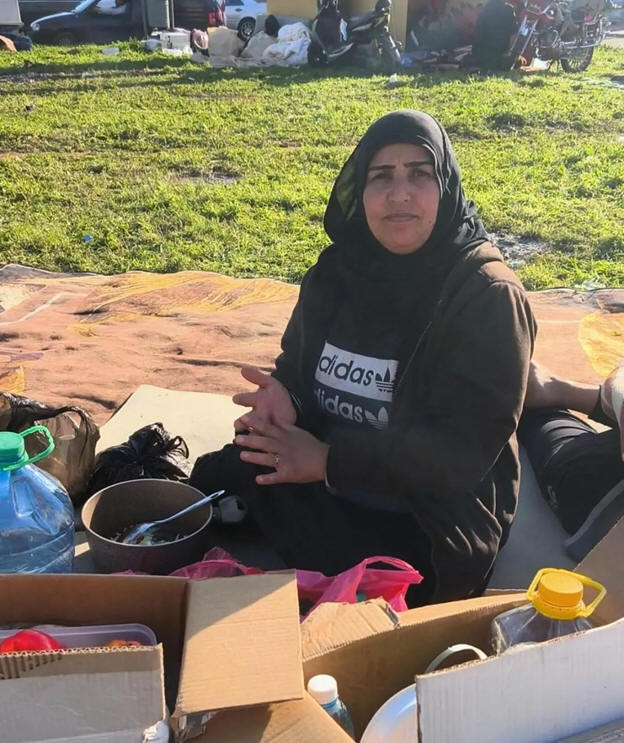
| Many of the 450,000 displaced Lebanese people could not find shelters and ended up living in the streets and public parks, as a result of the the Israeli air strikes and artillery fire on their cities and villages, on March 2-9, 2026. | A Lebanese family living in the street after being displaced together with the other 450,000 who were displaced by the the Israeli air strikes and artillery fire on their cities and villages, on March 2-9, 2026. |
***
Lebanese Health Ministry: 486 Martyrs and 1313 Wounded as a Toll of Israeli Aggression Since March 2
Al-Naja'h, on: 2026-03-09 1
The Health Emergency Operations Center of the Lebanese Ministry of Health announced on Monday evening that the toll of the Israeli aggression on Lebanon from the dawn of Monday, March 2, until the afternoon of Monday, March 9, has risen to 486 martyrs and 1313 wounded.
The occupation army continued to bombard various areas in Lebanon, resulting in martyrs and injuries, in addition to the destruction of dozens of buildings and infrastructure.
Since dawn today, the occupation aircraft have launched at least ten raids targeting the southern suburbs of the capital, Beirut.
The Israeli warplanes also carried out raids targeting the towns of Borj Rahhal, Sarifa, Ansariya, Dhuter al-Sharqiyah, Arabsalim, Barghez, Khayyam, Al-Tiri, Beit Lev, Bint Jbeil, Yater, Majdal Zone, Al-Bayada, Hanin, Jouya, Haris, Tibnin, Tir Dibba, Kunin, and Beit Yahoun in southern Lebanon, in addition to the city of Hermel in the Bekaa in the east of the country
الصحة اللبنانية: 486 شهيدًا و1313 جريحًا حصيلة العدوان الإسرائيلي منذ 2 آذار
***
Several people killed in Israeli airstrikes on Lebanon
Al-Mayadeen, March 9, 2026
Israeli airstrikes on southern Lebanon and Beirut's Southern Surbub killed several people and wounded dozens, with raids reported in Tair Dibba, Jwayya, and Bint Jbeil.
The Israeli occupation forces launched a series of violent airstrikes on Monday, targeting Beirut's Southern Suburb and multiple towns in southern Lebanon, resulting in a rising number of casualties.
According to Al Mayadeen's correspondent, Israeli warplanes have carried out more than 10 raids on the Southern Suburb since dawn. The strikes targeted the vicinity of the Saint Therese neighborhood, the area between Ghobeiry and Haret Hreik, and most recently, the Al-Sfeir area, Al-Laylaki and Bir al-Abed areas.
"Israel" issued displacement threats this morning against the Southern Suburb of Beirut, threatening all branches of al-Qard al-Hassan association with destruction. The association has aided tens of thousands of Lebanese, offering them zero-interest loans.
In southern Lebanon, Al Mayadeen's correspondent reported that a Lebanese police officer belonging to the Chebaa municipality was martyred in an Israeli drone strike.
Separately, three individuals were killed in the town of Kfar Tebnit after an airstrike completely destroyed their home. In another incident, two people were martyred while traveling to the town of Aitaroun. Their vehicle was struck by a drone on the main road between Bint Jbeil and Aitaroun.
A further fatality was recorded in the town of Choukine, where an airstrike destroyed a home, killing one person and critically injuring another.
Israeli warplanes also conducted strikes on the towns of Sarifa and Yater, targeted the al-Maslakh neighborhood in Bint Jbeil, and renewed raids on the town of Jwayya in the Tyre (Sour) district.
Six killed, 30 wounded in Tair Dibba and Jwayya
Lebanon's Ministry of Health confirmed that the occupation's raids on the towns of Tair Dibba and Jwayya resulted in the deaths of six people and left more than 30 others wounded. Rescue operations and efforts to clear the rubble are ongoing.
In a related development, civil defense teams from the Al-Risala Scout Association successfully retrieved the bodies of martyrs in the town of Sarifa who had been killed in an Israeli strike two days prior. Meanwhile, the Lebanese Red Cross, supported by the Lebanese army, completed a complex operation to evacuate 11 Syrian workers.
The workers were injured on Sunday evening when an Israeli drone targeted them on the outskirts of the town of Yohmor al-Shaqif while they were unloading a shipment of chickens. They remained stranded at the site for hours before being transported to a hospital in Nabatieh.
Israeli strikes across Lebanon
The latest attacks come amid a broader wave of Israeli strikes targeting multiple areas across Lebanon, including residential neighborhoods and civilian infrastructure. Over the past days, Israeli airstrikes have hit towns across Southern Lebanon and other regions, causing widespread destruction and civilian casualties.
According to Lebanese officials and local reports, several massacres have been recorded in southern towns during the escalation. In the town of Dweir, Israeli strikes destroyed a home and a nearby car repair garage, killing six people, including five members of the Ayash family. In Seer al-Gharbiya in the Nabatieh district, an airstrike on a residential building reportedly killed at least 20 people, most of them women and children, wiping out an entire family.
Additional strikes targeted several towns in the Nabatieh and Saida districts, including Rcheif, Srebbine, Shaukine, Tefahata, and Ghaziyeh, where a four-story residential building collapsed after being hit by an airstrike. Rescue teams later detected signs of life beneath the rubble, with efforts continuing to reach survivors.
Airstrikes were also reported in the border town of Alma al-Shaab, where a resident identified as Sami Y. Ghafri was killed, as well as in Aytit in the Tyre district and in Qana, where four people were killed after a residential building was struck.
Several people killed in Israeli airstrikes on Lebanon | Al Mayadeen English
***
HRW verifies 'Israel' using white phosphorus in South Lebanon
Al-Mayadeen, March 9, 2026
Human Rights Watch says "Israel" deployed artillery-fired white phosphorus munitions over homes in Yohmor, southern Lebanon, raising concerns over civilian harm.
The Israeli military deployed artillery-fired white phosphorus munitions over residential areas in the southern Lebanese town of Yohmor, Human Rights Watch (HRW) said on Monday.
The human rights organization verified and geolocated seven images showing airburst white phosphorus munitions over homes, as well as civil defense workers responding to fires in at least two houses and one vehicle.
Ramzi Kaiss, Lebanon researcher at HRW, described the incident as “extremely alarming” and warned that “the incendiary effects of white phosphorus can cause death or cruel injuries that result in lifelong suffering.”
HRW confirmed that images posted on social media on the morning of March 3 show at least two artillery-delivered white phosphorus munitions detonating over residential neighborhoods. The distinctive smoke clouds observed were consistent with those produced by M825-series 155mm artillery projectiles containing white phosphorus.
Earlier that day, at 5:27 AM, Israeli military spokesperson Avichay Adraee issued displacement threats for Yohmor and 50 nearby villages, instructing residents to move at least 1,000 meters from the villages to open land. Adraee repeated the threat directive at 12:12 p.m. HRW has not independently confirmed whether civilians were present or injured during the attacks.
Photographs shared on Facebook by the Civil Defense Team of the Islamic Health Committee, show workers extinguishing fires on rooftops and in a car, with smoke rising from a residential balcony.
The geolocated sites were within 160 meters of the observed airbursts. HRW’s analysis indicates the fires were likely caused by white phosphorus munitions, suggesting the weapons were deployed unlawfully in areas with civilian concentrations.
Banned by international law, used by 'Israel' regularly
White phosphorus is a chemical substance used in artillery shells, bombs, and rockets that ignites upon contact with oxygen, capable of setting homes, agricultural areas, and other civilian objects on fire.
Under international humanitarian law, the use of airburst white phosphorus in populated areas is considered unlawfully indiscriminate, as it fails to meet the requirement to take all feasible precautions to avoid civilian harm.
Human Rights Watch said "Israel’s" use of white phosphorus in southern Lebanon underscores the need for stronger international regulations on incendiary weapons.
Currently, Protocol III of the Convention on Conventional Weapons is the only legally binding instrument specifically dedicated to incendiary weapons, and "Israel" is not a party to this protocol.
Protocol III governs weapons “primarily designed” to cause fires or burns, but excludes certain multipurpose munitions with incendiary effects, including white phosphorus. It also imposes weaker restrictions on ground-launched incendiary weapons, like those used in Lebanon, than on airdropped incendiary weapons, despite both causing similar severe injuries.
'Israel' and White Phosphorus: a brief history of ecocide
"Israel" has repeatedly used white phosphorus in southern Lebanon, raising serious humanitarian and environmental concerns. During the 2006 Lebanon War, "Israel" fired white phosphorus shells over towns including Qana and Marjayoun, causing widespread fires and civilian injuries.
The consequences of such attacks extend beyond immediate civilian harm. White phosphorus can ignite homes, farmland, and forests, destroying crops and contaminating soil. In 2008, fires caused by unexploded white phosphorus shells in southern Lebanon forced evacuations and left long-lasting burn marks on agricultural land.
Environmental experts warn that repeated use of incendiary weapons leads to soil degradation and water contamination, affecting entire ecosystems. Studies after the 2006 war showed persistent pollution in Lebanese rivers and fields near attack zones, making recovery slow and costly.
Such environmental destruction has sparked calls to consider these acts under the concept of ecocide, defined as extensive damage to, destruction of, or loss of ecosystems. International law remains limited, but HRW and other organizations argue that deliberate use of white phosphorus in civilian areas should fall under ecocide scrutiny.
HRW verifies 'Israel' using white phosphorus in South Lebanon | Al Mayadeen English
***
The suffering of displaced people in Lebanon. Roads turn into homes in the middle of war
Al-Arabi TV, Mu'hammed Al , Jannoun 9 March 2026
Displacement tragedy repeats in Lebanon - Getty Images The line The war that Lebanon has been experiencing for a week has changed the lives of many, especially those who are now out of their homes, and their lives have turned into the unknown.
The 450,000 displaced people is the latest figure counted by the Lebanese authorities for the number of displaced people since the start of the Israeli aggression as of dawn last Monday. These IDPs are distributed in various areas of Lebanon, with the exception of those that the Israeli army has issued bombing warnings, particularly the area south of the Litani River in southern Lebanon.
Displacement, suffering and pain. Where do displaced people find shelter?
In an instant, many people, whether Lebanese or of other nationalities, found themselves on the streets, where the roads have become their home in displacement, where there is no roof to protect them, while their conditions are now open to passers-by in the sun and the cold of winter.
The Arab TV website targeted the displaced people scattered in the city of Saida, southern Lebanon, especially those who covered the roads for many days before moving to a place of shelter, recounting the suffering they faced by all standards. Children of different ages live the bitterness of war with their families, while women sit without any protection, while men have no camels or camels, especially those elderly who have found themselves without a shelter to protect them at the end of their lives.
On the side of the road, in that relatively wide open park, the Arab TV camera's camera documented this suffering. There, 42-year-old Syrian woman Mariam Hanouf al-Shams sat with her children in the sun and in the open for more than three days, after being displaced from the town of Shihabiya in southern Lebanon, following the war between Hezbollah and Israel.
The presence of the displaced woman "Maryam" on the road came after she was not allowed to enter any shelter center for the displaced in the city of Saida, explaining that the reason for this ban was her Syrian nationality. However, Mariam decided to move to another place to protect her and her children with her husband, Alireza Saad, a retired soldier in the Lebanese Internal Security Forces.
Before moving to safety, the Arab TV website met with the Syrian woman to document her suffering on the road. Amid the crowd of displaced people scattered around her, she tried to prepare food for her young children, while the main meal was boiled potatoes and vegetable salad.
Mariam is one of hundreds of Syrians who have fled from southern Lebanon following the security tension. Many of them lived in the southern border area, particularly in the towns of Sarda and Wazzani, while their main activity was agriculture.
In an interview with the Arab TV website, Mariam told her story with the displacement, saying that she fled the war three times, and each time homelessness awaited her. She added:
"What can I say as a mother of young children who have suddenly been attacked by war without being held accountable?"
She continued:
"On Sunday night (March 1), we were staying at our house in the town of al-Shihabiya. The night was quiet, and we didn't expect anything. Suddenly, just before Suhoor, we were informed of an urgent evacuation of homes due to Israeli shelling. We quickly left our homes, leaving most of our belongings. It was to escape for ourselves and our children."
Mariam does not hide her deep sadness over what happened to her and her family, but what saddens her even more is what she called "racial discrimination" during her displacement in Sidon, where she was prevented from entering schools with her children, and heard racist phrases from many such as:
"Syrians are not allowed to enter shelters."
Maryam added:
"Like the Lebanese here, we were displaced together and our destiny is the same. So why are we treated like this? They tell us to go back to your country, Syria. Well, how can we go back and not have the money for it? How can we go back and not have a home or a job there? Shall I go back to being homeless too?"
Our resilience has faded
"Sarah", a 30-year-old woman with two children, agreed with what the Syrian citizen Mariam said, and she also stayed in Martyrs' Square with her husband without any tent to protect them, for consecutive days.
Ahead of moving to a shelter, Sarah spoke heartily about what she faced during this forced displacement: "Look around here and you'll see that the majority of people are Syrians. Have you asked yourselves why? Because racism has overwhelmed so many, as if we are doomed to death," she said.
"We were displaced from the town of Khiam in southern Lebanon and came to escape death, and we stayed on the street without any helper except God. "What we saw was very difficult, while our resilience was gone, and to make matters worse, Syrians are treated as third, fourth and fifth class."
She continued: "We do not have any elements of resilience, and whoever brought us some meals carries humanity in his heart, but there are other people who have described us as the ugliest, and this affected me a lot."
Sara reveals that some people came to the place of the Syrians and criticized them for not fasting during the month of Ramadan, adding:
"Some people also cursed a young Syrian next to us because he was not fasting and was smoking a cigarette. What happened was very harmful to us, as many people cannot fast in this situation, especially since we are living in a tragic reality that everyone sees without exception, whether ordinary people or even officials."
She continues:
"We have never felt this discrimination before, and I can say with confidence that the ugliness is that there is no one to support you, racism has blinded the hearts of many. "But even so, there are still people who are doing good on their own."
In her speech, displaced woman Sara appeals to the Syrian state to pay attention to the affairs of the displaced Syrians as a result of this war, saying:
"We hope that our country will work to help us and lift us out of what we are in, because suffering is very difficult, and those who live in the open will be exposed to everything."
215,000 Syrians 'affected' by conflict
Al-Arabiya TV contacted the United Nations High Commissioner for Refugees (UNHCR) in Lebanon and asked it about the issue of following up on displaced Syrians from conflict zones in Lebanon.
UNHCR told Al-Arabiya TV that it estimates that as many as 215,000 Syrian refugees could have been affected by the ongoing conflict in various parts of Lebanon.
UNHCR says that Syrian authorities have reported that more than 60,000 Syrians have crossed into Syria since the start of the aggression on Lebanon until Saturday, noting that this figure includes Syrian refugees in Lebanon who had previously decided to return home, as well as others who fled the ongoing conflict.
UNHCR confirmed that its teams are present at the Lebanese-Syrian border in cooperation with the authorities and partners to support the new arrivals by providing essential relief items, noting that it stands ready to respond inside Lebanon through pre-positioned supplies and community support mechanisms.
The Government of Lebanon has identified some 700 public schools for use as collective shelters for displaced persons, and has stressed that these centres must be inclusive and accessible to all nationalities, including non-Lebanese.
The most prominent suffering of the displaced
Displaced people were forced to leave their homes abruptly due to shelling, leaving behind most of their belongings - Getty Images
Homelessness on the street Difficulty getting food No access to shelters Racial discrimination Children are most affected Harsh conditions
Many of the displaced people, Lebanese and Syrians, found themselves on the streets homeless, exposed to the sun and cold, with elderly children and women without protection.
According to UNHCR, empowering all displaced people in need of assistance is a fundamental humanitarian principle and is expected by international partners and donors to Lebanon who are providing funding for humanitarian response and resilience programmes, based on a comprehensive needs-based approach.
However, UNHCR, citing humanitarian partners, reported that in some locations, access to some shelters was limited for non-Lebanese, including Syrian refugees.
In response, humanitarian partners are working closely with the Government of Lebanon and regional and local authorities under the Government-led Emergency Response Plan, to facilitate access to safe shelter options and provide need-based assistance to all displaced families, regardless of nationality.
معاناة النازحين في لبنان.. الطرقات تتحول إلى منازل وسط الحرب | التلفزيون العربي
Read also Politics - Lebanon More than half a million displaced people. Israel admits to launching 100 airstrikes on Lebanon
***
Fair Use Notice
This site contains copyrighted material the
use of which has not always been specifically authorized by the copyright
owner. We are making such material available in our efforts to advance
understanding of environmental, political, human rights, economic,
democracy, scientific, and social justice issues, etc. We believe this
constitutes a 'fair use' of any such copyrighted material as provided for
in section 107 of the US Copyright Law. In accordance with Title 17 U.S.C.
Section 107, the material on this site is
distributed without profit to those
who have expressed a prior interest in receiving the included information
for research and educational purposes. For more information go to: http://www.law.cornell.edu/uscode/17/107.shtml.
If you wish to use copyrighted material from this site for purposes of
your own that go beyond 'fair use', you must obtain permission from the
copyright owner./font>
|
||||||||||||||||