www.aljazeerah.info
2026 News
Archives
Mission & Name
Conflict Terminology
Editorials
Gaza Holocaust
Gulf War
Isdood
Islam
News
News Photos
Opinion Editorials
US Foreign Policy (Dr. El-Najjar's Articles)
www.aljazeerah.info
|
Editorial Note: The following news reports are summaries from original sources. They may also include corrections of Arabic names and political terminology. Comments are in parentheses. |
***
Iranians Mourn 165 School Girls Who Were Massacred by the Israeli Air Strikes, Which Also Killed 52 Lebanese Civilians, Injured 154, and Displaced 28,500, March 3, 2026
***
 |
 |
| Iranian mourning mothers bidding farewell to 165 school girls and staff who were massacred by an Israeli air strike on the Shajareh-ye Tayyebeh Girls' Elementary School in Minab, Hormozgan Province, March 3, 2026. |
Iranians bid farewell to 165 school girls and staff who were massacred by an Israeli air strike on the Shajareh-ye Tayyebeh Girls' Elementary School in Minab, Hormozgan Province, March 3, 2026. |
 |
|
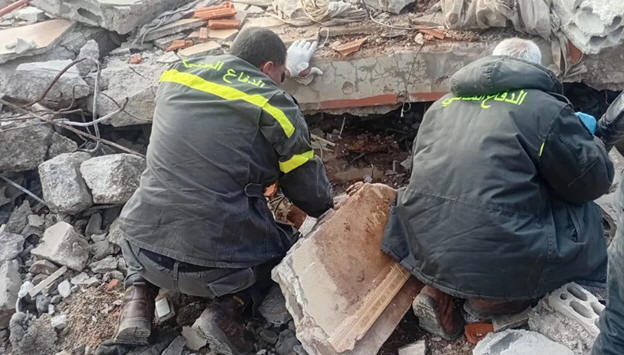
| 52 Lebanese civilians were killed, 154 were injured, and about 28,500 were displaced by the Israeli air strikes on South Lebanon and southern Beirut, by March 3, 2026. | Lebanese rescue members trying to get bodies of the martyred Lebansese civilians who were massacred by the Israeli air strikes on their homes in southern Lebanon, March 3, 2026. |
| Iranians Mourn 165 School Girls Who Were Massacred by the Israeli Air Strikes, Which Also Killed 52 Lebanese Civilians, Injured 154, and Displaced 28,500, March 3, 2026 | |
***
Minab bids farewell to 165 schoolgirls killed in US-Israeli strike
By Al-Manar, March 3, 2026Funeral ceremonies were held in Minab for 165 victims of a US-Israeli strike on a girls' elementary school.
Funeral ceremonies were held on Tuesday for 165 victims of the Shajareh-ye Tayyebeh Girls' Elementary School in Minab, Hormozgan Province, southern Iran. Most of the martyrs are young schoolgirls, along with staff members and parents who were present at the time of the attack.
The school was struck on Saturday, February 28, on the first day of the US-Israeli aggression against Iran, when it was packed with pupils during class hours. The strike killed 165 people and left 96 others wounded.
Iranian authorities confirmed that the identities of 66 of the 165 victims remain unconfirmed. Hossein Sadeghi, head of the Information and Public Relations Center at the Ministry of Education, told Tasnim News Agency that 99 victims have been fully identified and their names released, while remaining families will need to submit DNA samples to complete the identification process.
"These crimes will not go unpunished," Iranian Foreign Minister Abbas Araghchi warned on the day of the attack, writing on X that the school "was bombed in broad daylight, when packed with young pupils."
Pattern of strikes on civilian infrastructure
The Minab school was far from an isolated case.
Since the aggression began on February 28, US-Israeli strikes have repeatedly hit civilian infrastructure across Iran. Seven medical facilities, including hospitals and emergency stations, were targeted on Monday alone, resulting in casualties among medical personnel.
Gandhi Hospital in northern Tehran sustained significant damage after a strike hit a nearby area on March 1, destroying its in-vitro fertilisation department and forcing staff to relocate cells and embryos. The Tehran Emergency Services building was also struck on Monday, injuring several emergency workers.
Schools beyond Minab were not spared either. A strike on a school in Abyek killed one student, while two others were killed in a strike in Tehran on the first day of the offensive. In Fars Province, 20 volleyball players were killed when Israeli strikes hit a sports hall in the city of Lamerd.
Densely populated residential neighborhoods in Sanandaj were struck, and more than 20 civilians were killed in an attack on Niloofar Square in Tehran.
Three Iranian Red Crescent aid workers were also targeted in a US-Israeli airstrike on Monday while conducting a rescue mission. Their condition is currently reported as stable.
At least 555 were martyred in US-Israeli strikes in Iran, according to the Iranian Red Crescent Society, with strikes having hit more than 130 cities across the country.
Minab bids farewell to 165 schoolgirls killed in US-Israeli strike | Al Mayadeen English
***
Iranian Red Crescent: Death toll rises to 555 since start of Israel-US offensive
Monday 2-March-2026
TEHRAN, (PIC)
The Iranian Red Crescent announced on Monday that the death toll has risen to 555 people as a result of the ongoing US-Israeli military offensive over the past two days.
In a statement, it said the joint Israeli-American attacks have targeted 131 residential areas across Iran, according to the Fars News Agency. The organization confirmed that 555 people have been killed but did not provide updated figures on the number of injured.
The last reported toll, released by the Iranian Red Crescent on Saturday, indicated 201 deaths and 747 injuries.
Since early Saturday, Israel and the United States have been carrying out military strikes on Iran, resulting in the killing of hundreds of people, including Supreme Leader Ali Khamenei and senior security officials.
Tehran has responded by launching missiles and drones toward Israel, and has also carried out attacks on US bases and interests in several Arab countries. Some of these strikes have caused casualties and damage to civilian infrastructure, including ports and residential buildings.
Iran has come under this offensive despite reported progress in negotiations with the United States, according to Omani mediation efforts. This marks the second time Israel has disrupted ongoing talks, the first being the June 2025 war.
During recent negotiations in Geneva, an Iranian official stated that Tehran had presented a proposal for a resolution, including technical and practical pathways, along with assurances that it does not seek nuclear weapons. While emphasizing that uranium enrichment is a sovereign right, Iranian negotiators reportedly offered a temporary suspension of enrichment for a limited period.
Washington and Tel Aviv accuse Iran of maintaining nuclear and missile programs that threaten Israel and US-allied countries in the region. Iran, however, maintains that its nuclear program is peaceful and denies any intention to develop nuclear weapons.
Jewish settlers kill two Palestinians, injure others after attacking W. Bank town
***
***
Recap of 'Israel's' aggression on Lebanon since Monday
Al Mayadeen, March 3, 2025
Latest toll
According to the latest official update issued Monday night by Lebanon’s Disaster Management Unit, the Israeli aggression has killed 52 Lebanese civilians and wounded 154 others, with at least 28,500 displaced.
***
Israeli warplanes launched widespread strikes on Beirut's Southern Suburb, southern Lebanon, and El-Biqaa' since Monday, killing 52 civilians and wounding 154.
"Israel" began its latest escalation on Lebanon during the early hours of Monday, March 2, when Israeli occupation forces launched extensive airstrikes targeting Beirut’s Southern Suburb (Dahye) and southern Lebanon.
At approximately 03:30 a.m., Israeli warplanes carried out an hour-long wave of strikes on densely populated neighborhoods in 'Haret Huraik, Al-Jamous, and areas near Beirut International Airport, hitting residential buildings in the Southern Suburb.
"Israel" is attempting to frame its escalation as due to the Resistance's retaliation on Sunday, but the aggression is unfolding after 15 months of Israeli violations that Lebanese authorities and UNIFIL say have surpassed 15,400 breaches since the ceasefire took effect, with hundreds killed by "Israel" in the past year.
Border towns targeted
By 05:00 a.m., the aggression had expanded across southern Lebanon. Airstrikes hit residential areas in El-Shahabiya (Tyre District) and El-Sultaniyah (Bint Jubail District), where civilians were reported killed. Raids also struck Qalaway, Nabatiya, 'Adshit, 'Harouf, Toul, and El-Kufour, broadening the scope of the bombardment.
Along the southern border, Israeli forces targeted homes and surrounding areas in Yaroun, 'Aytaroun, and El-Khiyam, as intense artillery shelling pounded border regions. An Israeli Apache helicopter fired on Yaroun, while a drone strike targeted the center of Mays al-Jabal. Simultaneously, Israeli warplanes conducted low-altitude flights over northern and western El-Biqaa', reinforcing fears of a wider theater of operations.
Israeli authorities also issued threats to dozens of additional towns across the South and Bekaa, signaling potential further escalation.
Morning Assault Spreads
As morning progressed, the assault intensified across Tyre District. Israeli warplanes targeted Qana, Hallousia, Mahrouneh, and Aiteet, followed by raids on Ain Qana (twice), Kounin, Arab Salim, Mansouri, Srifa, Burj al-Shamali, and Wadi Jilo, among other towns. Strikes also hit areas between al-Taybeh and al-Qantara, while Hadatha in Bint Jbeil District came under fire.
By mid-morning, the Lebanese Ministry of Public Health reported a preliminary toll of 31 martyrs and 149 wounded, warning the number could rise as search-and-rescue operations continued and hospitals completed damage assessments.
The renewed escalation follows intensified Israeli air raids on Iqlim al-Tuffah heights, the al-Rayhan heights, and the Barghaz Valley days earlier, underscoring the continuation of Israeli air operations despite the ceasefire framework.
Media targeted
The raids persisted throughout the day and into the night. On Monday evening, Israeli occupation forces fired six missiles at a building facing Al Mayadeen’s headquarters in Jnah, carried out five air raids on the Manshiyeh neighborhood in Beirut’s Southern Suburb, leveling three buildings completely, and struck branches of Al-Qard Al-Hassan Association.
Overnight strikes also targeted Al-Manar TV headquarters, Al-Nour Radio, and another building in Haret Hreik, expanding the scope of attacks to include Lebanese media institutions.
Lebanese Government measures
Amid the continued Israeli assault, Prime Minister Nawaf Salam announced that the Cabinet had approved measures, including an immediate prohibition on Hezbollah’s military and security activities and steps reinforcing the state’s monopoly over arms. Salam said the decisions were taken "in accordance with the Constitution, the National Reconciliation Document, and the government’s ministerial statement."
The Council of Ministers condemned rocket fire from Lebanese territory and called on the United States and France — guarantors of the ceasefire — to press "Israel" to halt its attacks.
Hezbollah MP Mohammad Raad criticized the government’s posture during the aggression, saying: "We understand the Lebanese government’s inability to confront the brutal Zionist enemy that violates national sovereignty, occupies land, and poses a continuous threat to the country’s security and stability." He added there was "no justification" for targeting citizens who reject occupation while the aggression continues.
Latest toll
According to the latest official update issued Monday night by Lebanon’s Disaster Management Unit, the Israeli aggression has killed 52 Lebanese civilians and wounded 154 others, with at least 28,500 displaced.
***
***
Israeli Occupation Forces expand occupation of Lebanese land, Lebanese army abandons posts
Al-Mayadeen, March 3, 2026
The Israeli security minister says occupation forces will "advance and hold additional terrain" in southern Lebanon, as the Lebanese army moves to abandon its posts alongside the border.
Israeli occupation forces announced Tuesday the expansion of their occupation of Lebanese territory, with ground incursions underway. The Israeli Army's 91st Division has now infiltrated multiple positions south of the Litani River in what it described as "forward defensive operations."
Israeli Security Minister Israel Katz stated that he has authorized the IOF to advance and occupy additional positions in Lebanon following the Lebanese resistance's rocket fire on Sunday, itself a response to 15 months of Israeli aggressions despite the ceasefire.
A military spokesperson, Lieutenant Colonel Nadav Shoshani, claimed in a briefing with reporters that forces were operating "only at the borderline area" in order to "prevent attacks" against settlers in northern settlements and "very strategic important points."
"Israel" is attempting to frame its escalation as due to the Resistance's retaliation on Sunday, but the aggression is unfolding after 15 months of Israeli violations that Lebanese authorities and UNIFIL say have surpassed 15,400 breaches since the ceasefire took effect, with hundreds killed by "Israel" in the past year.
"Israel's" new deployments were also confirmed by a Lebanese official, who told Reuters that Israeli forces were conducting incursions across parts of the border.
The ground incursions follow the Israeli military's announcement on Sunday of the mobilisation of 100,000 reservists, many of them along the border with Lebanon.
Lebanese army evacuates border posts
The Lebanese army began to evacuate its border positions after receiving information about Israeli occupation forces' plans to advance toward frontline towns.
The army evacuated forward positions in the Majidiyeh plain, in Bastara and Azrael in the Kfar Chouba hills, and transferred personnel to the Kfar Hamam center. Further evacuations were carried out in Mays al-Jabal, Hula, and all forward positions established in recent months.
Meanwhile, Al Manar's correspondent reported that the Lebanese army withdrew from more than 50 border posts and a newly established checkpoint near the border. The Lebanese army's withdrawal paved the way for a number of ground incursions, most notably in Aita al-Shaab, Yaroun, and Tal al-Nahhas.
Israeli occupation forces subsequently advanced further toward the border towns of Ramiya, Kfar Kila, Wata al-Khiam, and Majidiya, per Al-Akhbar.
Israeli strikes expand across Lebanon
The ground incursion has unfolded alongside a relentless Israeli air and artillery campaign. Since Monday, strikes have hit residential areas across southern Lebanon, including al-Shahabiya, al-Sultaniyah, Adshit, Harouf, Yaroun, Aitaroun, and al-Khayam, as well as Beirut's Southern Suburb, where densely populated neighborhoods in Haret Hreik and al-Jamous were targeted.
Overnight strikes hit the headquarters of Al Manar TV and Al Nour Radio, and a building adjacent to Al Mayadeen's offices in Jnah was bombed.
Lebanon's Disaster Management Unit reported that the Israeli aggression has killed 52 Lebanese civilians and wounded 154 others in the current escalation, with at least 28,500 people displaced.
Since the November 2024 ceasefire agreement and up until late February 2026, more than 370 Lebanese have been killed and at least 945 wounded by Israeli fire, according to the Lebanese Ministry of Public Health. Meanwhile, the Resistance and people from border towns have repeatedly called on the Lebanese state to assume its responsibilities against "Israel".
Resistance strikes Israeli military bases
In response to the ongoing Israeli aggression, the Lebanese Resistance movement Hezbollah carried out a series of drone operations against Israeli military infrastructure on Tuesday morning. The group struck the Meron surveillance base in northern occupied Palestine, hitting a radar system and a command building, and separately targeted the Nafah base in the occupied Syrian Golan Heights, headquarters of the Israeli military's 210th Brigade.
Earlier strikes hit radar facilities and control rooms at the Ramat David airbase. Hezbollah said all three operations were conducted in response to Israeli aggression against Lebanese towns and Beirut's southern suburbs, and in retaliation for the assassination of Sayyed Khamenei.
'Israel' entrenches occupation as ceasefire violations surpass 15,400
Tuesday's ground expansion adds to an already entrenched Israeli military occupation that has persisted in violation of the ceasefire agreement. "Israel" has refused to withdraw from five strategic hilltop positions inside Lebanese territory, Tallat al-Hamams, Tallat al-'Uwaydah, Jabal Blat, Tallat al-Labbouneh, and Tallat al-'Azziyeh, and has now moved to seize additional terrain.
Since the ceasefire began, "Israel" has committed more than 15,400 documented violations according to UNIFIL and Lebanese government figures, including over 7,500 aerial infringements and nearly 2,500 ground incursions north of the Blue Line.
Lebanon's Foreign Ministry documented 2,036 Israeli breaches in the final quarter of 2025 alone, filing a formal complaint with the UN Security Council that produced no enforceable response.
IOF expands occupation of Lebanese land, Lebanese army abandons posts | Al Mayadeen English
***
52 killed, 154 injured in Israeli aggression on Lebanon
ByAl Mayadeen English Source: Al Mayadeen English 2 Mar 2026 21:07 3 Shares
As Israeli strikes hit Lebanon, targeting civilian sites in the South, East, and in the Southern Suburb of Beirut, civilian casualties continue to mount.
"Israel" has killed 52 Lebanese civilians and injured 154 others during the aggression on Lebanon, the Lebanese government’s Disaster Management Unit announced on Monday, adding that at least 28,500 have been forcibly displaced from their homes.
Moreover, the Israeli occupation launched six missiles in an attack targeting a building facing Al Mayadeen's headquarters in Jnah, Beirut, earlier tonight.
In recent hours, Israeli occupation forces also struck branches of the Al-Qard Al-Hassan Association, alongside five air raids on the Manshiyeh neighborhood in Beirut’s Southern Suburb, leveling three buildings completely.
Earlier attacks on Lebanon
The new escalation in the Israeli aggression began during the early hours of dawn, with Israeli occupation artillery targeting the outskirts of Aita al-Shaab and Israeli raids hitting the towns of al-Shahabiya in Tyre District and al-Sultaniya in Bint Jbeil District, killing three civilians in al-Shahabiya and four in al-Sultaniya. Strikes also hit Burj Qalaway, while occupation forces simultaneously targeted Nabatieh, Adshit, Harouf, Toul, and Kfour.
Along the southern border, Israeli forces targeted homes and surrounding areas in Yaroun, Aitaroun, and Khiam, as heavy artillery shelling pounded the border areas. An Israeli drone strike even targeted the center of Mays al-Jabal. In eastern Lebanon, Israeli warplanes flew at low altitude over the western and northern Bekaa valleys.
As morning broke, strikes intensified across Tyre District, with Israeli warplanes targeting Qana, Hallousia, Mahrouneh, and Aiteet, while strikes hit areas between al-Taybeh and al-Qantara. Hadatha in the Bint Jbeil District also came under fire.
By mid-morning, the assault had broadened further. Israeli warplanes struck Ain Qana twice, Kawnin, Arab Salim, Mansouri, and Srifa, while raids targeted al-Majdal in the Tyre District for the second time. Also in the Tyre District, warplanes targeted Burj al-Shamali and Wadi Jilo, while Maaroub was struck for the second time. Strikes also hit Jmeijmeh, Siddiqin, the area between Yanouh and Maarakeh, and the outskirts of Zarariya, al-Hawsh, and Tayr Daba.
52 killed, 154 injured in Israeli aggression on Lebanon | Al Mayadeen English
***
Fair Use Notice
This site contains copyrighted material the
use of which has not always been specifically authorized by the copyright
owner. We are making such material available in our efforts to advance
understanding of environmental, political, human rights, economic,
democracy, scientific, and social justice issues, etc. We believe this
constitutes a 'fair use' of any such copyrighted material as provided for
in section 107 of the US Copyright Law. In accordance with Title 17 U.S.C.
Section 107, the material on this site is
distributed without profit to those
who have expressed a prior interest in receiving the included information
for research and educational purposes. For more information go to: http://www.law.cornell.edu/uscode/17/107.shtml.
If you wish to use copyrighted material from this site for purposes of
your own that go beyond 'fair use', you must obtain permission from the
copyright owner./font>
|
||||||||||||||||