www.aljazeerah.info
2026 News
Archives
Mission & Name
Conflict Terminology
Editorials
Gaza Holocaust
Gulf War
Isdood
Islam
News
News Photos
Opinion Editorials
US Foreign Policy (Dr. El-Najjar's Articles)
www.aljazeerah.info
|
Editorial Note: The following news reports are summaries from original sources. They may also include corrections of Arabic names and political terminology. Comments are in parentheses. |
***
During the two-year Israeli Genocidal War on the Palestinian people in the Gaza Strip (October 7, 2023-October 13, 2025), world governments were either active participant and accomplices of the genocide, or watched passively, without taking any actions to Stop it.
***
5 Palestinians Killed, Dozens Injured, Increasing the Death Toll of the Israeli Genocidal War on Gaza to 74,250 Martyrs and 175,278 Injuries, Settler Attacks Continue
October 7, 2026
***
Note about the number of Palestinians, who were kidnapped by the Israeli occupation forces in the Wet Bank:
The Commission of Detainees and Ex-Detainees Affairs, the Palestinian Prisoner's Society (PPS), and Al-Dhameer Association for Human Rights stated in a report issued Sunday that the total number of kidnappings of Palestinians in the West Bank, since the start of the ongoing genocide in Gaza, has risen to more than 18,500, including over 570 women and about 1,500 children.
Source: Palestine Information Center, August 10, 2025.
***
Note About the Missing Palestinians in the Gaza Strip:
On February 26, 2025, the Palestinian Center for Political and Development Studies announced that the number of the missing in the Gaza Strip has exceeded 14,000 people, including 2,000-3,000 held in Israeli occupation prisons, without releasing any information on their fate.
***
***
 |
 |
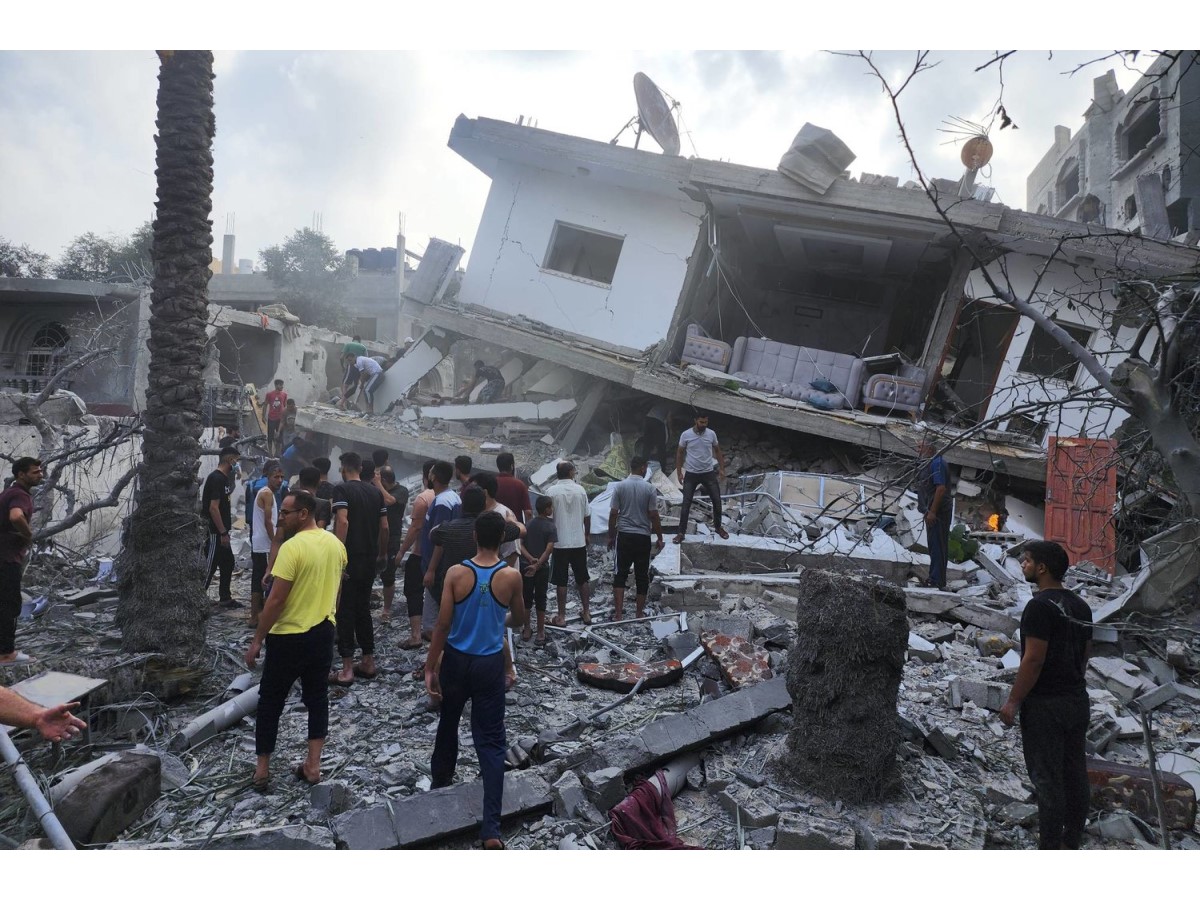
| Four Palestinians were martyred and several others were injured by Israeli attacks on Gaza, increasing the death toll to 74,228 and injuries to 175,188, October 7, 2026. |
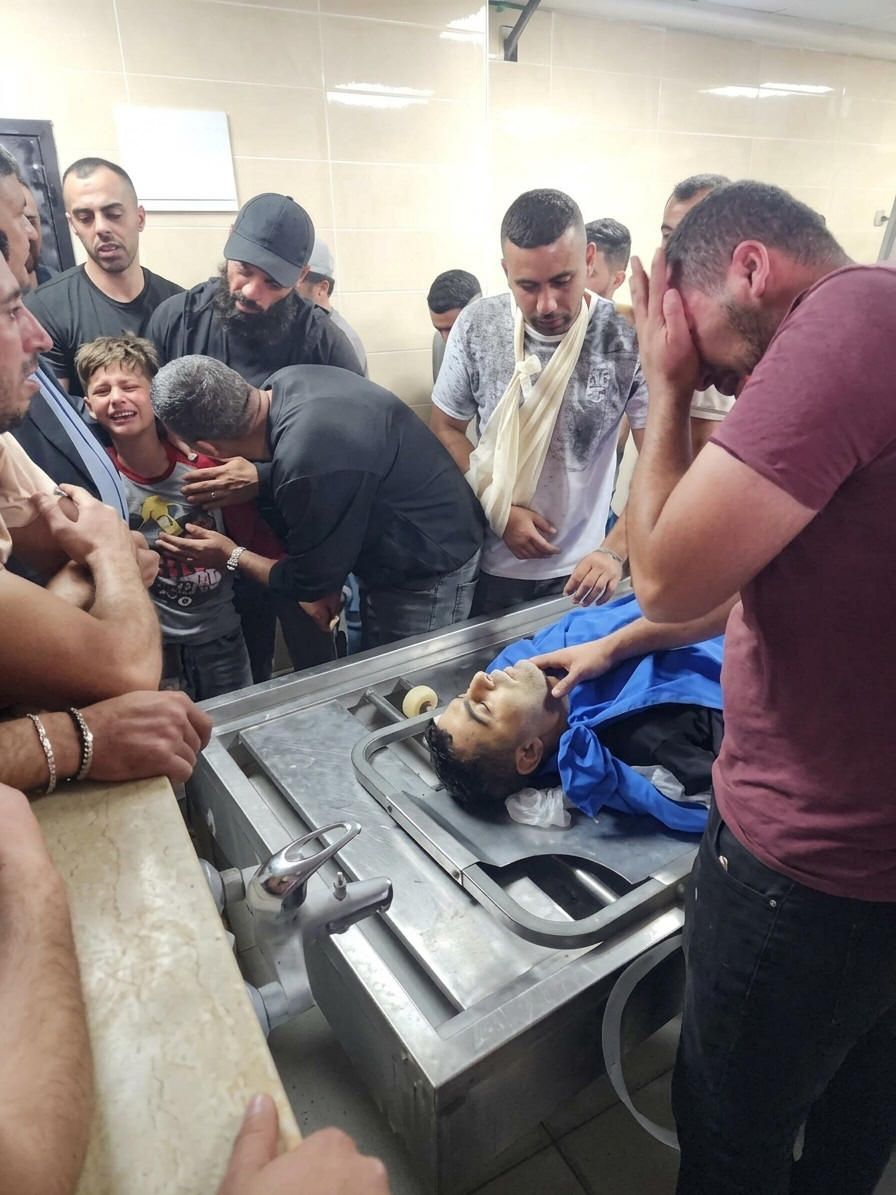
A Palestinian, Ali al-Bazzari, was martyred and 16 others were wounded during an Israeli forces and settler attack on farmers harvesting olives in the West Bank town of Burqa, October 7, 2026. |
|
|
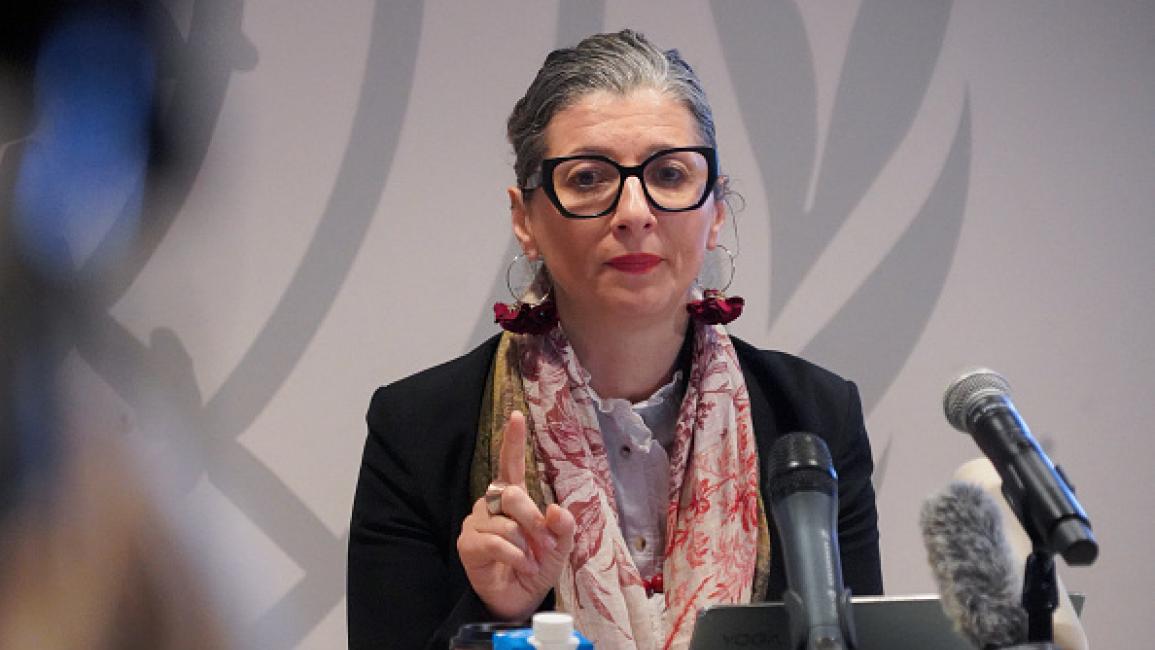 |
| Israeli genocide continues and humanitarian crisis deepens in Gaza, with 74,228 martyrs and 175,188 injuries, one year lateral after the ceasefire, October 7, 2026. | UN Special Rapporteur, Francesca Albanese, said the Israeli genocide in the Gaza Strip has not ended, with continuing hunger and worsening conditions, October 7, 2026. |
|
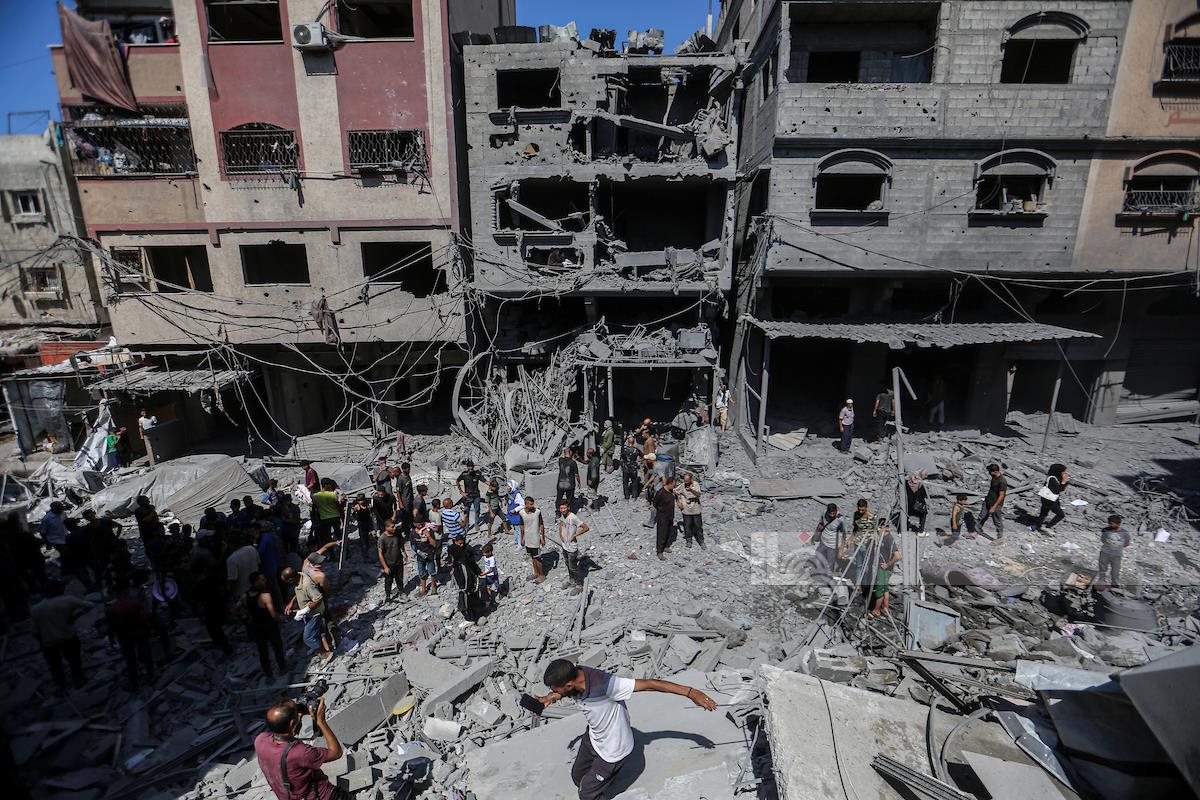
5 Palestinian Killed, Dozens Injured, Increasing the Israeli Genocidal War on Gaza to 74,250 martyrs and 175,278 Injuries, Settler Attacks Continue, October 7, 2026 |
|
***
***
***
The death toll of the Israeli aggression on the Gaza Strip has risen to 74,250 martyrs and 175,278 injured
07 October 2026 1:46 PM
Gaza, Oct. 07 (QNA): The death toll from the Israeli aggression on the Gaza Strip since October 7, 2023, has risen to 74,250 martyrs and 175,278 wounded.
Medical sources reported that during the past 24 hours, the Gaza Strip hospitals received 5 martyrs, one of whom was injured, and 11 were injured.
It explained that the number of martyrs since the ceasefire on October 11, 2025, reached 1467, while the number of injuries reached 5161, in addition to the recovery of the bodies of 836 martyrs.
The Israeli occupation forces continue their aggression against the Gaza Strip, amid the continued deaths and injuries and the deterioration of the humanitarian situation in the Gaza Strip.
***
Four Palestinians killed, others wounded in fresh Israeli attacks on the Gaza Striop
Wednesday 7-October-2026
GAZA, (PIC)
Four Palestinians were martyred and several others were injured in fresh Israeli attacks in the Gaza Strip on Wednesday.
According to the Palestinian Information Center (PIC) reporter, 60-year-old Hisham Abu Mustafa was killed in an Israeli drone strike in Khan Younus refugee camp in southern Gaza.
Another citizen was also killed in an Israeli strike that targeted the Qizan Rashwan area of Khan Younus.
In a separate incident, a 14-year-old child died from a critical head injury sustained after being shot by Israeli forces near the telecommunications area of Khan Younus.
At dawn, civil defense worker Mu'hammed Tammous was killed in an Israeli strike while on his way to evacuate two wounded civilians from a street near Khan Younus Hospital in northern Gaza.
These two civilians were injured in an Israeli strike near the northern gate of Kamal 'Udwan Hospital. Simultaneously, drones dropped stun grenades in the vicinity of the hospital.
A young girl was also wounded by Israeli gunfire in the El-Mawasi area of Khan Younus after military vehicles opened heavy fire towards tents sheltering displaced families.
Meanwhile, Israeli tank fire struck tents sheltering displaced families near the El-Amal neighborhood pond on Street 5, north of Khan Younus, alongside heavy gunfire east of the city.
Additionally, widespread military activity, including shooting incidents, artillery shelling, drone overflights, and demolitions, was reported in other areas of Gaza today.
***
Gaza: Six Palestinians martyred, others injured
Tuesday 6-October-2026
GAZA, (PIC)
Fresh Israeli attacks in the Gaza Strip killed four Palestinian civilians and wounded several others on Tuesday, while two more succumbed to injuries sustained in earlier strikes.
Local sources reported that a citizen was killed and another person was injured in an Israeli drone strike that targeted a bicycle this morning near the Gaza municipality park in Gaza City’s 'Omar El-Mukhtar street.
Another citizen succumbed to wounds he sustained yesterday after an Israeli airstrike targeted the El-Taybeh Towers area in the west of Khan Younus, south of Gaza.
Meanwhile, family sources said that Fat'hi Buraika, a resident of Khan Yunis, was martyred in Egypt after succumbing to injuries sustained in an Israeli attack during the war on Gaza.
Two citizens were also wounded by Israeli gunfire in separate areas of Gaza.
Later, three citizens were martyred and several others were injured in separate attacks in Gaza City and El-Maghazi refugee camp in central Gaza.
Additionally, widespread military activity, including shooting incidents, artillery shelling, drone overflights, and demolitions, was reported in other areas of Gaza today.
***
Albanese: Gaza genocide has not ended, destruction is beyond words
Wednesday 7-October-2026
NEW YORK, (PIC)
UN Special Rapporteur on the situation of human rights in the occupied Palestinian territories Francesca Albanese said Israel’s genocide in the Gaza Strip has not ended, three years after it began, warning that the scale of destruction, continuing hunger and worsening conditions across the occupied Palestinian territories require action that goes beyond diplomatic condemnation.
In an interview with Anadolu Agency, Albanese said the situation in Gaza was “catastrophic” and beyond what words could adequately describe. She warned that the continuing destruction raises serious questions about the international community’s response, particularly that of governments that continue to support Israel.
Albanese said referring to Palestinians as “genocide survivors” could wrongly suggest that the danger had passed, noting that around 70% of the Gaza Strip is under Israeli control while widespread destruction continues.
Her warning coincided with remarks by UN Special Rapporteur on the right to food Sofía Monsalve Suárez, who said humanitarian assistance is still not entering Gaza freely or at the scale required, leaving Palestinians trapped in severe food insecurity.
Gaza between destruction and hunger
Despite the ceasefire announced on October 10, 2025, figures cited in Albanese’s interview indicate that Israeli attacks have continued. Since then, 1,467 Palestinians have been killed and another 5,161 wounded, most of them children and women, while destruction has continued and agreed quantities of food, medicine, medical supplies and shelter materials have not been allowed into Gaza.
Speaking to Al Jazeera on Wednesday, Monsalve Suárez warned that continuing restrictions on humanitarian assistance are worsening Gaza’s humanitarian and food crisis.
She said aid is not reaching Palestinians with the necessary freedom or in sufficient quantities while high levels of food insecurity persist across the Strip.
According to projections from the Integrated Food Security Phase Classification, more than 1.4 million people, representing around 67% of Gaza’s population, are expected to face Crisis-level or worse acute food insecurity between July and December 2026.
Around 212,000 Palestinians are expected to experience Emergency levels of acute food insecurity, reflecting the continuing struggle of families to obtain sufficient food.
The United Nations has documented the severe impact that restrictions on humanitarian assistance, combined with the destruction of Gaza’s agricultural land and food-production systems, have had on the hunger crisis.
Albanese linked what is happening in Gaza to historical conflicts in which Indigenous peoples were subjected to extermination during the colonial era, saying the way history is written will ultimately determine how Gaza is remembered.
She portrayed Gaza as the site of a confrontation between two camps: one seeking to continue genocide, exploitation and the erasure of Palestine, and another seeking to stop it. She placed the United States, Israel and their allies in the first camp, while saying peoples around the world and some governments stand on the other side.
Albanese said the genocide has also transformed public perceptions, stressing that killing children while attempting to portray Israel as the victim contradicts the reality on the ground and that this narrative is increasingly failing to withstand changes in public opinion.
West Bank faces expanding Israeli assaults
Albanese also warned that the situation in the occupied West Bank is deteriorating amid killings, arrests, detentions, demolitions and restrictions imposed on Palestinian communities.
Since the beginning of the genocidal war on Gaza, attacks by Israeli forces and settlers have intensified across the occupied West Bank and East Jerusalem. According to figures cited in the report, 1,210 Palestinians have been killed, 13,350 wounded and 26,000 arrested.
The violations include the demolition of homes and other structures, the burning of mosques and vehicles, the bulldozing of agricultural land, restrictions preventing farmers from reaching their land, displacement and continued settlement expansion.
Albanese welcomed moves by 12 Western countries to impose restrictions on trade with Israeli settlements in the occupied Palestinian territories but questioned how broadly those measures would be applied.
She said the British measures represented a long-overdue shift in policy but maintained that the approach remained too heavily focused on settlements, questioning whether it would also encompass occupied East Jerusalem.
Criticism of US policy
Addressing European-US relations, Albanese said the war on Gaza had exposed the cost of Europe’s dependence on Washington, maintaining that the relationship does not always function as an alliance between equal partners.
She urged Middle Eastern governments to take seriously links between US foreign policy and visions associated with a “Greater Israel” project, warning that, in her view, the project is not merely a future concept and that there are signs of its implementation.
Albanese said some supporters of this vision invoke biblical assertions extending to Jordan, Syria and Iraq, urging governments across the region to pay attention to its potential consequences.
US sanctions against Albanese
Albanese also discussed the US sanctions imposed on her in July 2025 following her repeated criticism of Israel and her reports examining companies she said were contributing to continuing Israeli activities in the occupied Palestinian territories.
She said the effects of the sanctions extend beyond the United States, restricting her access to banking and financial services and affecting her ability to work, travel and cover everyday expenses.
Albanese said she can no longer use her credit cards, has lost access to health insurance and remains barred from entering the United States. She said the restrictions have also affected her ability to carry out her UN mandate.
Her inability to conduct financial transactions or receive payment for other work has left her financially dependent on members of her family, she said, noting that her work for the United Nations is unpaid.
Three years into the genocide, Albanese’s warning and the latest UN food-security assessments point to a crisis that has not ended with the ceasefire. Palestinians continue to be killed and wounded, large parts of Gaza remain devastated, humanitarian assistance remains restricted, and more than 1.4 million people face severe levels of acute food insecurity.
For Gaza, the destruction is therefore not only measured in buildings reduced to rubble. It is also reflected in families struggling to obtain food, medicine and shelter while the conditions necessary for meaningful recovery remain out of reach.
***
***Killing, Injuring, and Abduction of Palestinians in the West Bank by Israeli Occupation Regime Forces
***
Palestinian killed, 16 injured as army-backed settlers attack farmers in W. Bank
Wednesday 7-October-2026
NABLUS, (PIC)
A Palestinian was martyred and 16 others were wounded Wednesday when Israeli forces and settlers launched a joint attack on farmers harvesting olives in the town of Burqa, north of Nablus in the occupied West Bank.
According to the Palestinian health ministry, Ali al-Bazzari, 44, succumbed to wounds he sustained during the attack that was carried out by Israeli soldiers and settlers on Burqa farmers.
The Red Crescent said its ambulance crews provided medical assistance for eight people injured in the attack, including three who were wounded by live fire.
One of the gunshot victims was reported to be in extremely critical condition.
According to local sources, a large group of extremist Jewish settlers, accompanied by Israeli forces, attacked farmers from the town of Burqa while they were harvesting olives in their grove in the Ramin Plain.
Several farmers sustained injuries after those settlers physically attacked them and fired live bullets at them.
The settlers also blocked paramedics and threatened to open fire on anyone approaching, delaying emergency medical evacuation for the victims.
Meanwhile, Israeli soldiers assaulted paramedics and local volunteers as they tried to reach the wounded and evacuate them from the area.
The soldiers also detained three paramedics and one volunteer and confiscated ambulance keys before later releasing them and ordering them to leave the area.
***
IOFs raids homes, kidnap Palestinians in the West Bank
Wednesday 7-October-2026
WEST BANK, (PIC)
The Israeli occupation forces (IOFs) stormed different areas of the West Bank at dawn Wednesday, raiding homes and kidnaping a number of Palestinian citizens.
In Nablus, Israeli troops spread in different neighborhoods of the city and carried out raids on homes and arrests.
The IOFs also stormed the village of 'Awarta, south of Nablus, and raided a house.
In El-Khaleel (Hebron), violent clashes broke out between local youths and Israeli forces near the town of Bait Ummar after the illegal Israeli extremist Jewish settlers tried to attack the area.
The IOFs also carried out raids in other parts of the West Bank. Arrests were reported in some areas.
Meanwhile, in Masafir Yatta, south of al-Khalil, settlers escorted by soldiers placed a Palestinian home under siege in the Wadi El-Rakheem area. Reports indicate that the siege is still ongoing.
Another group of settlers uprooted olive trees in the plains of Turmus 'Ayya, north of Ramallah, while others placed Israeli flags at the entrance of El-Lubban El-Sharqiya, south of Nablus.
***
***
Aggression and Attacks by Illegal Israeli Settlers and Soldiers
***
Three Palestinians injured in settler attack in southern Nablus
Tuesday 6-October-2026
NABLUS, (PIC)
The illegal Israeli extremist Jewish settlers shot and injured a young Palestinian and savagely assaulted three others in the town of 'Aqraba, south of Nablus in the occupied West Bank.
The Red Crescent in Nablus said its paramedics treated a 23-year-old man who was shot in the foot by settlers in 'Aqraba. He was transferred to a hospital for medical assistance.
Three other Palestinians were also severely beaten, including Agence France-Presse (AFP) photojournalist Ja'far Ishtayyeh.
***
Dozens of of the illegal Israeli settlers defile Al-Aqsa Mosque
Tuesday 6-October-2026
Al-Quds (occupied Jerusalem), (PIC)
Hordes of extremist Jewish settlers escorted by police officers desecrated the Aqsa Mosque’s courtyards on Tuesday morning and later in the afternoon, amid tight restrictions on the entry of Muslim worshipers to the holy site.
According to local sources, at least 130 settlers entered the Mosque in different groups through its El-Maghariba Gate and toured its courtyards today.
During their tours at the Islamic holy site, the settlers received lectures from rabbis about the alleged temple mount and a number of them provocatively performed Talmudic prayers.
Meanwhile, the Israeli occupation police imposed movement and entry restrictions on Muslim worshipers at the Aqsa Mosque’s entrances and gates and prevented many of them from entering the holy site.
***
***
News Related to the Israeli Genocidal War on the Palestinian People
***
Na'eem: The Board of Peace statement “racist, biased and unacceptable”
Wednesday 7-October-2026
GAZA, (PIC)
Senior Hamas official Basim Na'eem has described the statement issued on Wednesday by the US-led Board of Peace on the third anniversary of “Operation Al-Aqsa Flood” as “racist, biased, and unacceptable in both form and substance.”
In a statement released on Wednesday, Na'eem said that the Board’s statement was unworthy of an entity meant to uphold international law.
Na'eem added that the statement adopts a language that cannot serve as a foundation for peace, stability, and prosperity in the region, criticizing the Board’s clear bias towards the Israeli narrative and its disregard for the Palestinian people’s rights and their prolonged suffering.
The Board of Peace’s statement, issued on the third anniversary of the events of October 7, 2023, focused primarily on commemorating Israeli victims and captives, labeling Palestinian resistance fighters as “terrorists.”
The statement asserted that Israel’s security must form the foundation of any peace process to prevent a recurrence of October 7, while ignoring any mention of the Palestinian people’s rights or suffering.
***
'Hamas, Islamic Jihad discuss Gaza, West Bank developments and Palestinian national dialogue in Cairo
Wednesday 7-October-2026
CAIRO, (PIC)
'Hamas and Palestinian Islamic Jihad held talks in the Egyptian capital, Cairo, on Wednesday to discuss developments in the Gaza Strip and the occupied West Bank, as well as the latest political developments and efforts to advance Palestinian national dialogue.
The meeting brought together a Hamas delegation headed by Zaher Jabarin and a Palestinian Islamic Jihad delegation led by the movement’s Secretary-General Ziad al-Nakhalah.
The two delegations discussed political and field developments related to the Palestinian cause, as well as ways to support the steadfastness of the Palestinian people amid the current challenges.
The talks also addressed the Israeli escalation in the occupied West Bank, including settlement expansion, settler attacks, Israeli raids and continuing violations against Aqsa Mosque.
The two movements also discussed ways to advance Palestinian national dialogue and narrow differences among Palestinian factions and political forces in a manner that strengthens Palestinian unity and serves national interests, alongside several other issues related to the current political stage.
Egyptian efforts to advance national dialogue
A 'Hamas delegation arrived in Cairo earlier Wednesday as part of continuing consultations over initiatives aimed at advancing internal Palestinian national dialogue.
The visit coincides with consultations hosted by Cairo in preparation for a comprehensive Palestinian dialogue, following visits to Egypt by Jibril Rajoub and Mohammad Shtayyeh for discussions with Egyptian officials and Palestinian factions ahead of the proposed talks.
The Egyptian efforts build on previous rounds of Palestinian dialogue hosted in Cairo, including a meeting held on January 14, 2026, with the participation of Palestinian factions and political forces to discuss issues related to the Gaza ceasefire.
Talks over a national electoral list
Political discussions in Cairo are also examining the possibility of forming a broad national list to contest the upcoming Palestinian legislative elections, potentially bringing together parties with different political and organizational backgrounds in an attempt to move beyond traditional factional divisions.
Reports indicate that Palestinian political forces have reached a preliminary understanding to discuss a potential electoral list that could include Hamas and Palestinian Islamic Jihad, alongside the Fatah Democratic Reform Current led by Mohammed Dahlan, Nasser al-Qudwa’s current and the Al-Nasser Salah al-Din Brigades.
Palestinian President Mahmoud Abbas issued a presidential decree in July setting Saturday, November 28, 2026, as the date for Palestinian Legislative Council elections.
The decree called on Palestinians in Jerusalem, the occupied West Bank and the Gaza Strip to participate in free and direct legislative elections to choose members of the Palestinian Legislative Council on the scheduled date.
***
Ceasefire one year on: Genocide continues and humanitarian crisis deepens
Wednesday 7-October-2026
GAZA, (PIC)
A year after the ceasefire agreement came into effect in the Gaza Strip, a new tally by the Palestinian Center for Human Rights reveals that the relative calm imposed by the agreement did not put an end to Israeli violations or to the worsening humanitarian crisis, but rather attacks continued at a less intense pace, while basic life necessities remained out of reach for broad sectors of the Strip’s population.
In a report released by the Palestinian Center for Human Rights on 7 October 2026, coinciding with the passage of almost year since the ceasefire, it confirmed that the agreement reduced the frequency of attacks, but did not stop what it described as acts falling under the acts specified in Article Two of the Convention on the Prevention and Punishment of the Crime of Genocide.
During a year of the ceasefire, the report documented the martyrdom of at least 1,445 Palestinians and the injury of 5,072 others, while the martyrs tally up to 3 October included 312 children and 139 women.
It pointed out that the tally does not include all those missing under the rubble, nor deaths resulting from deprivation of basic necessities, noting that the tally of victims since the start of the Israeli attack on the Gaza Strip in October 2023 reached, according to the Ministry of Health, 74,228 martyrs and 175,188 injured.
The report explained that the patterns of killing that prevailed during military operations continued during the ceasefire period, including bombarding homes over the heads of their occupants, targeting civilian gatherings, and killing displaced persons inside tents and shelter centers, as well as killings near what is known as the “Yellow Line” and restricted access areas.
It also documented the targeting of members of the civilian police and those in charge of maintaining order, alongside the killing of civilians while attempting to secure food and livelihoods.
Injuries without recovery
The effects of the war did not stop at the numbers of the dead, as the report confirmed the continuation of physical and psychological harm to the population, pointing to the recording of about 2,500 new injuries requiring rehabilitation during a year of the ceasefire.
Thus, the cumulative tally since October 2023 rose to about 43,000 injuries likely to alter the course of the lives of those affected, including cases of amputation, spinal cord injuries, brain injuries, and severe burns.
Many of the injured face difficult conditions after leaving hospitals, returning to tents or damaged buildings that do not provide an appropriate environment for recovery, amid a shortage of rehabilitation services, artificial limbs, and assistive devices.
Gaza has not entered “post-trauma”
The report considers that the population of the Gaza Strip has not actually entered a “post-trauma” phase, because the sources of trauma themselves remain standing.
Thousands of families are still waiting to know the fate of their missing sons and daughters, or to retrieve bodies from under the rubble, or to obtain approvals for their patients to travel, while other families await an opportunity to return to their homes or restore their source of income.
The report noted an assessment published in April 2026 showing moderate or severe signs of anxiety, fear, and loss of hope for the future among more than 60% of youth.
Sleep disturbances, fear, and social withdrawal also continue among children, coinciding with the exhaustion of health workers who provide treatment to others while they themselves face loss and displacement.
60,000 Palestinian children lost one or both parents
The report’s figures reveal the scale of the disaster that befell family structures in Gaza, with approximately 60,000 children who lost one or both of their parents, and more than 26,000 widows.
The loss of the breadwinner leaves surviving women with additional burdens related to care and securing basic needs, amid the absence of income, housing, and services, while children lose the sources of protection and stability they need.
According to the report, the continuation of these conditions throughout a year of the ceasefire kept grief, fear, and helplessness a part of daily life, and undermined the population’s ability to imagine a future where they can restore their lives.
Medical treatment, housing, and food: Restricted necessities
On the health front, the report showed that Israeli restrictions kept medical treatment, housing, food, and other requirements for survival out of reach for broad sectors of the population.
It pointed out that about 47% of essential medicines have run out, while the number of patients and wounded requiring treatment outside the Strip exceeded 20,000.
During the years of the war, 1,628 patients died while waiting for evacuation, while cancer, kidney, heart, and diabetes patients faced intermittent treatment dependent on the availability of medicine, fuel, and consumables, alongside Israeli approvals for patient travel.
As for housing, about 94% of the Strip’s population needed shelter assistance and non-food items in June 2026.
At the same time, about two-thirds of the Gaza Strip’s area remained under Israeli military control, confining the majority of the population to a limited geographic patch, where hundreds of thousands live in dilapidated tents or damaged and cracked buildings, amidst risks threatening their safety.
Aid: Gap between the agreement and reality
The report provides a reading of the movement of trucks entering the Strip during the period between 13 October 2025 and 16 August 2026, showing that the daily average did not exceed about 211 trucks, compared to an announced rate of 600 trucks within the agreement’s arrangements.
The daily average of aid trucks also decreased by about 41% when comparing the beginning of the monitored period with its end, coinciding with a noticeable rise in private sector trucks.
Families remained largely dependent on aid and community kitchens, at a time when bringing in fuel, raw materials, power equipment, and repair gear remained restricted, preventing the restoration of local capacity to produce food and provide job opportunities.
Exhausted economy and high unemployment
The economy was not immune to the effects of war, as the report showed a contraction of the Gaza Strip’s economy by about 5% in the first quarter of 2026 compared to the previous quarter, after the unemployment rate reached about 78% during the year 2025.
Factories, workshops, farms, and fishing boats remained unable to resume their activity due to destruction, access restrictions, and lack of equipment and production inputs.
Consequently, the availability of some goods in the markets was not enough to pull families out of their crisis, as loss of income drove families to reduce meals, go into debt, sell their remaining belongings, and even postpone medical treatment to cover daily needs.
Water, sanitation, and education: Endless crises
Restrictions extended to water and sanitation networks, waste management, and rubble removal, keeping the population near sources of pollution, disease, and war remnants, amid the impossibility of repairing services and operating them regularly.
In education, Gaza’s children were deprived of formal education for the fourth consecutive academic year, after large numbers of schools were destroyed or converted into shelter centers.
The educational process shifted to temporary spaces lacking the requirements for safe and appropriate education, at a time when the education crisis overlaps with hunger, displacement, injuries, and loss of income sources, increasing the risks of school dropout and involvement in the labor market, including child labor.
Difficulties also redouble for children with disabilities, given their limited access to education, rehabilitation services, and necessary support.
Call for international action
At the conclusion of its report, the Palestinian Center for Human Rights called on the international community to act to stop acts of genocide and protect the population of the Gaza Strip, demanding that states parties to the Convention on the Prevention and Punishment of the Crime of Genocide stop supplying Israel with weapons and ammunition, suspend any cooperation that could contribute to the continuation of crimes, and ensure compliance with provisional measures issued by the International Court of Justice.
It also demanded lifting the blockade, opening border crossings, securing the population’s needs, facilitating the evacuation of the sick and wounded, and bringing in materials and equipment necessary to repair housing and facilities, and restore services and livelihoods.
It further stressed the necessity of stopping displacement plans and the withdrawal of Israeli forces to allow the displaced a voluntary, safe, and dignified return to their areas, alongside supporting the prosecution of those responsible for crimes before the International Criminal Court and competent national courts, and ensuring redress for Palestinian victims.
Ceasefire year: No end to the crisis
According to what the report documents, the passage of a year since the ceasefire did not turn into a real beginning for a recovery phase in the Gaza Strip; killings continued, injuries accumulated, patients remained waiting for treatment, and hundreds of thousands remained without safe housing, while restrictions continued to affect food, water, health, education, and work.
The tally reveals that the ceasefire, despite reducing the level of military operations, did not end the conditions that made daily life in Gaza hostage to the humanitarian crisis, nor did it open the way for real recovery or a stable return to normal life.
***
===============================================================================================================================
بِسْمِ اللهِ الرَّحْمَـٰنِ الرَّحِيمِ
"مِنْ أَجْلِ ذَٰلِكَ كَتَبْنَا عَلَىٰ بَنِي إِسْرَائِيلَ أَنَّهُ مَنْ قَتَلَ نَفْسًا بِغَيْرِ نَفْسٍ أَوْ فَسَادٍ فِي الْأَرْضِ فَكَأَنَّمَا قَتَلَ النَّاسَ جَمِيعًا" (الْمَائِدَةُ ، 5: 32).
"وَمَنْ يَقْتُلْ مُؤْمِنًا مُّتَعَمِّدًا فَجَزَاؤُهُ جَهَنَّمُ خَالِدًا فِيهَا وَغَضِبَ اللَّهُ عَلَيْهِ وَلَعَنَهُ وَأَعَدَّ لَهُ عَذَابًا عَظِيمًا" (النِّسَاءُ ، 4: 93).
"إِنْ أَحْسَنتُمْ أَحْسَنتُمْ لِأَنفُسِكُمْ ۖ وَإِنْ أَسَأْتُمْ فَلَهَا ۚ فَإِذَا جَاءَ وَعْدُ الْآخِرَةِ لِيَسُوءُوا وُجُوهَكُمْ وَلِيَدْخُلُوا الْمَسْجِدَ كَمَا دَخَلُوهُ أَوَّلَ مَرَّةٍ وَلِيُتَبِّرُوا مَا عَلَوْا تَتْبِيراً (الإسْرَاءُ ، 17: 7).
In the Name of Allah, the Beneficent, the Merciful
"Because of that, We decreed upon the Children of Israel that whoever kills a soul, unless for a soul, or for corruption in the land, it is as if he had killed humankind entirely" (The Holy Quran, Al-Ma-ida, 5: 32).
"And whoever kills a believer intentionally, his recompense is Hell, wherein he will abide eternally, and Allah has become angry with him, and has cursed him, and has prepared for him a great torment" (Al-Nisa, 4: 93).
"If you do good, you do good for yourselves; and if you do evil, (you do it) to yourselves. Then, when the latter (final) promise comes, they (your enemies) will sadden your faces, and enter the Masjid (in Jerusalem), as they entered it the first time, and will destroy what they had taken over with (total) destruction (Al-Isra, 17: 7).
***
While brutal force has been used to create Zionist Israel and sustain it thus far, Zionist claims to Palestine are false. Actually, from the five thousand years of known written human history, there has been a continuous Palestinian-Canaanite presence in the Holy Land. Despite the Zionist false claims, the ancient Israelites ruled part of the land for only 85 years (during the reign of Prophets David and Solomon , peace be upon them, and Solomon's son).
After that, the Egyptians conquered Palestine-Canaan in 925 BC, followed by Assyrians, Babylonians, Persians, Greeks, and Romans, before the Arab Muslim rule, starting from 636 AD.
By the Time Jesus, peace be upon him, started his mission, the three population groups of Canaanites, Palestinians, and Israelites were melted together in religion and language. Most of them became Christians when Constantine converted in 313 AD. Then, most of them became Muslims in the 7th and 8th centuries AD.
So, Palestinian Muslims, Christians, and Jews are the ones who have the right to claim descent from ancient Israelites, Palestinians, and Canaanites, not Zionists from other continents.
No matter what the Zionists and their supporters do, they cannot change the will of God, Who promised the Holy Land to Abraham and his descendants, basically the Palestinian Muslims and Christians.
No matter how much persecution and aggression the Zionists and their supporters inflict upon the Palestinian people, they will never be able to force them out of the Holy Land, which Allah, praise to Him, promised for them, and kept His promise ever since.
This is a necessary brief background to understand the US-Backed Zionist Israeli continuous wars against the Arab nation generally, and the Palestinian people in particular, which included the wars of 1948, 1956, 1967, 1978, 1982, the brutal crushing of the two Uprisings (1987-1993 and 2000-2004), 2009, 2012, 2014, 2021, and the current genocidal war on Gaza (Since October 7, 2023), which has culminated a blockade of Gaza since 2007. In addition, the Israeli occupation and apartheid regime launched so many covert operations, raids, and air strikes on many Arab states since 1948.
The following news stories are just examples, not a systematic record, of the Israeli occupation government abuse, mistreatment, and violations of Palestinian human rights, on daily basis.
http://english.wafa.ps/, https://english.palinfo.com/, https://imemc.org/, https://paltoday.ps/ar/
***
***
Editorial
Notes about terms
& names of
people and places:
1. Names of people and places have been standardized to
match standard Arabic grammatical rules.
2. Underlined
letters and letters preceded by an apostrophe are
references to Arabic letter sounds, which does not exist in the English
alphabet.
3. The English letter i is
equivalent to the Arabic short vowel known as kasra,
as in Ibraheem
and Qasim
as well as in the English words sit and bit. So, it is incorrect to use
it as a long vowel for such Arabic names as Jameel and Jibreel.
4. The English letter e is
equivalent to the Arabi short vowel known as fat'ha,
as in A'hmed
and Mu'hammed.
5. It is more accurate to refer to the
land-grabbing Israelis,
who establish illegal settlements in the Palestinian territory of the
West Bank, as illegal
Israeli settlers, than referring to them as colonists.
The term colony is
a reference to a large entity or a country, such as American states before
independence. It was also a reference to Egypt, and India,
when they were British colonies.
In addition, the term "colony"
represents a positive
nostalgic theme, in the minds of native speakers of
English, particularly in America and Britain.
6. It is more
accurate to use the verbs "abduct"
and "kidnap"
than the verbs "detain"
and "arrest,"
in reference to taking Palestinian citizens by force to prisons and
interrogation centers, by Israeli occupation regime soldiers. This is
because the presence of the Israeli occupation regime forces is illegal
in the Palestinian territories, and they have no jurisdiction over the
Palestinian people.
Click here for more about using the apostrophe and the underlining of
letters in the transliteration of Arabic names.
***
Names of some of the Palestinian cities, as pronounced in standard Arabic, and their foreign names in parentheses:
Al-Khaleel (Hebron)
Al-Nusayrat
Al-Quds (occupied Jerusalem)
Aree'ha (Jericho)
Al-Zaytoun (al-Zeitoun)
Bait (Beit)
Bait La'hm (Bethlehem)
Dair El-Bala'h
Jineen (Jenin)
Khan Younus (Khan Younis)
***
Person's names as pronounced in standard Arabic:
A'hmed, 'Hasan, Mu'hammed, Younus, Yousuf,
'Hasan Mulai'hat,
***
Conflict terminology
The Israeli occupation apartheid regime (the Israeli government)
Illegal Israeli settlers (instead of settlers, colonists)
A group of the illegal Israeli settlers
***
Fair Use Notice
This site contains copyrighted material the
use of which has not always been specifically authorized by the copyright
owner. We are making such material available in our efforts to advance
understanding of environmental, political, human rights, economic,
democracy, scientific, and social justice issues, etc. We believe this
constitutes a 'fair use' of any such copyrighted material as provided for
in section 107 of the US Copyright Law. In accordance with Title 17 U.S.C.
Section 107, the material on this site is
distributed without profit to those
who have expressed a prior interest in receiving the included information
for research and educational purposes. For more information go to: http://www.law.cornell.edu/uscode/17/107.shtml.
If you wish to use copyrighted material from this site for purposes of
your own that go beyond 'fair use', you must obtain permission from the
copyright owner./font>
|
|||||||||||||||||||