www.aljazeerah.info
2026 News
Archives
Mission & Name
Conflict Terminology
Editorials
Gaza Holocaust
Gulf War
Isdood
Islam
News
News Photos
Opinion Editorials
US Foreign Policy (Dr. El-Najjar's Articles)
www.aljazeerah.info
|
Editorial Note: The following news reports are summaries from original sources. They may also include corrections of Arabic names and political terminology. Comments are in parentheses. |
***
The Death Toll from the Israeli War on Lebanon Reached 4,175 in Addition to 12,164 Injuries, Before the Recent Ceasefire
June 22, 2026
***
 |
 |
|
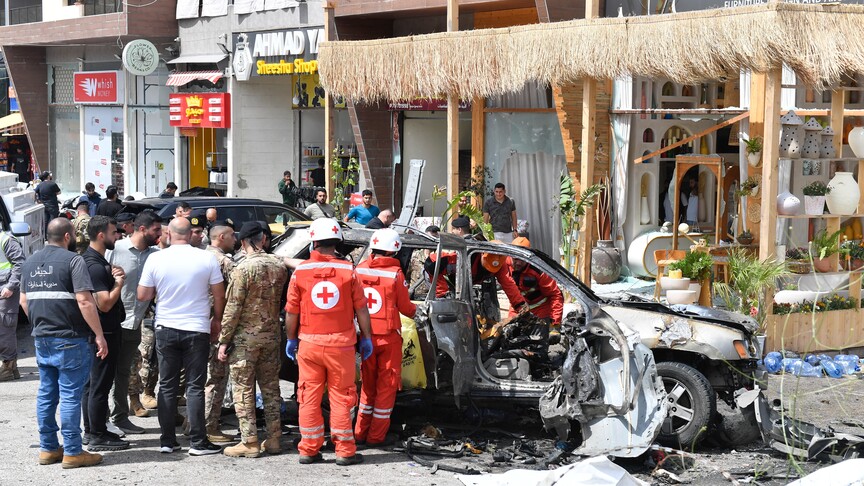
A Lebanese vehicle was destroyed by an Israeli air strike, file June 22, 2026. |
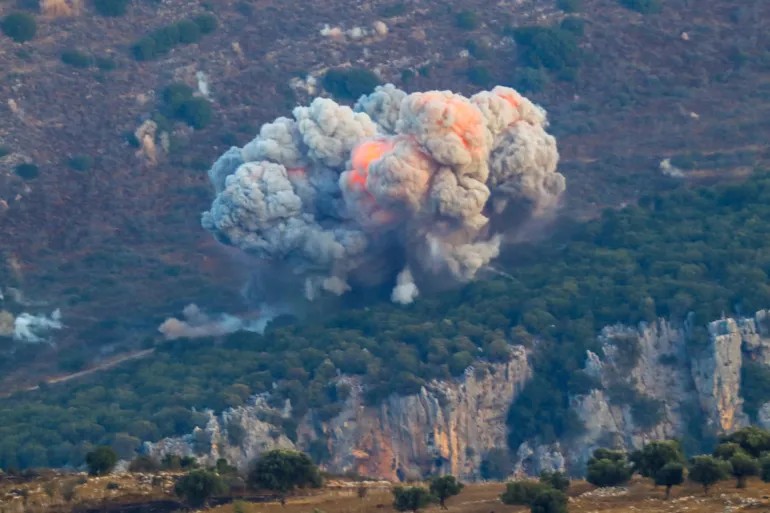
Israeli air strike on a South Lebanon town, file, June 22, 2026 pic |
 |
 |
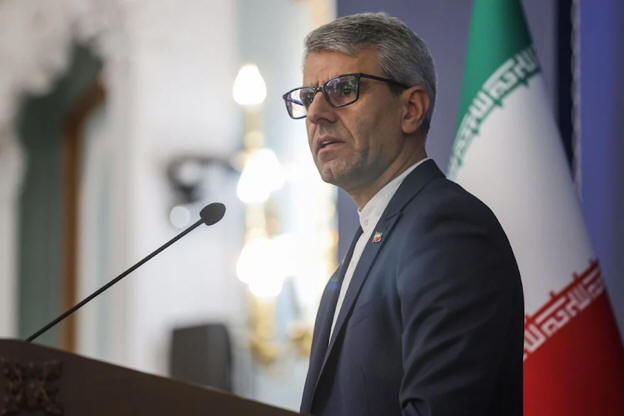
| Iranian Foreign Ministry spokesperson, Isma'eel Baqaei, emphasized the that any step Iran takes must be matched by the US undertakings, June 22, 2026. | Iranian Foreign Minister Abbas Araqchi said significant progress has been made toward ending the war on Lebanon, June 22, 2026. |
The Death Toll from the Israeli War on Lebanon Reached 4,175 in Addition to 12,164 Injuries, Before the Recent Ceasefire, June 22, 2026 |
|
***
The death toll of the aggression against Lebanon rises to 4175 martyrs
Monday 22-June-2026
Palestinian Media Center
The Lebanese Ministry of Health announced on Monday evening that the death toll from the Israeli aggression on Lebanon has risen to 4,175 martyrs and 12,164 injured, since March 2.
In its daily report, the ministry explained that the past 24 hours witnessed the registration of 49 new martyrs, in light of the ongoing operations to retrieve victims from the affected areas.
For its part, the Lebanese Civil Defense reported the recovery of the bodies of 13 martyrs from under the rubble in the areas of El-Nabatiyeh and Marji'youn in the south of the country, which reflects the extent of the destruction left by the Israeli attacks in those areas.
These developments come in conjunction with the entry into force of the ceasefire agreement between Hezbollah and Israel, based on the memorandum of understanding reached between Iran and the United States, in a step that is expected to contribute to de-escalating the military and opening the way for addressing the humanitarian repercussions resulting from the past months of confrontations.
اقرأ المزيد عبر المركز الفلسطيني للإعلام: https://palinfo.com/news/2026/06/22/1112124/
***
'Israel' fully destroyed 11,000 buildings in South Lebanon: UN report
Al-Mayadeen, June 23, 2026
A UNDP and Lebanese research assessment estimates extensive structural damage in southern Lebanon due to the Israeli aggression.
Direct damage to buildings in southern Lebanon during the Israeli aggression is estimated at around $1.38 billion, a UN agency and a Lebanese research center revealed on Monday.
“In total, 11,095 buildings were completely destroyed, impacting 17,891 housing units, while 2,242 buildings sustained partial damage... and 9,311 buildings incurred minor damage,” the United Nations Development Program (UNDP) and Lebanon’s government-linked National Council for Scientific Research (CNRS) said.
The findings were drawn from a “rapid building-level damage assessment” in southern Lebanon, which compared satellite imagery from late April, nearly two months into the war, with imagery from October 2025. The assessment does not include damage from the most recent weeks of the ongoing Israeli aggression.
“Findings indicate that direct damage to buildings in south Lebanon is estimated at $1.38 billion,” the statement added.
Satellite images reveal scale of Israeli destruction in South Lebanon
Israeli warplanes have carried out relentless airstrikes across southern Lebanon while ground forces have infiltrated territory near the border, with bulldozers tearing down buildings and demolitions razing whole villages, increasingly following the Gaza playbook.
A CNN review of satellite imagery back in April revealed the scale of the destruction. Hundreds of buildings, most of which appear to be homes, have been either completely flattened or rendered uninhabitable. Satellite imagery and videos from after the April 16 "ceasefire" announcement show demolitions continuing, with excavators and armored vehicles clearly visible.
Rights groups have warned that "Israel's" aggression includes heavy strikes on critical infrastructure and healthcare facilities, the targeting of journalists, and psychological warfare against the Lebanese population.
Israeli officials outline long-term occupation plans
Israeli officials have outlined plans for a long-term "security zone" inside the Lebanese border. Prime Minister Benjamin Netanyahu has said his forces will expand their positions 10 kilometers deep inside Lebanese territory.
War Minister Israel Katz vowed to destroy all homes in villages near the border. After the ceasefire was announced last week, Katz doubled down, saying the destruction of houses in Lebanese villages will continue.
Israeli Finance Minister Bezalel Smotrich has called for the "annexation" of territory from Lebanon up to the Litani River, saying "Israel" should seize vast swathes of land in southern Lebanon.
Senior Israeli officials even said that "Israel" will impose what it calls a “yellow line” in Lebanon, barring residents from returning to areas occupied by the Israeli military, which is a tactic lifted straight from "Israel’s" renewed occupation of Gaza’s territory.
Much of Lebanon's south has been left damaged and depopulated after more than two years of Israeli aggression. Nearly 1.3 million Lebanese have been displaced, according to the International Rescue Committee.
Lebanese authorities reported that the Israeli aggression since March 2 has killed more than 4,100 people and forcibly displaced more than one million others.
***
Tasnim: Iran, US, Lebanon to form unit to monitor MoU clause
Al-Mayadeen, Tasnim, June 22, 2026
A source close to Iran's negotiating team tells Tasnim that Tehran, Washington, and Beirut will form a unit to monitor a key clause of their understanding, with Iran's commitments reversible if it is not implemented.
Iran's negotiating team pushed in Switzerland to activate Article 13 of the understanding reached with Washington, with priority given to its Lebanon-related clause, a source close to the talks told Tasnim News Agency, warning that Tehran will treat its commitments as reversible if the article is not implemented.
A joint conflict-resolution unit will be established with the participation of Iran, the United States, and Lebanon to monitor implementation of the Lebanon-related clause of the understanding, Tasnim reported, citing the source.
The source explained that Iran is considered part of the security arrangements in Lebanon, having helped establish the arrangements tied to that clause of the Lebanese file.
Hormuz reopening linked to sanctions relief
The source further revealed that Iran does not equate its closure of the Strait of Hormuz with the lifting of the US blockade. Iran has in fact linked its reopening of the Strait to the implementation of the remaining clauses of the understanding, including the Lebanon file, oil sanctions waivers, and the release of frozen funds, according to the source.
The source stressed that if Article 13 is not implemented, with priority given to its clause on Lebanon, Iran will consider its commitments reversible.
The main Iranian delegation's negotiations in Switzerland have concluded, Tasnim said, though experts remain in the country to follow up on implementation of the understanding.
Furthermore, no negotiations on the nuclear file have taken place, and Iran is awaiting implementation of Article 13 before proceeding further.
The source also told Tasnim that they expect a statement on oil sanctions waivers to be published on the US Treasury Department's website.
What Article 13 entails
Article 13 of the memorandum of understanding includes a ceasefire on all fronts, particularly in Lebanon, the start of lifting the naval blockade, the release of frozen Iranian assets, and relief from sanctions on oil, petrochemicals, and related products.
Iran will not move into the final phase of talks unless all of these conditions are fulfilled, the source affirmed.
Iranian Foreign Ministry spokesperson Esmail Baghaei, a member of Iran's negotiating delegation, told IRNA after the first round of Iran-US talks in Switzerland concluded that the two mediators issued a joint statement drafted in consultation with both delegations, adding that its contents carry particular weight for the next phase of the process.
One of the statement's main provisions is the creation of a high-level committee to oversee implementation of the memorandum of understanding, Baghaei said, alongside a separate mechanism specifically tasked with monitoring implementation of the memorandum's first clause, which concerns Lebanon.
According to Baghaei, the formation of these groups, as well as the start of any negotiations toward a final agreement, depends on the prior implementation of Articles 1, 4, 5, 10, and 11 of the memorandum, and all of these mechanisms must be structured so that the other side cannot evade its commitments.
***
Baqaei: Panel to oversee Lebanon, oil, sanctions provisions
Al-Mayadeen, June 22, 2026
Baqaei stresses that the governing principle in the current talks is commitment for commitment, meaning any step Iran takes or plans to take must be matched by the other side's implementation of its own undertakings.
Iranian Foreign Ministry spokesperson Isma'eel Baqaei, a member of Iran's negotiating delegation, told IRNA after the first round of Iran-US talks in Switzerland concluded, that the two mediators issued a joint statement drafted in consultation with both delegations, and that its contents carry particular weight for the next phase of the process.
Baqaeisaid one of the statement's main provisions is the creation of a high-level committee to oversee implementation of the memorandum of understanding, alongside a separate mechanism specifically tasked with monitoring implementation of the memorandum's first clause, which concerns Lebanon.
He said the statement also provides for the formation of technical working groups to implement the memorandum under Clause 12, with the technical delegations from both sides set to resume work today.
According to Baqaei, the formation of these groups, as well as the start of any negotiations toward a final agreement, depends on prior implementation of Articles 1, 4, 5, 10, and 11 of the memorandum, and all of these mechanisms must be structured so that the other side cannot evade its commitments.
On the economic track, Baqaei said detailed discussions covered the sale of Iranian oil, the licenses required for oil exports, and the unfreezing of Iranian assets, and that the necessary measures have been taken on these points, with implementation expected soon.
On the quadrilateral meeting, nuclear file
Addressing the quadrilateral meeting, Baqaei said that after Iran's delegation announced it would not take part, contact continued through the mediators, which Iran used to press for the other side to follow through on its obligations.
He described the governing principle as commitment for commitment, meaning any step Iran takes or plans to take must be matched by the other side's implementation of its own undertakings.
On the nuclear file, Baqaei said the US delegation briefly presented its positions during the quadrilateral meeting, and Iran's delegation did the same, characterizing the exchange as a presentation of positions rather than a negotiation. He said Iran's positions were stated clearly and explicitly, and that Foreign Minister 'Abbas Araghchi warned the other side against repeating expansionist and unreasonable demands on the nuclear issue.
The Bürgenstock framework
The media committee of Iran's negotiating delegation issued a statement on Monday outlining the broader Bürgenstock framework, which links security arrangements, financial measures, and sanctions relief to conditional implementation steps.
According to that statement, the Lebanon mechanism Baghaei referenced is named the Conflict Control Unit, with Iran taking part and "Israel" excluded. It follows sustained pressure from Iran's delegation since Saturday afternoon that helped maintain a fragile ceasefire in Lebanon ahead of the talks.
The same round of talks produced a separate understanding on the Strait of Hormuz, establishing a communication channel through which relevant parties can contact Iran directly over maritime coordination and regional navigation, part of broader discussions on managing and gradually reopening the strait.
On the financial side, Iran and Qatar signed a memorandum of understanding on releasing Iran's frozen assets during the same round of talks.
Separately, documents issued by the US Treasury's Office of Foreign Assets Control during the negotiations provide for a 60-day suspension of sanctions on oil, petrochemical, and related sectors, allowing Iran to resume oil sales to its customers and receive payments through mechanisms managed by its Central Bank.
***
Iran announces new mechanism to end Lebanon war as Hezbollah rejects ceasefire under Israeli conditions
Monday 22-June-2026
TEHRAN, (PIC)
Iran announced on Monday the creation of a new mechanism involving mediators to oversee efforts to end the war in Lebanon, as 'Hizbullah Secretary-General Na'eem Qasim rejected any ceasefire that allows Israel to continue military operations or maintain forces on Lebanese territory.
Iranian Foreign Ministry spokesperson Isma'eel Baqaei said the mechanism was agreed as part of talks with Washington in Switzerland and would involve a deconfliction cell aimed at ending military operations in Lebanon.
The US and Iran also agreed on a 60-day roadmap toward a final agreement, according to mediators Qatar and Pakistan.
Technical negotiations are expected to continue in Switzerland, while a senior committee will oversee mediation and working groups dealing with Iran’s nuclear program and US sanctions.
Baqaei said progress had been made on authorizing Iranian oil exports and releasing frozen Iranian assets, which Tehran considers essential for moving toward a final agreement.
Iranian Foreign Minister 'Abbas Araqhchi said the talks had achieved “significant progress” toward ending the war in Lebanon.
The announcement followed remarks by Qasiiiiim, who said a ceasefire could not mean halting Hezbollah’s fire while allowing Israel to attack, advance or kill anywhere in Lebanon.
“This is a continuation of the aggression, not a ceasefire, and we will not accept it,” he said.
Qasim said any genuine ceasefire must end Israeli attacks by air, land and sea, halt demolitions and prevent Israel from consolidating its presence in occupied Lebanese areas.
He also rejected the continued presence of Israeli forces or the establishment of security zones inside Lebanon, saying the Lebanese army was responsible for protecting sovereignty and deploying across the country.
His comments came after Israeli prime minister Benjamin Netanyahu said Israel would continue occupying what he called a “security strip” in southern Lebanon.
Israeli war minister Israel Katz and army chief Eyal Zamir have also said Israel does not intend to withdraw from the buffer zone.
According to Lebanon’s Health Ministry, Israeli attacks since March 2, 2026, have killed 4,106 people, wounded 12,153 and displaced more than one million.
***
Araqchi: Significant progress made toward ending war on Lebanon
Al-Mayadeen, June 22, 2026
Iran says significant progress was made in talks aimed at ending the war on Lebanon, as mediation efforts advance and technical teams continue work in Switzerland.
Iranian Foreign Minister Abbas Araqchi said significant progress has been made toward ending the war on Lebanon, amid ongoing mediation efforts led by regional actors, as technical teams continue work in Switzerland following the conclusion of high-level negotiations.
Araghchi stated that intensive diplomatic engagement, supported by Pakistani and Qatari mediation, contributed to advancing discussions aimed at de-escalation and ending military operations. He added that key outcomes were reached on economic and strategic files under discussion.
Iranian Foreign Ministry spokesperson Isma'eel Baqaei confirmed that the Islamic Republic’s negotiating delegation has concluded its work in Switzerland, while technical teams will continue addressing remaining issues.
Baqaei said the talks, held over multiple sessions, included discussions on sensitive economic matters, including oil exports, sanctions relief, and access to frozen Iranian assets. He noted that “good progress” was achieved in several areas.
Economic and strategic issues on the table
According to Baqaei, negotiations included discussions on issuing permits for oil and petrochemical exports and mechanisms for releasing frozen Iranian funds, alongside broader financial arrangements tied to sanctions-related measures.
He also indicated that a framework was discussed to ensure the safe passage of ships through the Strait of Hormuz, describing it as a key component of the wider regional stability agenda.
During the talks, Iranian officials raised concerns over continued violations of the ceasefire in Lebanon, stressing the need to halt military aggression across all fronts.
Mediation efforts and next steps
Baqaei said developments inside the negotiation rooms reflected both progress and tensions, noting that an American statement during the quadrilateral meeting influenced Iran’s decision not to proceed with further immediate sessions.
The spokesperson added that mediators are expected to issue a consolidated text outlining general points agreed during the 18-hour negotiation round, which will serve as a reference for upcoming stages.
Technical teams are expected to continue work on unresolved issues in preparation for a potential final agreement, as diplomatic engagement remains ongoing despite the pause in formal talks.
***
'Israel' weighs limited pullback ahead of Lebanon talks: CNN
Al-Mayadeen, June 22, 2026
The Israeli occupation is reportedly considering a limited withdrawal from parts of occupied South Lebanon following pressure by Iran to secure the implementation of the MoU.
The Israeli occupation is considering announcing limited withdrawals from parts of Lebanese territory it occupies, a source familiar with the discussions told CNN.
The reported proposal would involve what the source described as "symbolic" redeployments from minor positions beyond the so-called "Yellow Line", an area of land within Lebanese territory that "Israel" occupied after the November 2024 ceasefire with Lebanon, and which "Israel" has repeatedly refused to surrender.
According to CNN, the proposal has been discussed in advance of three days of US-sponsored talks between Lebanese and Israeli representatives. However, the move comes as Iran has rejected moving forward with the MoU with the US unless a ceasefire is achieved in Lebanon.
The source told CNN the move is being presented as a political gesture toward the Lebanese state while efforts continue to contain broader regional tensions.
Washington hosts new round of Lebanon talks
The discussions come amid ongoing pressure by Iran to secure the implementation of ceasefire arrangements and address continued Israeli strikes and occupation in southern Lebanon.
According to CNN's source, occupation officials view the proposed withdrawal as a means of advancing its direct negotiations with Lebanon, keeping them distinct from parallel negotiations involving Iran and the United States.
The talks are expected to take place under US auspices in Washington and come as pressure mounts over the occupation's continued military presence in Lebanese territory.
Iranian and Lebanese Resistance officials have repeatedly stressed that full implementation of the ceasefire understandings requires a complete withdrawal of occupation forces from southern Lebanon and an end to ongoing attacks.
Iranian diplomatic efforts
Iran has taken a strong stance towards bringing about a ceasefire in Lebanon after the Israeli occupation continued to violate the ceasefire.
During talks in Switzerland, Iran noted that cessation of Israeli attacks on Lebanon would be the top priority, or else Tehran would take the necessary measures to ensure that this clause is met.
The Islamic Republic also tied the future of maritime travel through the Strait of Hormuz to the Lebanon front, stating that the vital waterway would remain closed so long as the aggression on Lebanon continues.
The Islamic Republic's negotiating team pushed on Monday in Switzerland for the implementation of Article 13 of the memorandum of understanding it signed with the US, which calls for a ceasefire on all fronts, particularly in Lebanon, the start of lifting the naval blockade, the release of frozen Iranian assets, and relief from sanctions on oil, petrochemicals, and related products. Hormuz would not be opened until these conditions are met, according to Iranian officials.
***
***
Fair Use Notice
This site contains copyrighted material the
use of which has not always been specifically authorized by the copyright
owner. We are making such material available in our efforts to advance
understanding of environmental, political, human rights, economic,
democracy, scientific, and social justice issues, etc. We believe this
constitutes a 'fair use' of any such copyrighted material as provided for
in section 107 of the US Copyright Law. In accordance with Title 17 U.S.C.
Section 107, the material on this site is
distributed without profit to those
who have expressed a prior interest in receiving the included information
for research and educational purposes. For more information go to: http://www.law.cornell.edu/uscode/17/107.shtml.
If you wish to use copyrighted material from this site for purposes of
your own that go beyond 'fair use', you must obtain permission from the
copyright owner./font>
|
||||||||||||||||