www.aljazeerah.info
2026 News
Archives
Mission & Name
Conflict Terminology
Editorials
Gaza Holocaust
Gulf War
Isdood
Islam
News
News Photos
Opinion Editorials
US Foreign Policy (Dr. El-Najjar's Articles)
www.aljazeerah.info
|
Editorial Note: The following news reports are summaries from original sources. They may also include corrections of Arabic names and political terminology. Comments are in parentheses. |
***
Ten US waves of attacks on Iran, Iranian attacks on the US bases in Bahrain, Kuwait, and Jordan, preparations for a limited US ground invasion of southern Iran
July 21, 2026
***
 |
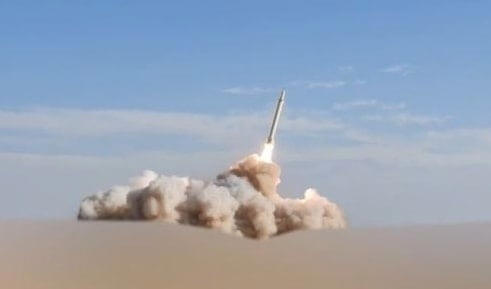 |
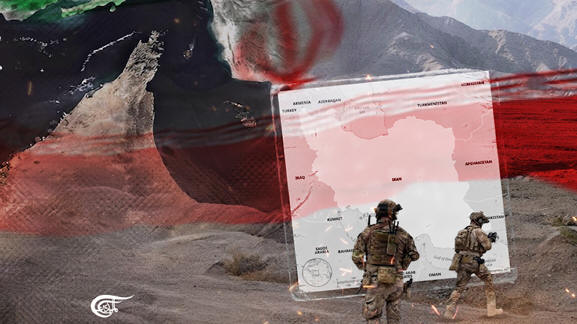
| Analysts speculate about the US preparations for a limited incursion into southern Iran, citing strikes on key infrastructure and military targets, July 21, 2026. | The IRGC says Iranian naval forces carried out a large-scale retaliatory response, hitting US assets and pledging continued strikes against US forces, July 20, 2026. |
 |
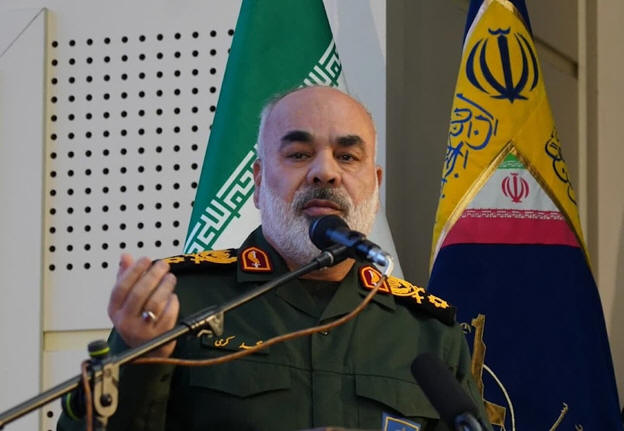 |
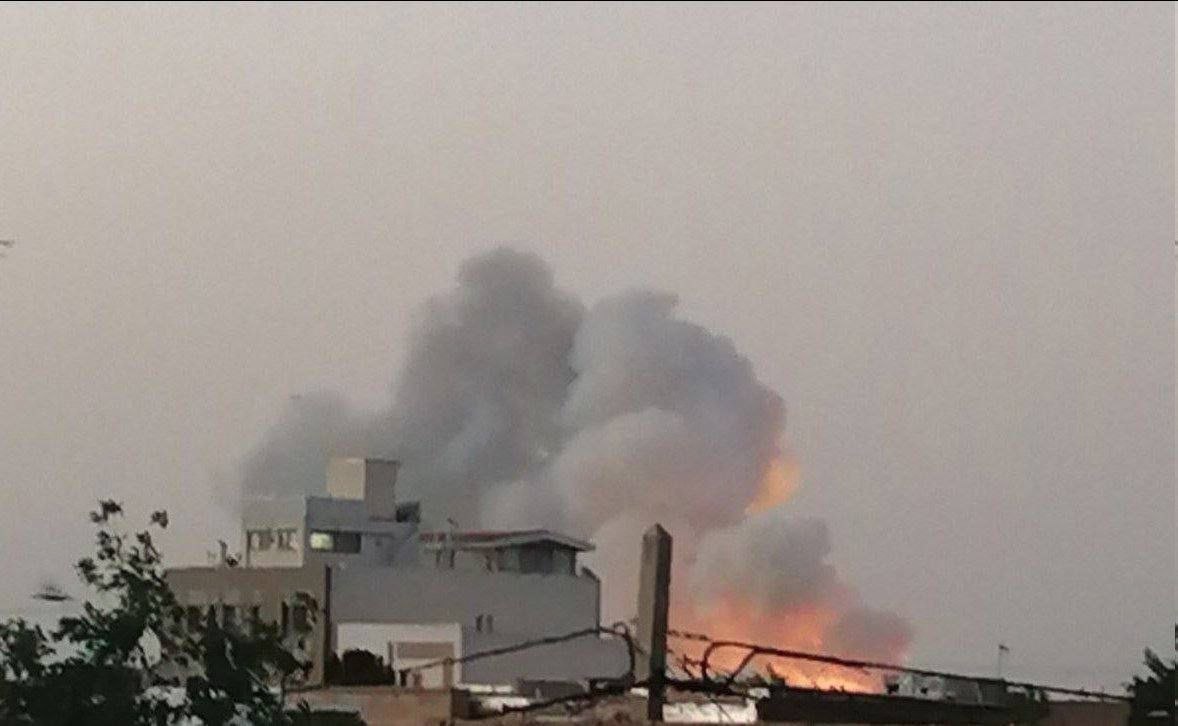
| US Central Command said it had completed its ninth wave of strikes on Iran, as Tehran expanded its attacks to targets in the Gulf and shipping lanes, July 20, 2026. | Iran's IRGC commander, Mu'hammed Karami, said the Iranian continuous readiness constitute the fundamental pillars of sustainable security in the Gulf, July 21, 2026. |
Ten US waves of attacks on Iran, Iranian attacks on the US bases in Bahrain, Kuwait, and Jordan, preparations for a limited US ground invasion of southern Iran, July 21, 2026 |
|
***
US-Iran escalation widens as shipping security comes under threat
Monday 20-July-2026
TEHRAN, (PIC)
US Central Command said on Monday it had completed its ninth wave of strikes on Iran, as Tehran expanded its attacks to targets in the Gulf and shipping lanes.
CENTCOM said it targeted military command centers, air defense sites, coastal surveillance positions, missile and drone launch platforms, and communications networks as part of efforts to reduce Iran’s ability to threaten ships and sailors in the Strait of Hormuz.
Inside Iran, state media reported one person martyred, and explosions in several southern cities as a result of the US strikes, with renewed bombardment reported Monday morning after Washington announced the end of the ninth wave.
East Azerbaijan province said one person was martyred and others wounded in an attack on a military site near Tabriz, while several people were injured in strikes around Urmia in West Azerbaijan province.
Reports also cited explosions in Isfahan, while local officials in Bushehr said several areas were bombed, causing power cuts in some neighborhoods. Explosions also continued to be reported in other southern areas.
Meanwhile, Kuwait and Bahrain said they came under Iranian drone attacks. Kuwait’s army said it intercepted the attack, while Bahraini state television said air defenses engaged aerial targets as sirens were activated.
Iran’s Islamic Revolutionary Guard Corps said it destroyed a US radar system at Ali Al-Salem Air Base in Kuwait.
Tehran also expanded its operations to Jordan, with the IRGC saying it targeted US military aircraft at Aqaba Airport. US reports said military helicopters were damaged in the attack, as part of an escalation targeting American forces in the region.
Politically, US President Donald Trump said the latest strikes came in response to the killing of US service members, arguing that Iran’s military capabilities had been significantly degraded.
US Secretary of State Marco Rubio said Washington was ready to engage in “real diplomacy” if Tehran abided by it, while pointing to divisions inside the Iranian establishment.
Regarding the Strait of Hormuz, Rubio said Iran was using the waterway as leverage and called on other countries to take greater responsibility for protecting international navigation, while stressing that the US would continue securing shipping routes.
On the ground, the IRGC said two oil tankers exploded and were prevented from continuing their journey through the strait, without providing further details. It warned that the passage would remain unsafe as long as US aggression continued.
A British maritime body also reported that a vessel was struck by a projectile near the coast of Oman, while Iranian sources said missiles were launched toward ships off the coast of the UAE.
Shipping data has shown a decline in vessel traffic through the Strait of Hormuz in recent days amid the rising military tensions.
Israeli reports, meanwhile, said Tel Aviv joining the campaign against Iran remains a possibility, despite the political and security risks of widening the confrontation, especially ahead of elections.
The confrontation between Washington and Tehran entered its second week after the United States announced on July 8 that the ceasefire had ended following attacks on commercial vessels in the Strait of Hormuz, amid an ongoing dispute over mechanisms to regulate navigation in the strategic waterway.
***
IRGC's Karami stresses defense readiness during Gulf inspection
Al-Mayadeen, July 21, 2026
Iranian military officials reaffirm readiness to confront threats as a military source says restrictions on Strait of Hormuz transit remain in place.
Iran's Islamic Revolution Guard Corps (IRGC) Ground Forces commander, Brigadier General Mu'hammed Karami, conducted an inspection tour of coastal areas and strategic islands in the Gulf, stressing the goal of strengthening defensive capabilities to confront various threats.
Karami said the continuous readiness and effective presence of IRGC Ground Forces units constitute the fundamental pillars of sustainable security in the Gulf waters, adding that the forces' vigilance serves as an impenetrable bulwark against the ambitions of adversaries.
The IRGC Ground Forces commander said the forces are continuously reorganizing and strengthening their defensive capabilities to neutralize any threat, stressing that the Iranian people and armed forces are fully prepared to respond to any aggression.
He further asserted that the blood of the martyred Leader of the Nation, Sayyid 'Ali Khamenei, and the martyred commanders will soon be avenged.
In a related development, Iranian Army Navy Commander Rear Admiral Shahram Irani said during a ceremony honoring martyrs that the US-Israeli enemy must be held accountable for its crime. Irani stressed that the Iranian Navy will continue carrying out its national and military missions with resolve and capability despite all threats.
No change to Strait of Hormuz restrictions
Earlier today, a military source told the Fars News Agency that there had been no change in the situation and that no permits had been issued for vessels to transit the Strait of Hormuz as long as US aggression against Iran continues.
The source stressed that the Iranian Armed Forces have full control over the Strait of Hormuz, adding that any decision to reopen the strait or maintain the restrictions imposed on it will be made based purely on security considerations and national interests. On a related note, the IRGC said that two oil tankers were disabled after explosions caused extensive fires while attempting to navigate an unsafe route south of the Strait of Hormuz.
In a statement, the IRGC said the vessels were attempting to pass through the strategic waterway after being misled by the US military’s false information. It said the tankers were using a dangerous route and warned shipping companies against relying on US guidance regarding maritime traffic in the area.
The IRGC said rescue and emergency units were working to evacuate the crews from the vessels following the incident.
***
IRGC says 3 missile, drone waves struck US bases in Bahrain, Kuwait
Al-Mayadeen, July 20, 2026
The IRGC says its naval forces carried out a large-scale retaliatory response, hitting US assets and pledging continued strikes against US forces.
The Islamic Revolution Guard Corps (IRGC) said its naval forces had carried out a three-stage operation targeting US military facilities in Bahrain and Kuwait, stressing the retaliation inflicted heavy damage on American forces in the region.
In a statement, the IRGC said the waves were part of the 23rd wave of Operation Nasr 2 under the code name and were carried out in response to US aggression against the country.
In detail, the IRGC said the first stage targeted storage and maintenance depots for unmanned aerial vehicles belonging to US units stationed at Sakhir Air Base in Bahrain, resulting in their destruction.
It added that the second stage struck equipment depots for TF59 boats at Salman Port in Bahrain, leading to their destruction and causing heavy losses.
The third stage, according to the statement, targeted deployment, support, and equipment depots belonging to special naval commando forces at Arifjan Base in Kuwait, which it said were set ablaze and completely destroyed.
IRGC vows more strikes, dismisses US claims Iran is running low
The IRGC said the attacks were carried out by its forces using large numbers of missiles and drones as part of a reciprocal response, adding that such operations were continuing.
“The overwhelming attacks carried out by the fighters of Islam, using large numbers of missiles and drones, as part of a reciprocal response and retaliation for the attacks by the child-killing US military, are continuing,” the statement stressed.
The IRGC also criticized the US president, saying he had acknowledged his lack of understanding of global affairs and had underestimated Iran’s capabilities.
It said the US president had “once again revealed his lack of wisdom and ignorance last night,” after he claimed that Iran had only a small number of missiles and drones remaining and that they were close to being exhausted.
“Let the murderous president of the United States know that if this war continues for several years, then, by the permission of Almighty God, our missiles and drones will continue raining down on the heads of the American criminals until its final day,” the statement concluded. Iran has repeatedly said that US military bases and economic assets in the Gulf region have been used to launch acts of aggression against Iran, including strikes that have resulted in civilian casualties. In this framing, Iran frames any action targeting such facilities as retaliation against hostile military activity originating from or enabled by those bases.
Iran touts defense advances as US cites growing missile challenges
Earlier today, Iran’s acting defense minister, Brigadier General Majid Ibn al-Reza, said the country’s defense industries have strengthened national deterrence despite sanctions and wartime pressures, arguing that domestic scientific and technological capabilities have enabled continued production of missiles, drones, and military equipment.
He said Iran’s defense sector has become increasingly self-reliant and capable of confronting advanced technological powers.
As Operation Nasr 2 continues, Tehran maintains that its technological advances have enhanced its ability to respond to military threats and sustain its defense operations.
***
IRGC strikes US aircraft in Jordan, addresses 'noble Jordanian people'
Al-Mayadeen, July 17, 2026
The IRGC announces retaliatory operations against US military assets in Jordan, Kuwait, and Qatar, saying missiles and drones hit key positions.
Iran's Islamic Revolution Guard Corps (IRGC) announced on Friday that it had targeted US fighter jets and aerial refueling aircraft stationed in Jordan, as well as bases in Kuwait and Qatar, in response to US aggression carried out on Thursday, July 16.
The Islamic Revolution Guard Corps (IRGC) announced that it targeted US fighter jets and aerial refueling aircraft in Jordan in response to the US aggression against "civilian targets, including several bridges, residential areas, and a water pumping station in Bandar Abbas, southern Iran."
The IRGC said the operation was carried out during Wave 14 of Operation Nasr 2, using "several ballistic missiles and a large number of drones" in a two-phase operation.
Iran urges Jordanian people to stand up against US occupation
In its Statement No. 22 detailing the operation and the reason behind it, the IRGC directly addressed the "noble Jordanian people" and said that following its strike last year on the Al-'Udeid base in Qatar, the US military "transferred the command center of US forces in the region from Qatar to Al-Azraq, and it became the command center of aggression against the Palestinian people and other Islamic countries on your land and within your reach."
The IRGC stated that in addition to the US Central Command base, "there is an air base containing dozens of aerial refueling aircraft where US F-35, F-15, and F-16 aircraft are stationed, and from which they launch airstrikes against the oppressed peoples of Palestine, Iran, and Lebanon."
"The US aggression used its bases in Jordan to commit a major war crime and strike civilian targets, including several bridges, residential neighborhoods, and a water pumping station in Bandar Abbas, southern Iran," it continued.
Addressing the Jordanian people and military, the IRGC stated, "The time has now come for you, O noble people and army of Jordan, to perform your divine duty and strike the interests of the American enemies and erase the stain of American occupation from the land of dear Jordan."
The statement concluded by saying, "If you support God, He will support you and make your footsteps firm."
IRGC strikes HIMARS in Kuwait in wave 15
The Islamic Revolution Guard Corps (IRGC) announced a new retaliatory operation in response to the US war crimes committed on Thursday, July 16.
According to the IRGC Public Relations Department's statement, in Wave 15 of Operation Nasr 2, IRGC Ground Forces launched a combined drone and missile operation targeting US military assets and positions, destroying a HIMARS missile launcher platform in Kuwait, as well as a site belonging to US and counter-Revolution forces.
The statement said the operation led "large numbers of anti-Revolution, US special forces to their doom," affirming that "the retaliatory operations will continue."
Al-'Udeid Air Base in Qatar struck in wave 15
Additionally, the Islamic Revolution Guard Corps (IRGC) announced that its Aerospace Force launched a surprise and intense attack on the US Al Udeid Air Base in Qatar as part of Wave 15 of Operation Nasr 2, dedicating the operation to "the martyrs of the recent crimes committed by the United States."
The IRGC affirmed that the retaliatory strike was carried out "to punish the aggressor and retaliate against the child-killing US military," announcing it "completely destroyed a long-range radar system and several US strategic aerial refueling aircraft, while severely damaging others."
It warned that "the United States and the countries hosting its military bases in the region should understand that crossing red lines and targeting civilians and non-military infrastructure will have extremely harsh and devastating consequences."
"If the enemy continues on this path, it will face retaliatory strikes of even greater destructive power; strikes that will be remembered in the history of warfare," the IRGC declared.
Several killed, wounded in US attacks on Iran
US strikes overnight Thursday-Friday targeted an airport, a railway station, and two bridges in Iran, killing at least eight people and injuring 20 others, according to Iranian state media reports.
Iran’s state television reported that strikes targeting two bridges in Hormozgan Province killed three civilians and injured nine others, revising an earlier casualty toll. The broadcaster also confirmed that “three explosions were heard in the vicinity of Iran Shahr Airport, while at least one hostile US projectile struck the airport,” located in the southeastern part of the country.
Separately, the Mehr News Agency reported on Telegram that a railway junction station in Bandar Abbas came under US strikes, confirming that “two Iranians were injured in the attack.” Iranian state media also reported that another US strike injured one person in the coastal city of Bushehr in western Iran.
Meanwhile, IRNA, citing Hormozgan University of Medical Sciences, reported that seven people were killed in US strikes on bridges in the city of Bandar Khamir, a coastal city in southern Iran.
Iran’s Ministry of Health has released a separate toll from the renewed US strikes on Iran, with more than 400 people injured and 38 killed as of 6:30 am on July 17, according to Hossein Kermanpour, head of the Ministry’s Public Relations Center.
***
Is a US ground invasion of Iran imminent? Analysts weigh in
By Hala Far'hat
Al-Mayadeen, July 21, 2026
Analysts question whether the expanding US bombing campaign is preparing the ground for a limited incursion into southern Iran, citing strikes on key infrastructure and military targets.
More than 50,000 US troops are now deployed across West Asia, US Central Command said on Sunday, describing the force as "highly vigilant, focused, lethal, and ready."
The announcement comes more than a month after Tehran and Washington signed a memorandum on June 18 intended to end the US war on Iran, which began on February 28; yet, the pause was short-lived. The US resumed attacks on Iran on July 8, Tehran retaliated against US bases across the region, and President Donald Trump declared the ceasefire over the following day.
Since then, the US campaign has expanded beyond air defenses, coastal radar systems, anti-ship weapons, and Islamic Revolution Guard Corps naval assets. Recent attacks have targeted bridges, railway links, ports, airports, roads, and armored divisions across southern Iran.
The shift has led analysts to consider whether Washington is pursuing more than the reopening of the Strait of Hormuz. While the forces currently deployed remain far below what a full invasion and occupation would require, the targets being bombed could support preparations for a more limited ground operation along Iran’s southern coast or against its islands.
What the strikes are actually hitting
Attacks across the ninth consecutive night of the campaign, and in the days before it, have moved beyond the maritime suppression targets that defined the war's first waves. On July 16 and 17, US strikes hit three bridges, a road tunnel, and the train station in Bandar Khamir, in the Hormozgan province, a strike pattern read by observers as an effort to sever Bandar Abbas, Iran's main port, from inland routes toward central Iran and Tehran.
Chabahar's maritime control tower was struck and later confirmed damaged in satellite imagery. A port building at Sarkhur Tahruyi, also in Hormozgan, was hit. Iranshahr airport was reportedly struck as well. Strikes also hit positions of Iran's 88th Armored Division in Sistan and Baluchestan and the 92nd Armored Division in Khuzestan, degrading forces stationed along Iran's principal southern axes.
The July 7 and July 8 waves were framed almost entirely around air defense, coastal radar, anti-ship capabilities, and IRGC naval assets, the classic target set of a campaign aimed at contesting the Strait of Hormuz. By mid-July, the target set had visibly expanded to transport nodes, ports, and armored divisions, the kind of infrastructure and force degradation that precedes a ground deployment rather than sustains a purely maritime one.
The economic weight of the provinces under fire
Writer and political analyst Sa'eed Shaverdi, speaking to Al-Mayadeen, argues that the attacks are not only degrading military capacity but deliberately targeting the Iranian economy.
He points to four southern provinces bearing the brunt of the campaign: Khuzestan, a key oil and gas-producing province; Bushehr, including the Assaluyeh area; Hormozgan; and Sistan and Baluchestan. These provinces, Shaverdi notes, are home to Iran's most important and largest ports, through which the country exports both oil and non-oil goods and imports the commodities it needs from abroad.
By his account, these four provinces have been under sustained attack for roughly ten days, with strikes spilling over into other provinces, including Yazd. He reads this as evidence that Washington concluded that a naval blockade alone was insufficient, since Iran could route around it, and has shifted instead toward severing these provinces' links to the rest of the country entirely.
Analysts see two tracks, possibly converging
Lebanese journalist and analyst Ali Fneish, in an interview for Al-Mayadeen, argues that two explanations for the US campaign are now circulating and that the evidence increasingly suggests Washington may be pursuing both simultaneously.
The first and officially declared objective is pressuring Iran to relinquish its control over navigation through the Strait of Hormuz. The second is that the strikes are laying the groundwork for a ground offensive in southern Iran and the possible occupation of Iranian islands. Fneish notes that a ground scenario is no longer theoretical from Iran's side either and is a possibility several Iranian officials have publicly addressed.
Hamidreza Azizi, an Iran security policy expert, echoed a similar sentiment in a social media post, arguing that Washington may now see control of Iran's southern coastal belt as the only durable solution to the Hormuz problem, a more ambitious goal than earlier ideas centered on seizing individual islands.
He pointed to the same infrastructure pattern - bridges, railway links, and airports disrupted, fuel tankers struck at Bandar Abbas, and the armored division strikes - as evidence of a campaign designed to smooth the path toward an eventual ground deployment.
A ceasefire as cover for invasion prep
International affairs expert Mostafa Khoshcheshm, speaking to Al-Mayadeen, argues that any pause in the fighting may itself be part of the preparation for a ground invasion.
He says the US will seek a temporary ceasefire with Iran specifically to prepare for a ground invasion and that Trump remains committed to a ground and naval attack because the two previous rounds of war failed to produce results.
Khoshcheshm points to the buildup in Kuwait as evidence the preparations are already underway, saying it appears the Americans are staging there for a ground and naval assault. He adds that Gulf Arab states have become more deeply involved in supporting the United States, a shift that helps explain why that staging is happening on their territory.
Iran, he says, will not risk its national security, and the United States must leave the region.
Iran moves to disrupt invasion preparations
On his part, retired Brigadier General Ali Abi Raad, speaking to Al-Mayadeen, argues that Iran is already acting on the assumption that a ground phase is being prepared and is trying to nip it in the bud.
He says Iranian forces are deliberately targeting concentrations of US troops that could play a role in any ground operation or incursion. Iranian strikes on Camp Buehring in Kuwait, in this reading, were not just retaliatory but severed logistical links between US forces in the Gulf and Iraq.
He adds that US stockpiles of Patriot and Iron Dome interceptors have thinned to the point that Iranian missiles are reaching their targets without interception. The strike on the port of Fujairah, converted into a refueling base for US naval vessels, points to the same pressure on logistics.
And despite Trump's claims that Iran's capabilities have been destroyed, Abi Ra'd says, Tehran continues to control the Strait of Hormuz, undercutting the premise that the air campaign alone has already achieved its aims.
Doubts about whether an invasion could succeed
Shaverdi does not rule out that these attacks are laying the groundwork for a ground offensive, but he is skeptical of its prospects. Such an operation, he says, would not be easy, and the United States would face major difficulties; the chances of it succeeding are, in his words, very slim.
He also offers a sharper read of Iran's response than a purely defensive posture. Iran, he says, has moved to target the operational depth of the US military presence in the region. The IRGC Aerospace Force is striking that depth with "unprecedented intensity", using both ballistic missiles and drones, while Iran's regular army has been running similar operations, relying more on drones than missiles to hit locations where US soldiers and forces are concentrated.
Meanwhile, Margaret Kimberley, executive editor and senior columnist at Black Agenda Report, told Al Mayadeen that Washington continues to misjudge Iran. Washington has already failed to overthrow the Iranian government, she said, and deploying ground troops would not succeed either.
The numbers behind an invasion
If a ground option is being prepared, the scale required is difficult to reconcile with the force currently in place.
Defense and security experts often point to a standard counterinsurgency benchmark of 20 security personnel per 1,000 civilians against Iran's population of roughly 88 million, putting the requirement for full invasion and occupation at 1.76 million troops, more than the entire active-duty US military.
Even a limited operation confined to Iran's coast and Khuzestan was estimated to require 250,000 to 400,000 troops, five to eight times the roughly 50,000 currently deployed region-wide, most of them not ground combat forces.
Some analysts compare a potential Iran invasion to Iraq in 2003, but the comparison undercuts rather than supports confidence in a quick campaign. The US used roughly 170,000 troops to take Iraq, a country a quarter of Iran's size, with flat desert terrain, and a military already weakened by a decade of sanctions and previous wars. Iran offers none of those advantages.
Its Zagros mountains form a natural barrier along its western and southern approaches, its southern coastline alone runs 1,800 kilometers, and its population, at roughly 88 million, is more than three times Iraq's at the time of the 2003 invasion. If Iraq needed 170,000 troops, a harder target nearly four times the size would need significantly more, not less. That is the basis for the far larger troop estimates above, and why the current US deployment falls so far short of them.
Kharg Island, the limits of a smaller option
This is not the first time a narrower option has been floated instead. Azizi's post noted that current speculation already exceeds earlier ideas centered on seizing Kharg Island, Iran's primary oil export terminal, to cut off its exports, or occupying islands near the Strait to secure shipping.
Kharg itself has a track record. Iraq bombed the island repeatedly between 1984 and 1988 during the Iran-Iraq War, and Iran kept exporting oil throughout by rerouting tankers to Larak Island further south.
Any modern seizure would face the same fortified approaches, missile range from nearby Bushehr province, and the likelihood that Iran would treat any ground incursion onto its sovereign territory, even an offshore island, as a red line triggering broader retaliation.
The smaller options carry smaller force requirements and larger political risk, and neither history nor current geography suggests they resolve the standoff on their own.
Iran's response: 'We are waiting for them'
If Washington is weighing a ground option, Tehran has already answered. Iran's ambassador to Russia said on Sunday that if American troops arrive, the war would become "a manly war," adding that he was not sure the US would be able to remove the bodies of its soldiers from the region.
Foreign Minister Abbas Araghchi struck the same note months earlier, when asked on NBC News whether he feared a ground invasion. "No, we are waiting for them," he said, adding that Iran was confident it could confront US forces and that the result would be "a big disaster for them."
Martyr Ali Larijani, former secretary of Iran's Supreme National Security Council, said Iranian forces were "waiting and ready for American troops," vowing to "disgrace" US officials "by killing and capturing thousands" if ground forces enter Iran.
Full invasion unlikely, limited incursion possible
The available evidence does not show that a US ground invasion is imminent. Washington has not deployed the number or type of forces required for a full-scale occupation, and an operation against Iran would be considerably more difficult than the 2003 invasion of Iraq.
However, the pattern of recent strikes suggests the United States may be preparing for more than just an air and naval campaign. By targeting transport links, ports, airports, armored units, and supply routes, the US could be trying to weaken Iran’s ability to move forces and supplies in the south. This would make it easier to carry out a smaller, more limited ground operation along the coast or on nearby islands.
A full invasion remains unlikely under the current deployment, but a smaller ground incursion cannot be ruled out. Iran appears to be treating that possibility seriously, targeting US troop concentrations, supply routes, and regional bases that could support such an operation.
***
US considers ground invasion of Iran amid warnings of military failure
Al-Mayadeen, April 3, 2026
The US is considering a ground invasion of Iran as its war effort stalls, despite warnings from military experts that such a move would be costly, ineffective, and potentially disastrous.
The US administration is weighing a ground invasion of Iran as its war effort shows limited progress, despite mounting warnings from military experts that such a move would be costly, ineffective, and potentially disastrous.
Retired US Army Lt. Col. Daniel Davis warned that any US ground invasion of Iran would face insurmountable challenges, describing it as “militarily unattainable".
“Whatever the intent is, it’s going to come at a very high casualty rate. It just almost couldn’t be any other way,” he said, stressing that Iran’s geography and defensive capabilities make victory unlikely.
“With that few troops, and with this massive amount of territory that Iran has along the Strait of Hormuz and the Gulf of Oman, it’s just pointless… There’s definitely not going to be any military victory here.”
Limited results from air aggression
After weeks of aggressive bombings, Washington has failed to achieve results. Iran continues to control shipping through the Strait of Hormuz while maintaining its ability to strike US interests across West Asia.
US President Donald Trump has alternated between signaling possibly ending the war and threatening escalation, warning Iran could be hit “extremely hard” while refusing to rule out a ground invasion.
At the same time, Tehran has denied that any meaningful negotiations are underway, exposing the gap between US claims and realities on the ground.
Pentagon prepares for potential ground invasion
Signs of US escalation in Iran are already visible, with the Pentagon increasing troop deployments, including Marines, 82nd Airborne units, and special operations forces, assets typically associated with a ground invasion.
Potential targets reportedly include Iran’s enriched uranium stockpiles and Kharg Island, a key hub for the country’s energy exports. However, such operations would require complex, high-risk missions involving deep strikes and extraction under fire.
Analysts warn ground war in Iran could be 'hugely costly'
Analysts warn that even limited incursions could quickly spiral into a broader war.
“We’ve pretty much achieved everything that can be achieved from the air at this point,” said Emma Ashford, noting that further progress would likely require major escalation.
She cautioned that a US ground invasion of Iran could be “hugely costly,” adding that once troops are deployed, “escalation starts to snowball.”
Military planners also face logistical risks, including long-distance helicopter insertions over open water, leaving forces exposed to Iranian missiles and drones.
US public opposed as Iran 'underestimated'
Public support within the US for deeper military involvement remains low. Polling shows two-thirds of Americans want the war to end quickly, even if Washington fails to meet its objectives. Only 14% support deploying ground troops, while 62% oppose a US ground invasion of Iran.
Despite sustained US aggression, Iran has retained its operational capabilities, continuing to challenge US and Israeli forces.
“I think we underestimated them in a big way,” Davis admitted, underscoring the broader failure of Washington’s military calculations.
As the war continues, Washington faces a growing dilemma: escalate further into a costly and uncertain ground war in Iran, or accept a strategic failure after failing to impose its objectives through bombing campaigns.
The debate over a US ground invasion of Iran reflects a deeper reality: US military dominance has failed to deliver decisive results, while Iran continues to resist and adapt, turning the war into a prolonged war of attrition.
Fair Use Notice
This site contains copyrighted material the
use of which has not always been specifically authorized by the copyright
owner. We are making such material available in our efforts to advance
understanding of environmental, political, human rights, economic,
democracy, scientific, and social justice issues, etc. We believe this
constitutes a 'fair use' of any such copyrighted material as provided for
in section 107 of the US Copyright Law. In accordance with Title 17 U.S.C.
Section 107, the material on this site is
distributed without profit to those
who have expressed a prior interest in receiving the included information
for research and educational purposes. For more information go to: http://www.law.cornell.edu/uscode/17/107.shtml.
If you wish to use copyrighted material from this site for purposes of
your own that go beyond 'fair use', you must obtain permission from the
copyright owner./font>
|
||||||||||||||||