www.aljazeerah.info
2026 News
Archives
Mission & Name
Conflict Terminology
Editorials
Gaza Holocaust
Gulf War
Isdood
Islam
News
News Photos
Opinion Editorials
US Foreign Policy (Dr. El-Najjar's Articles)
www.aljazeerah.info
|
Editorial Note: The following news reports are summaries from original sources. They may also include corrections of Arabic names and political terminology. Comments are in parentheses. |
***
Creative Destruction: The Name of the Game in the Middle East
***
Selective Creative Destruction Spreads from Palestine to Denmark, Iran, Lebanon, Sudan, and Venezuela February 1, 2026
***
 |
 |
|
Iranian Parliament Speaker, Mu'hammed Ghalibaf,
condemned the EU
allegations against Iran’s IRGC, which would accelerate Europe’s marginalization in the emerging global order, February 1, 2026. |
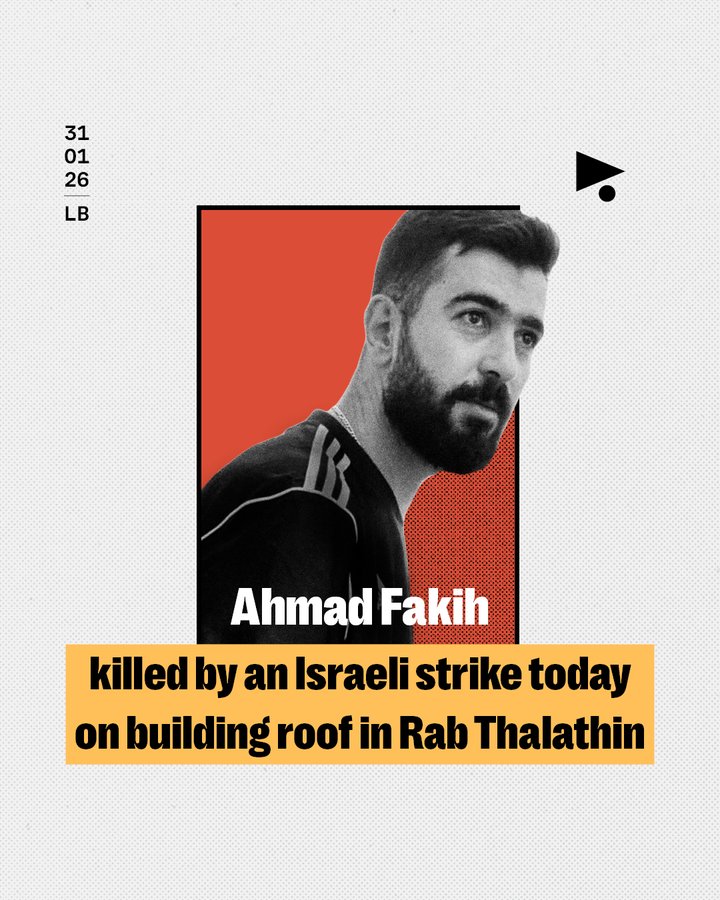
Lebanese citizen, A'hmed Faqeeh, was killed by an Israeli air strike on the town of Rab Thalatheen, in Marji'youn district, close to the border, on January 31, 2026. |
 |
 |
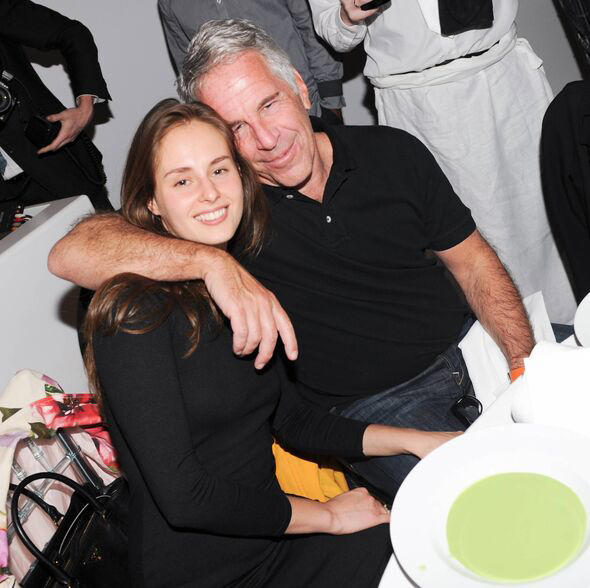
| Epstein left his Belarusian girlfriend $50M, diamond ring, an island, and properties in Paris and Florida, January 31, 2026. |
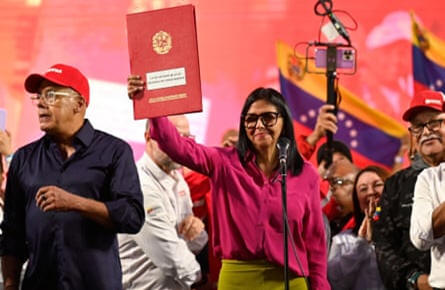
Acting Venezuela President, Delcy Rodríguez, holds up the new legislation at a rally in Caracas, alongside her brother and congressional leader, Jorge Rodríguez, on January 29, 2026. |
 |
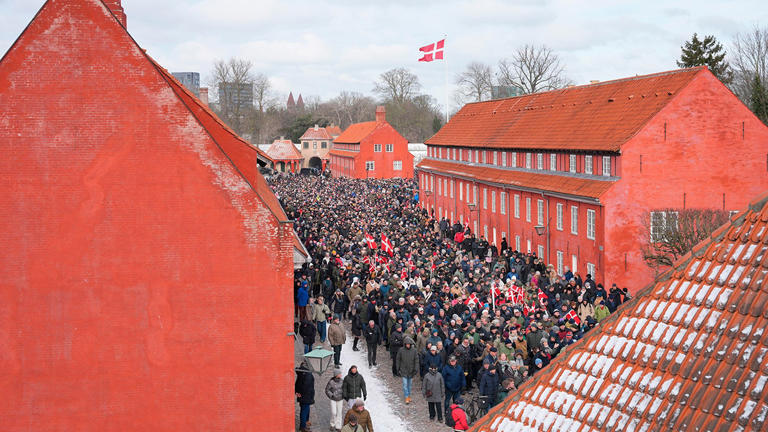 |
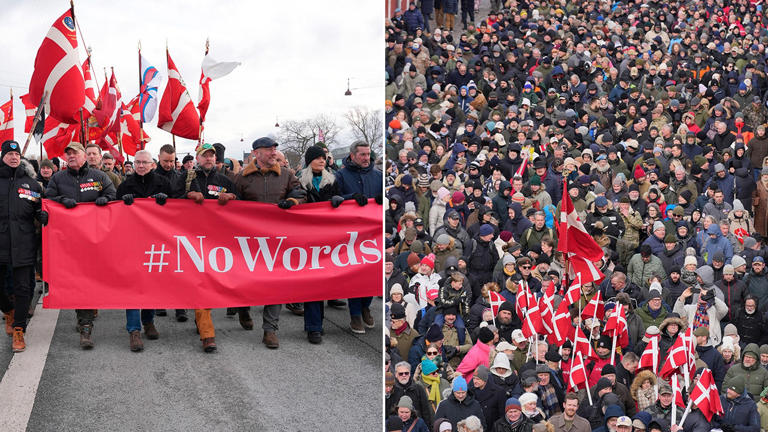
| Thousands of Danish veterans and other demonstrators protested outside the US Embassy in Copenhagen, against Trump's NATO comment and Greenland demand, January 31, 2026. | Thousands of Danish veterans and other demonstrators protested outside the US Embassy in Copenhagen, against Trump's NATO comment and Greenland demand, January 31, 2026. |
 |
 |
|
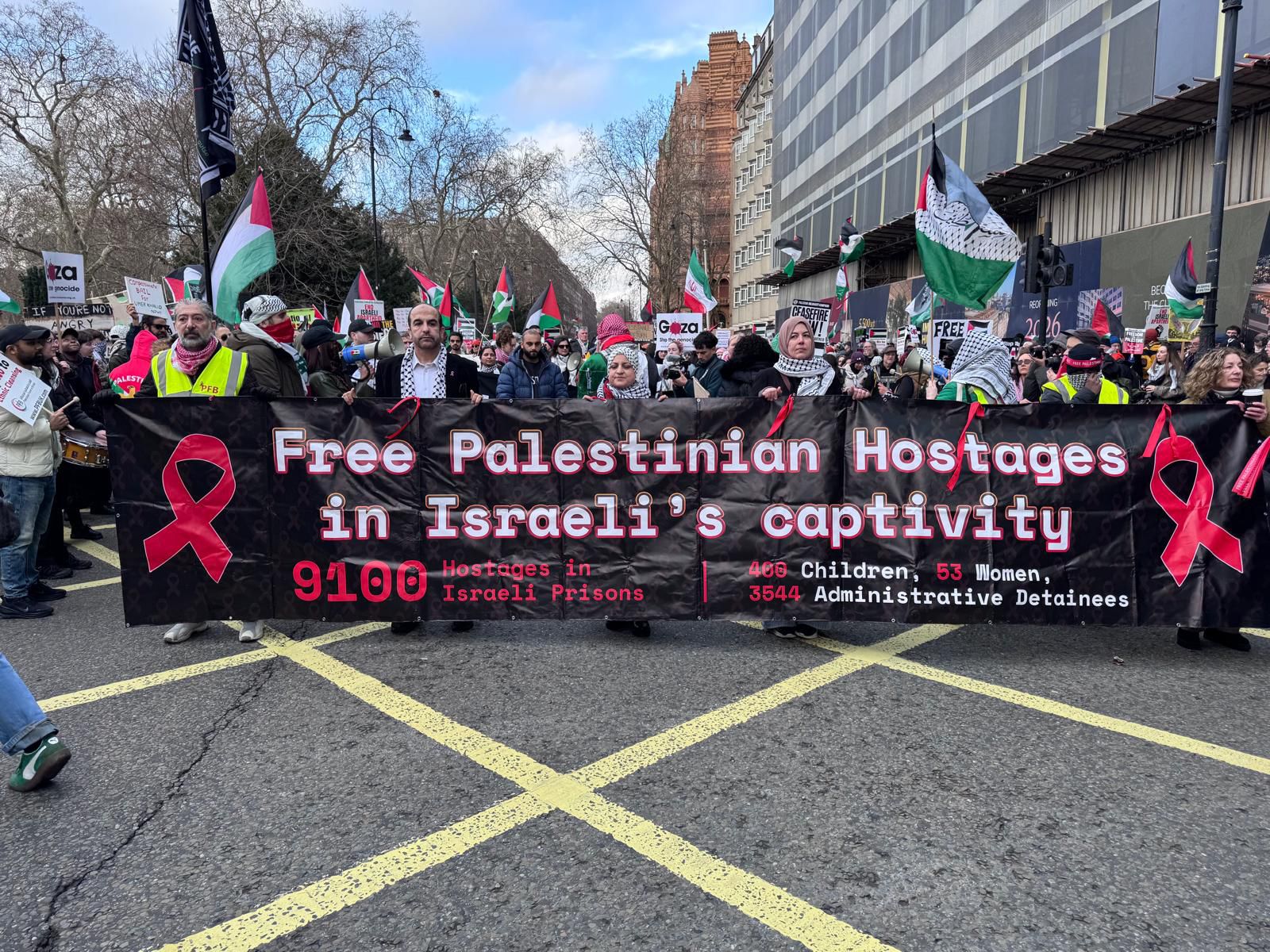
More than 100,000 people took part in a mass march in
London, calling for ending the genocide and ethnic cleansing, and demanding the release of Palestinian detainees held in Israeli prisons, January 31, 2025. |
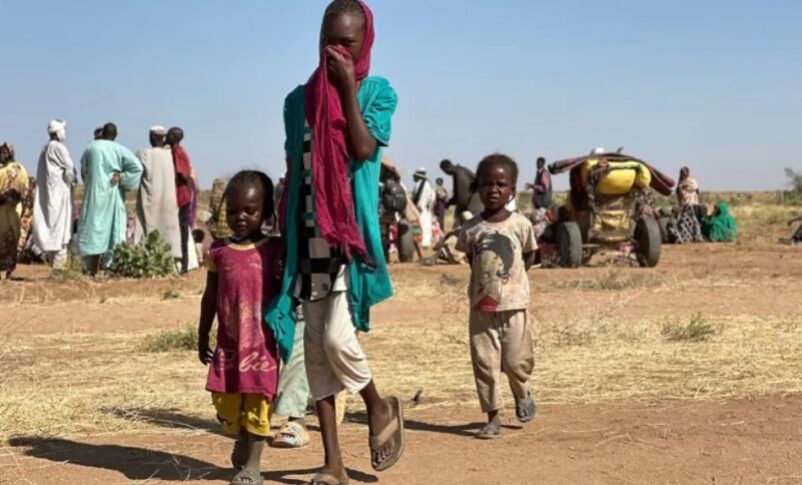
A Sudanese woman and her two children were among those displaced by RSF attacks on the Zamzam refugee camp, in Taweela, North Darfour, on April 16, 2025. |
***
Israeli Attacks on Lebanon
One person killed by an Israeli strike on south Lebanon
Sunday 1-February-2026
BEIRUT, (PIC)
An Israeli air strike on southern Lebanon killed one person on Saturday, Lebanese authorities said, as the Israeli occupation army claimed it targeted an operative from 'Hizbullah.
The Israeli occupation army has maintained regular strikes on Lebanon, despite a November 2024 truce that sought to end more than a year of hostilities.
The Lebanese Ministry of Health reported that one person was killed in a strike on the town of Rab Thalatheen, in Marji'youn district, close to the border.
The state-run National News Agency also reported that a young man identified as A'hmed Faqeeh was killed in the strike while carrying out repair work on the roof of a house.
***
***
Iran
Iran to declare European armies terror groups after IRGC designation
By Al-Mayadeen, February 1, 2026
Iran calls the EU’s IRGC designation politically motivated, warning of a diplomatic fallout.
Iranian Parliament Speaker Mohammad Bagher Ghalibaf has condemned the unfounded European Union accusations against Iran’s Islamic Revolution Guard Corps (IRGC), warning that the move would accelerate Europe’s marginalization in the emerging global order.
Addressing a public session of the Iranian Parliament on Sunday, Ghalibaf said the EU’s stance was an "irresponsible decision" taken under the influence of the US president and Israeli figures. He argued that the move reflected external pressure rather than independent European judgment and would weaken Europe’s global political standing.
Ghalibaf accused "Israel" of attempting to manufacture a media climate designed to intimidate both the Iranian public and independent states, but said such efforts would fail. He stressed that Iranians regard the IRGC as an inseparable part of the nation and a core pillar of Iran’s armed forces, adding that external pressure would only strengthen public support for the force.
Citing Article Seven on reciprocal measures, the parliament speaker announced that Iran would respond by classifying European armed forces as terrorist organizations. He said European governments would be responsible for the consequences of decisions that counter the interests of their own populations, while reflecting unconditional compliance with Washington.
Ghalibaf also defended the IRGC’s regional role, saying the force had played a central part in combating terrorism. He stressed that it was instrumental in defeating ISIS and had lost hundreds of personnel in the global fight against terrorism, one that, he argued, poses a greater threat to Europe than to Iran.
Iran condemns EU designation of IRGC
In a similar vein, the Iranian Intelligence Ministry has affirmed on Saturday its strong backing of the Islamic Revolution Guard Corps (IRGC) in response to the European Union’s recent decision to classify the force as a "terrorist organization", describing the move as part of an escalation by what it called the "front of arrogance" against the IRGC.
In an official statement, the Ministry accused the financial and moral backers of Zionism and the Islamic State (ISIS) of openly demonstrating their hostility toward the IRGC, framing the tension as part of the struggle against “US and Israeli state terrorism.”
The statement emphasized that the IRGC serves as a key bulwark against terrorism in the region and reaffirmed that the Intelligence Ministry will continue to fully support the force.
On his part, Iranian Foreign Minister Abbas Araghchi stated that Tehran may respond in kind by designating European armies as terrorist groups through the Iranian parliament.
In an interview for CNN Turk on Saturday, Araghchi criticized the EU’s move, saying, “The European Union made a big strategic mistake by declaring the IRGC a terrorist organization. They were a loser. We see that the role of the European Union in the region is gradually decreasing as time passes.”
He highlighted the IRGC’s role in counterterrorism efforts, particularly against ISIS, stating, “It is regrettable that they do not consider their own interests. The IRGC played a very important role in the fight against ISIL and terrorists. I must say that if it had not been for the IRGC, the Europeans would be facing ISIS today in Paris or other cities in Europe. Unfortunately, Europe was very ungrateful in this matter, and we know that they will regret this decision."
Araghchi also warned of possible legislative retaliation, adding, "I must also say that we can also, in response, put European armies on the list of terrorist groups through the parliament. Europe's actions will not reduce regional tension. Today, the countries of the region are working for the prosperity and peace of this region; Europeans are playing no role in this regard; it is only the regional countries. Europe is only fanning the flames."
EU designates IRGC as 'terrorist' organization
On January 29, European Union foreign ministers agreed to classify Iran’s Islamic Revolution Guard Corps (IRGC) as a "terrorist organisation", citing the ongoing riots in the country, EU foreign policy chief Kaja Kallas confirmed.
"Repression cannot go unanswered," Kallas wrote on X, adding: "Any regime that kills thousands of its own people is working toward its own demise."
European Commission President Ursula von der Leyen welcomed the decision, describing the designation as “long overdue". In a post on X, she said labeling the IRGC a terrorist organization was “justified” for what she described as a “regime that crushes its own people’s protests in blood,” a designation that the Israeli regime did not seem to warrant after killing over 71,000 people in Gaza, nor did the US regime for killing innocent people, bystanders, and protesters.
Kallas’ claims remain unsubstantiated, resting on political assertion rather than verified evidence. Observers note that coming from an EU that shielded "Israel" during the war on Gaza, Europe’s moral credibility in passing judgment appears limited.
***
Iran's Larijani says framework for nuclear talks with US progressing
By Al-Mayadeen, Jan 31, 2026
Iran says preparations for nuclear negotiations with the US are progressing despite media pressure, according to Supreme National Security Council chief Ali Larijani.
Preparations for nuclear negotiations between Tehran and Washington are moving forward despite what was described as an orchestrated media campaign, Iran’s top security official said on Saturday.
Speaking on X, Ali Larijani, secretary of the Supreme National Security Council of Iran, said that “structural arrangements for negotiations [with the United States] are progressing despite the artificial media warfare atmosphere.”
His remarks come amid heightened political and media pressure surrounding potential talks between Iran and the United States over Tehran’s nuclear program.
Trump may authorize strike on Iran
Senior US military officials have informed the leadership of a key US ally in the Middle East that President Donald Trump could authorize a military attack on Iran "as early as Sunday", according to multiple sources cited by Drop Site News.
The officials told the ally that strikes could begin as soon as Sunday if Washington decides to proceed, amid escalating regional tensions and intensive last-minute diplomatic efforts to avert a wider conflict.
A former senior US intelligence official who advises Arab governments and maintains informal ties with the Trump administration said the planned operation goes beyond Iran’s nuclear and missile programs and is aimed at regime change. He said US war planners envision strikes on nuclear, ballistic missile, and other military sites, alongside efforts to decapitate Iran’s leadership, particularly targeting the Islamic Revolution Guard Corps.
The source said the administration believes a successful strike on Iranian leadership could trigger mass protests inside Iran and ultimately lead to the overthrow of the government. He added that Prime Minister Benjamin Netanyahu is encouraging such an attack, assuring Trump that “Israel” could help install a new government aligned with Western interests.
Trump mulls military strikes on Iran
Also, according to CNN, Trump is reportedly weighing the possibility of launching military strikes against Iran, following the failure of recent talks aimed at curbing Tehran's nuclear activities.
According to The New York Times (NYT), diplomatic efforts over the past week have failed to yield any significant progress in reducing tensions between Washington and Tehran. Iranian officials reportedly remain firm in their position, refusing to meet Trump’s demands concerning the nuclear program.
CNN's report outlines that among the options under consideration are airstrikes targeting Iranian leadership, security officials, nuclear infrastructure, and government institutions. These potential military actions are being deliberated as a direct response to Iran’s continued refusal to compromise.
Although Trump has not reached a final decision, sources indicate that the arrival of a previously deployed American strike group in the region may expand the scope of available military options. This development appears to be influencing ongoing discussions within the US administration.
The report adds that in the wake of Trump’s latest threats against Iran, there have been no substantial direct contacts between the two sides. The lack of communication further underscores the deteriorating state of US-Iran relations amid heightened regional tensions.
***
Next round of US Russia-Ukraine peace talks set for Sunday
By Al-Mayadeen, February 1, 206
Russia and Ukraine are set to resume US-brokered peace talks in Abu Dhabi, with key issues including Donbass and the Zaporizhzhya nuclear plant on the agenda.
The next round of US-Russia-Ukraine peace talks is scheduled for Sunday in Abu Dhabi, the capital of the United Arab Emirates. The meeting follows an earlier trilateral round and will focus on key issues related to the conflict, including territory and the Zaporizhzhya nuclear power plant.
While the structure of the discussions is expected to be direct and bilateral, the role of the United States in this upcoming session remains unclear.
Ukrainian President Volodymyr Zelensky said on Friday that Kiev was not prepared to make territorial concessions or relinquish its claim to Donbass, a region that remains at the heart of the conflict. His remarks signal a firm position ahead of the negotiations, particularly regarding any discussion of land control or sovereignty.
Marco Rubio: US will not send top envoys
US Secretary of State Marco Rubio clarified on Wednesday that while the United States may be present at the talks, it will not be represented by US President Donald Trump’s special envoy Steve Witkoff or Trump’s son-in-law Jared Kushner.
He added that the upcoming round was “expected to be bilateral,” suggesting a reduced or background role for the US this time compared to earlier engagements.
Read more: Zelensky: No breakthrough with US on territorial dispute in peace talk
The identities of the national delegations attending Sunday’s meeting have not been disclosed. It is also unclear whether military or political figures will lead the discussions.
US says talks with Russian envoy advance Ukraine mediation
On Saturday, the United States said discussions with Russia’s special envoy had made progress toward advancing mediation efforts aimed at resolving the Ukraine conflict, according to a statement posted on X by Steve Witkoff. The post said that Russia’s special envoy Kirill Dmitriev held what were described as productive and constructive meetings in Florida as part of the US mediation initiative toward a peaceful settlement.
The US delegation included US Treasury Secretary Scott Bessent, Jared Kushner, and White House senior adviser Josh Gruenbaum, according to the statement. The post added that the US side was encouraged by what it described as Russia’s willingness to work toward securing peace in Ukraine, while praising Donald Trump for what it called his critical leadership in pursuing a durable and lasting peace.
That said, last Saturday, Ukraine and Russia concluded two days of direct, US-brokered negotiations in the UAE and agreed to hold another round of talks next week in Abu Dhabi, despite renewed military escalation on the ground. Ukrainian President Volodymyr Zelensky said the discussions were “constructive", noting that the next round could begin "as early as next week." The talks were reportedly centered on the US-proposed peace framework and key confidence-building measures.
A UAE government spokesperson also said the meetings were held in a “constructive and positive atmosphere,” with participation from senior military officials from both sides. This comes after two days of mediated talks in Abu Dhabi, where negotiators discussed the ceasefire plan promoted by the Trump administration, as diplomacy accelerates to end nearly four years of war in Ukraine.
The Abu Dhabi talks mark the first face-to-face engagement between Russian and Ukrainian negotiators since talks in Istanbul last summer, producing only limited agreements on prisoner exchanges. This time, the focus is on a broader US-backed settlement framework.
***
***
Greenland
Thousands protest Trump's NATO comments and Greenland demands at US embassy in Copenhagen
Story by Brie Stimson
Fox News, January 31, 2026
Thousands of Danish protesters, many of whom are military veterans who fought in Iraq and Afghanistan, staged a demonstration in Copenhagen on Saturday outside the U.S. Embassy.
The group was protesting President Donald Trump’s push that the U.S. acquire Greenland from Denmark and his remarks at Davos that NATO forces "stayed a little back" when they fought alongside the U.S. in Iraq and Afghanistan.
"They have a feeling that they’ve been betrayed," Carsten Rasmussen, president of the Danish Veterans Association, told The Associated Press. "And of course, they are angered by this. They deployed. They fought with the Americans. They fought with the Brits. They fought together. They bled together. And as you have heard here in front of the American embassy today, 52 of them never returned."
Forty-four Danish soldiers died in Afghanistan, the highest per capita death toll for a NATO country in the war, and eight more died in Iraq. The population of Denmark as of 2025 was just over 6 million.
During the protest, demonstrators laid 52 flags with the names of the fallen outside the embassy.
"Behind all these flags, there's a guy, there's a soldier, there's a young man," Lt. Col. Niels Christian Koefoed, a Dane who served in Afghanistan, told Reuters.
British Prime Minister Keir Starmer called Trump’s remarks about staying a "little back" ""insulting and frankly appalling," to which Trump wrote on Truth Social: "The GREAT and very BRAVE soldiers of the United Kingdom will always be with the United States of America!"
He didn’t, however, acknowledge the sacrifices of other NATO troops.
"Denmark has always stood side by side with the USA — and we have showed up in the world’s crisis zones when the USA has asked us to," Danish Veterans & Veteran Support, the group that organized the protest, said in a statement. "We feel let down and ridiculed by the Trump Administration, which is deliberately disregarding Denmark’s combat side by side with the USA."
The group added that "Words cannot describe how much it hurts us that Denmark’s contributions and sacrifices in the fight for democracy, peace and freedom are being forgotten in the White House."
Fox News Digital has reached out to the White House for comment.
On Greenland earlier this month, U.S. ambassador to NATO Matthew Whitaker told Fox News Digital that NATO has a "tendency to overreact."
Whitaker said Greenland’s importance has been clear for years as the ice melts, it reshapes the Arctic and opens new routes. "The security of the high north, which I’ve talked about a lot before this ever happened, is the most important issue," he said. "As the ice thaws and as routes open up in the Arctic, Arctic security, and therefore the security of Greenland, which is the northern flank of the continental United States, is crucial."
The protesters felt "insulted" by President Donald Trump's remark that NATO troops stayed "a little back" in Afghanistan and Iraq. AP Newsroom© AP Newsroom
He stressed that Greenland’s location makes it central to U.S. defense planning. "If you think about Greenland as part of the access to the naval assets, that monitoring and awareness and fortification of that part of the Western Hemisphere is crucial for the long-term security of the United States," Whitaker said.
He said recent diplomacy shows the issue can be addressed without escalation. "I know that a very successful meeting happened between the Danes and Greenland and Vice President Vance and Secretary of State Rubio, so I think it’s going to be constructive."
Original article source: Hundreds protest Trump's NATO comments and Greenland demands at US embassy in Copenhagen
Related: EUROPEAN LEADERS WARN TRUMP TARIFFS OVER GREENLAND 'RISK A DANGEROUS DOWNWARD SPIRAL'
***
***
London Pro-Palestinian March
More than 100,000 march in London in support of Palestine and in rejection of the Trump-led Peace Council
Sunday 1-February-2026
LONDON, (PIC)
London witnessed one of the largest pro-Palestine demonstrations since the ceasefire agreement signed in October 2025, as more than 100,000 people took part in a mass march through central London. Protesters voiced their rejection of the so-called ‘Peace Council’ led by the administration of US President Donald Trump, renewed calls to end the genocide and ethnic cleansing, and demanded the release of Palestinian detainees held in Israeli prisons.
The march drew a broad cross-section of the public, including British families, human rights campaigners, trade unionists, doctors, students, and members of the Arab and Muslim communities. Participants waved Palestinian flags and carried placards calling for accountability for war crimes and an end to UK arms exports to Israel.
A broad coalition behind the mobilization
The demonstration was called by the Palestine Solidarity coalition, bringing together several of Britain’s leading grassroots and advocacy organizations, including: Palestinian Forum in Britain, Palestine Solidarity Campaign, Stop the War Coalition, Campaign for Nuclear Disarmament, Islamic Association of Britain, and Friends of Al-Aqsa. Organizers said the continued public mobilization reflects widespread rejection across Britain of political proposals that bypass the fundamental rights of the Palestinian people, foremost among them the right to freedom, return, and an end to occupation.
Political, legal and cultural voices address the crowd
Speakers on the main stage included prominent political, medical and cultural figures: Jeremy Corbyn MP, Ghassan Abu Sittah, John McDonnell MP, Juliet Stevenson, and representatives from several UK trade unions. Tariq Othman delivered remarks on behalf of the Palestinian Forum in Britain, while Samer Jaber spoke representing the Red Ribbons campaign calling for the release of Palestinian detainees.
Corbyn: There can be no peace with injustice
In his address, Jeremy Corbyn stressed the importance of global solidarity in confronting injustice, saying events in Palestine cannot be treated as distant or marginal. He pointed to the presence of more than 3,509 administrative detainees among thousands of Palestinians held without charge or trial in Israeli prisons, describing the policy as a clear violation of international law. Corbyn also renewed his opposition to proposals from the Trump administration aimed at imposing control over Palestinian land, stating that: those who destroyed Gaza should bear the cost of rebuilding it; there can be no genuine peace without the return of Palestinian refugees to the villages from which they were displaced; ending genocide and ethnic cleansing must be an international priority.
Red ribbons as a symbol of Palestinian detainees
Red ribbons were distributed to tens of thousands of participants as part of a global campaign highlighting the plight of Palestinian detainees in Israeli prisons. Organizers said the red color symbolizes the immediate danger facing prisoners amid administrative detention, torture, medical neglect and harsh conditions of confinement, adding that the issue will remain central to public action until all detainees are released.
Remembering Hind Rajab
Speaking to the crowd, Adnan Hmidan, coordinator of the Red Ribbons campaign, noted that the demonstration coincided with the first anniversary of the killing of the Palestinian child Hind Rajab. He said Hind was killed alongside members of her family and the paramedics who attempted to rescue her after more than 350 bullets were fired at the vehicle in which they had sought shelter, describing the incident as emblematic of the wider tragedy facing Palestinians. Hmidan said the core message of the demonstration was: “Not allowing the occupation to finish off what remains of the Palestinian people, particularly the detainees enduring extremely harsh conditions in some of the worst prisons on earth.”
A humanitarian message from the Muslim Association of Britain
Shaima Dallali spoke on behalf of the Muslim Association of Britain, focusing on the catastrophic humanitarian reality left in Gaza. She referred to the recent acknowledgement by Israeli authorities of the casualty figures announced by Gaza’s Ministry of Health, which exceed 70,000 people killed, stressing that each number represents an entire human story, a family that has lost its children and its future. She said the tragedy cannot be reduced to statistics, but remains an open wound on the human conscience.
Part of a coordinated global mobilization
The London march coincided with coordinated actions around the world highlighting the suffering of Palestinian detainees, with events taking place from the West Bank to Australia, as well as in Canada, the Netherlands, Sweden, Norway, Germany, South Korea, Mexico and elsewhere. Participants said the synchronized mobilization reflects the growing breadth of international solidarity and rejection of attempts to normalize or obscure crimes committed against Palestinians.
Organizers stressed that the British public will remain present and vocal for as long as genocide continues, occupation persists, and freedom remains denied to a people who have paid the price of their steadfastness for more than seven decades.
***
***
Venezuela
Venezuela approves bill to open oil sector to foreign investment after US pressure
Law will give private companies more control but experts unsure whether changes go far enough for US
Tiago Rogero, South America correspondent
The Guardian, January 2026
The new hydrocarbons law promises to give private companies control over oil production and sales, ease taxes and allow for independent arbitration of disputes, while largely maintaining state control over oil production.
Analysts remain cautious about the law’s practical application, arguing that the text lacks clarity and that the changes, while welcome, are insufficient to deliver the overhauls sought by the US as it attempts to revive Venezuela’s battered oil industry.
“We’re talking about the future. We are talking about the country that we are going to give to our children,” said Delcy Rodríguez, the acting president, who signed the law shortly after its approval by congress.
The congressional leader, Jorge Rodríguez – who is the acting president’s brother – celebrated the law’s approval. “I congratulate the people of Venezuela. Only good things will come after the suffering. These are the good things, for everyone, that we must build together, regardless of how we each conceive the prosperity of our republic,” he said.
Earlier on Thursday, Delcy Rodríguez held a phone call with Donald Trump, who disclosed the conversation during his cabinet’s first meeting of the year. Trump said he was about to “open up all commercial airspace over Venezuela”. Since the US president, while ramping up pressure on the dictator Nicolás Maduro, declared Venezuela’s airspace “closed in its entirety”, at least eight international airlines have suspended operations in the South American country.
Delcy Rodríguez holds up the new legislation at a rally in Caracas on Thursday alongside her brother and congressional leader, Jorge Rodríguez(left). Photograph: Maxwell Briceno/Reuters
Trump said big US oil companies were already on the ground in Venezuela carrying out site assessments for potential operations. He said they were “scouting it out and picking their locations, and they’ll be bringing back tremendous wealth for Venezuela and for the United States.”
The Trump administration also eased some sanctions on Venezuela’s oil industry. The US Treasury issued a general licence authorising transactions involving the Venezuelan regime and the state-owned Petróleos de Venezuela (PDVSA).
Since the naval blockade to halt oil shipments on sanctioned vessels and the 3 January military operation that captured Maduro while leaving his entire cabinet in power, the US has taken control of Venezuela’s oil exports and revenues, which the White House has said it intends to retain indefinitely to ensure the regime follows its foreign policy objectives.
The US-supported changes to the hydrocarbons law were approved at first reading last week and underwent a fast-tracked “public consultation” process before being unanimously approved at the second and final reading on Thursday by the regime-loyal National Assembly.
The new law stipulates that even when they are minority partners in joint ventures with PDVSA, private companies may exercise “technical and operational management” directly, breaking with the previous rule that required state control over operational decisions. It also provides for a possible reduction in royalty payments to the regime from 30% to zero.
David Vera, an associate dean in the Craig School of Business in the US, said the new law “was necessary, and overall a positive step. But it still falls short of what US oil companies need to commit capital at scale. Yes, there’s more flexibility on royalties, taxes, arbitration, and commercialisation, but a lot of executive discretion and legal uncertainty remains.”
According to José Ignacio Hernández, a legal scholar and researcher of Venezuela’s oil industry who works with the consultancy Aurora Macro Strategies, the new law “improves some aspects of the previous draft by granting greater contractual stability to private investment”, but it “fails to address all the causes that led to the collapse of the oil sector”.
Venezuela holds the world’s largest proved oil reserves but accounts for less than 1% of global production.
The country was once the world’s largest exporter after emerging as a significant oil producer in the 1920s. Production was nationalised in the 1970s with the creation of PDVSA, which came under Hugo Chávez’s control in the 2000s, when Maduro’s mentor and predecessor dismissed most of its leadership and technical staff.
After an initial boom under Chávez, production collapsed after years of mismanagement and corruption, compounded by US sanctions, falling from 3.4m barrels a day to about 1m.
“The most troubling aspect of the new law is the lack of consultation and political dialogue,” said Hernández, noting that despite regime claims that more than 120 proposals were received during this week’s fast-tracked process, there was no meaningful public debate.
Gonzalo Escribano, who heads the energy and climate programme at the Elcano Royal Institute in Spain, said Venezuela’s oil market would only become genuinely attractive to foreign investment after a democratic transition – something for which the US has yet to set a timetable.
“A transition to democracy is needed so that there is a legitimate government and all decisions taken and laws approved have a legitimate constitutional backing and cannot simply be reversed,” said Escribano.
Hernández said: “It will be, I fear, a short-lived law.”
***
Venezuela swears in interim leader, seeking to show it operates free from U.S. control
NPR, AP, January 5, 2026
CARACAS, Venezuela —
The Venezuelan government on Monday sought to show its people and the world that the country is being run independently and not controlled by the United States following its stunning weekend arrest of Nicolás Maduro, the authoritarian leader who had ruled for almost 13 years.
Lawmakers aligned with the ruling party, including Maduro's son, gathered in the capital, Caracas, to follow through with a scheduled swearing-in ceremony of the National Assembly for a term that will last until 2031.
Delcy Rodríguez, who served as vice president to Maduro and has vowed to work with the Trump administration, was sworn in as interim president. She was sworn in by her brother, Jorge Rodríguez, who was reelected as speaker.
"I come with sorrow for the suffering inflicted upon the Venezuelan people following an illegitimate military aggression against our homeland," she said with her right hand up.
Venezuelan lawmakers gave speeches focused on condemning Maduro's capture Saturday by U.S. forces.
"If we normalize the kidnapping of a head of state, no country is safe. Today, it's Venezuela. Tomorrow, it could be any nation that refuses to submit," Maduro's son, Nicolás Maduro Guerra, said at the legislative palace in his first public appearance since Saturday. "This is not a regional problem. It is a direct threat to global political stability."
Maduro Guerra, also known as "Nicolasito," demanded that his father and stepmother, Cilia Flores, be returned to the South American country and called on international support. Maduro Guerra, the deposed leader's only son, also denounced being named as a co-conspirator in the federal indictment charging his father and Flores.
While Venezuelan lawmakers met, Maduro made his first court appearance in a U.S. courtroom on the narco-terrorism charges the Trump administration used to justify capturing him and taking him to New York. Maduro declared himself "innocent" and a "decent man" as he pleaded not guilty to federal drug-trafficking charges.
The U.S. seized Maduro and Flores in a military operation Saturday, capturing them in their home on a military base. President Donald Trump said the U.S. would "run" Venezuela temporarily, but Secretary of State Marco Rubio said Sunday that it would not govern the country day-to-day other than enforcing an existing " oil quarantine."
Rubio said the U.S. was using pressure on Venezuela's oil industry as a way to push for policy changes. "We expect to see that there will be changes, not just in the way the oil industry is run for the benefit of the people, but also so that they stop the drug trafficking," Rubio said on CBS' "Face the Nation."
On Sunday, Rodríguez said Venezuela is seeking "respectful relations" with the U.S., a shift from a more defiant tone she struck in the immediate aftermath of Maduro's capture.
"We invite the US government to collaborate with us on an agenda of cooperation oriented towards shared development within the framework of international law to strengthen lasting community coexistence," Rodríguez said in a statement. Her conciliatory message came after Trump threatened that she could "pay a very big price" if she did not fall in line with U.S. demands.
Venezuela's Supreme Court appointed Rodriguez as interim president on Saturday. The country's constitution requires an election within 30 days whenever the president becomes "permanently unavailable" to serve. However, the Supreme Court declared Maduro's absence a "temporary" one.
In such a scenario, the vice president, an unelected position, takes over for up to 90 days — a period that can be extended to six months with a vote of the National Assembly.
The Supreme Court made no mention of a time limit, though, leading some to speculate she could try to remain in power even longer. Rodríguez is also backed by Venezuela's military, long the arbiter of power struggles in the South American nation.
Before taking the oath of office, Venezuelan lawmaker Grecia Colmenares said she would "take every giant step to bring back (to Venezuela) the bravest of the brave, Nicolás Maduro Moreno, and our first lady, Cilia Flores."
"I swear by the shared destiny we deserve," she said.
A State Department official said Monday that the Trump administration is making preliminary plans to reopen the U.S. embassy in Venezuela.
The official, who spoke on condition of anonymity to discuss internal administration deliberations, said early preparations "to allow for a reopening" of the embassy in Caracas had begun in the event Trump decides to return American diplomats to the country.
***
***
Epstein
Epstein files: FBI memo says Israel ‘compromised’ Trump, Epstein had Mossad ties
The document cites a source linking Jared Kushner and a religious Jewish group accused of seeking to hijack Trump’s presidency A poster showing Jeffrey Epstein and US President Donald Trump with the text in Greenlandic “NO PEDO” is displayed on a bus stop shelter in Nuuk, Greenland, on January 24, 2026. (Jonathan Nackstrand/AFP) By Elis Gjevori Published date: 31 January 2026 19:17 GMT | Last update: 17 hours 36 mins ago
A declassified FBI memo from the Epstein files, released on Friday, includes incendiary allegations about US President Donald Trump.
The memo says that Trump was “compromised by Israel”, that convicted paedophile Jeffrey Epstein worked with Israeli intelligence, and that a Jewish religious group calling itself Chabad-Lubavitch sought to hijack his first term in office.
The memo, written in 2020, formed part of an FBI investigation into domestic or foreign influence over the US electoral process. It draws on information from a confidential human source (CHS) and appears among a vast trove of Epstein-related files released by the US Justice Department.
“CHS advised Chabad is doing everything they can to co-opt the Trump presidency,” the memo states regarding his first term.
Chabad-Lubavitch, a religious Jewish sect founded in Russia, has grown to an estimated 90,000 members. Its messianic, ultra-Orthodox ideology has repeatedly been linked to hardline settler colonial politics in Palestine.
New MEE newsletter: Jerusalem Dispatch
Sign up to get the latest insights and analysis on Israel-Palestine, alongside Turkey Unpacked and other MEE newsletters
The memo also cites Berel Lazar, a Chabad member and the former chief rabbi of Russia, describing him as a close adviser to Russian President Vladimir Putin.
“Chabad is basically state-sanctioned Judaism. It is used by Putin to keep tabs on all the Russo-Jewish oligarchs,” the FBI memo adds.
It identifies Trump’s son-in-law, Jared Kushner, as a supporter of the group and a key force within Trump’s inner circle.
“On the day Trump was elected President, Ivanka Trump and Jared [Kushner] were at the gravesite of Rabbi Schneersom [sic] who was the most powerful Rabbi in the Chabad network,” the memo states.
Epstein brokered meetings between Ehud Barak and UAE billionaire before Abraham Accords: Report Read More »
The source goes further, saying: “Trump has been compromised by Israel. And Kushner is the real brains behind his organization and his Presidency.”
The memo also says Epstein worked with US and foreign intelligence. “CHS became convinced Epstein was a co-opted Mossad Agent,” it says, pointing to prior FBI reporting.
“Epstein was close to the former Prime Minister of Israel, Ehud Barak, and trained as a spy under him,” the memo adds.
Epstein and Barak had a decade-long relationship. Barak, who was also a senior Israeli military intelligence figure earlier in his career, visited Epstein’s New York town house more than 30 times between 2013 and 2017.
In one email exchange, Epstein wrote to Barak: “you should make clear that i dont work for mossad. :)” Barak replied: “You or I?” Epstein responded: “that I dont :)”.
The document links those claims to Epstein’s 2008 plea deal, describing an alleged conversation involving his lawyer, pro-Israeli academic Alan Derschowitz, and then-federal prosecutor Alex Acosta, who was told Epstein “belonged to intelligence.”
The FBI files reveal that according to CHS, Derschowitz himself had "been co-opted by Mossad and subscribed to their mission".
Epstein files: FBI memo says Israel ‘compromised’ Trump, Epstein had Mossad ties | Middle East Eye
***
Horrifying photos of Prince Andrew revealed in Epstein files
Story by Annabella Rosciglione
The Daily Beast, January 31, 2026
Horrifying photos of Prince Andrew revealed in Epstein files
Friday’s release of millions of new documents and photos from the Epstein Files has landed Andrew Mountbatten-Windsor in the hot seat once again.
One image shows the former royal on his hands and knees, crouching over what appears to be a female on the floor. Another image shows the former prince with his hands over her stomach.
The female’s face has been redacted by the DOJ.
Another image shows Mountbatten-Windsor directly looking at the camera.
It is unclear when these photos were taken, and additional context was not provided with them.
The images are a part of more than 3 million files and 180,000 images the Department of Justice released Friday related to investigations into Epstein.
An August 2010 email from Friday’s file dump shows that Epstein invited Mountbatten-Windsor to have dinner with a 26-year-old Russian woman.
The email shows that Epstein wanted to introduce “A” to the woman, whom Epstein says Mountbatten-Windsor would “enjoy having dinner with,” in London.
Mountbatten-Windsor responded, saying that he would be in Geneva at that time, but “would be delighted to see her” upon his return.
“Will she be bringing a message from you? Please give her my contact details to get in touch,” the former prince wrote.
He also asked Epstein if “any other information you might know about her that might be useful to know?”
Epstein responded saying that “she [is] 26, russian, clevere [sic] beautiful, trustworthy and yes she has your email.”
These emails were exchanged two years after Epstein was given has become known as a “sweetheart deal” by then U.S.-Attorney Alex Acosta. Despite the mountain of evidence collected against Epstein at the time, he was able to plead guilty to lesser state-level solicitation charges to avoid federal sex trafficking charges.
Epstein completed his sentence in the Palm Beach County Jail just one month before these emails were exchanged.
One month later, September 2010 emails show that Epstein and Mountbatten-Windsor were planning to meet in London, perhaps even at Buckingham Palace.
“What time woudl [sic] you like me and [redacted], we will also need/ have private time,” Epstein wrote to Mountbatten-Windsor.
The former prince responded, “I am just departing Scotland should be down by 1800. I’ll ring you when I get down if you can give me a number to ring. Alternatively we could have dinner at Buckingham Palace and lots of privacy. A.”
Epstein said back:“bp pleease.”
An undated email shows Epstein emailing an unknown person that he will be having dinner at Buckingham Palace.
Mountbatten-Windsor, formerly Prince Andrew and the Duke of York, was stripped of his royal titles last year due to his association with Epstein. The former prince has repeatedly denied all wrongdoing in relation to Epstein and claimed not to have witnessed any wrongdoing on Epstein’s part.
Horrifying photos of Prince Andrew revealed in Epstein files
Related video: Who was involved in Epstein’s secret deal and final days (Volksgeist)
***
Epstein left girlfriend $50M, diamond ring and island in will signed 2 days before death
Story by Ananya Chetia
The Daily Express, January 31, 2026
The latest release of the Epstein files from the Department of Justice shows that in his will, he planned to leave his girlfriend $50 million, a 33-carat diamond ring, Little Saint James island, and his New York townhouse.
Epstein signed the will two days before he died. He planned to leave a $288 million fortune and international properties to more than 44 beneficiaries.
Epstein listed his girlfriend, Karyna Shuliak, as being from Belarus and may have been in a relationship with the disgraced businessman for nearly 10 years. She was also provided properties in Paris and Florida, according to the will.
Epstein is said to have paid for Shuliak's mother's expensive medical treatment and may have helped fund the upscale home where her parents live in Minsk, Belarus, according to the Daily Mail.
The 33-carat diamond ring Epstein left for Shuliak was "in contemplation of marriage" and was 'flanked by baguette-cut diamonds mounted in platinum'.
Epstein died as he was awaiting his trial on sex trafficking charges. The will was signed by his lawyer, Darren Indyke, eight days after his death.
Indyke would receive $50 million according to the will while his accountant, Richard Kahm, was set to get $25 million.
His estate ended up being passed on to a trust that has been used to compensate victims, pay taxes and legal fees, the Daily Mail reported. There is $127 million left over of the sum, the accounts show.
Related video: Who was involved in Epstein’s secret deal and final days (Volksgeist)
Volksgeist Who was involved in Epstein’s secret deal and final days possible victims, but he ended up pleading guilty to just Current Time 0:04 / Duration 4:08 0 View on WatchGhislaine Maxwell, Epstein's longtime associate, is serving 20 years in prison for sex trafficking and would receive $10 million, along with Epsiten's brother Mark and his pilot Larry Visoski.
His girlfriend, Suliak, was the last person to speak with Epsiten on the phone before he committed suicide on Aug. 10 in 2019. She also visited him 11 days before his death at the Metropolitan Correctional Center.
The DOJ released three million documents from the Epstein files on Friday which revealed more about Epstein's will.
***
***
Sudan
IOM Warns of Deepening Needs as Over Three Million People Return to Sudan
IOM, January 29, 2026
After months of displacement, families return to their communities in Sudan, often finding homes damaged and services limited. Photo: IOM
Geneva/Port Sudan, 29 January 2026 – More than three million people have returned to their areas of origin in Sudan, despite the extensive damage to housing, basic services, and vital infrastructure. The International Organization for Migration (IOM) is calling for sustained funding to meet the rising needs in areas of return and to support solutions that can help end the cycle of displacement.
“These returns speak to the resilience and determination of Sudanese families who want to rebuild their lives at home,” said IOM Director General Amy Pope. “But returning home does not mean returning to safety or stability. Many families are arriving to destroyed houses, limited services and uncertain futures, and without predictable support, return risks becoming another chapter of hardship rather than a path to recovery.”
The highest number of returns were recorded in Khartoum State, where more than 1.3 million people returned, followed by Aj Jazirah State, according to IOM’s latest data. Overall, 83 per cent of returnees came from internal displacement, while 17 per cent returned from neighbouring countries, including Egypt, South Sudan, and Libya, as well as from the Gulf States.
The number of returnees continues to increase, signaling pockets of perceived relative security in parts of the country. With most returnees going back to their areas of origin or to nearby areas, the scale of shelter needs and the urgent requirement for the reconstruction of homes and the restoration of essential infrastructure, including water systems, health facilities, and schools remains high. IOM stresses that returnees must be supported with dignified living conditions, access to services and protection, particularly as many are returning with almost nothing and limited prospects.
However, across areas in Darfur and Kordofan where violence continues to escalate, increased displacement has been recorded. El Fasher in North Darfur in particular has the highest number, with more than 1.2 million people displaced, representing 13 per cent of Sudan’s total. This reflects the growing concentration of displaced populations across Darfur and the continued insecurity forcing displacement from camps, including Zamzam and Abu Shouk in North Darfur.
Sudan remains the world’s largest displacement crisis as the conflict nears its third year. More than half of displaced people are living in urban areas across the country, placing immense pressure on already overstretched services and host communities.
As the humanitarian community strategically plans for this growing movement trend, IOM reiterates the urgent need for sustained humanitarian funding to address the immediate needs of returnees and displacement-affected communities, while supporting longer-term recovery and durable solutions. Without adequate resources and renewed efforts toward peace, millions of Sudanese families will remain trapped in protracted displacement and instability, unable to provide for themselves or their families.
***
The War in Sudan: context and interpretation
30 December 2025
by Ahmed Yaquob
There is no room for disagreement: the war in Sudan is the product of deep-rooted, historical internal contradictions. In truth, Sudan has been at war with itself since even before its independence. The current conflict has elevated these internal tensions to a stage where violence has become the logical and final outcome of structural imbalances concerning identity, wealth, power, and systemic marginalization—plunging the entire nation into the furnace of war. Without delving too deeply into Sudan’s complex history, this brief introduction captures the internal context of the turmoil unleashed on April 15th.
However, any analysis that focuses solely on these internal contradictions and interprets the war through a purely domestic lens is shortsighted. Such a view lacks the political sensitivity demanded by regional and global realities. A contextualization that overlooks the grand strategic visions of Western powers presents a crippled understanding of the situation.
The Western state model as a neo-colonial context
More than a century after Africa’s arbitrary division by Western powers at the Berlin Conference on November 15, 1884—a division that, despite its deceptively organized geometric lines, disregarded the continent’s social, cultural, and historical fabric—and half a century after most African nations gained independence, the result has been the importation of the nation-state model.
Adopted as the legal and political framework for governing African countries, this model has, over decades, failed to fulfil the aspirations of African peoples for development. Instead, these artificially imposed state structures have, in one way or another, fueled unrest and conflict across the continent. This politically engineered reality, based on the arbitrary borders of Berlin and their inherited problems, persists to this day.
Thus, decades of importing the Western state model, along with the significant distortions it has caused, are among the reasons for the continued dominance of tribal identity as a primary institution in political, social, and economic life. This has created ongoing tension with the central state, perpetuating instability and conflict across Africa—significantly influencing political decisions and alliances, and ultimately landing many nations on the list of “failed states.” This is a term often used by the West, which critics argue paves the way for a new form of influence through various projects and local and foreign agents, aiming to reshape African nations to external designs.
A Regional geopolitical battleground
The war in Sudan—its causes cannot be found in internal factors alone. Even its internal contradictions are, in one way or another, influenced by external forces. From another perspective, the Sudanese war is unfolding as part of a grand project being orchestrated in the Horn of Africa, the Nile Basin, and East Africa. Sudan is but one piece in a conflict that threatens to engulf the continent’s entire eastern flank, part of a larger scheme aimed at destabilizing the region, controlling resources and waterways, and dominating global trade routes. This plan requires the weakening of these nations to achieve absolute hegemony.
The Horn of Africa includes nations such as Somalia, Eritrea, Djibouti, and Ethiopia. The Nile Basin comprises Sudan, South Sudan, Eritrea, Ethiopia, Burundi, the Democratic Republic of the Congo (DRC), Uganda, Rwanda, Tanzania, Kenya, and Egypt.
A glance reveals overlapping interests and porous borders. The Eastern Nile Basin holds immense geopolitical significance due to its proximity to international trade routes via the Mediterranean, the Red Sea, the Indian Ocean, and the Arabian Gulf. Its overlap with the Horn of Africa means nearly half of the Nile Basin countries are part of the Horn. The current regional turbulence and the scramble by external powers to gain footholds pose a strategic threat to the water and regional security of these nations—especially as the rhetoric of conflict overshadows cooperation, endangering the interests of their peoples.
A significant majority of these countries suffer from:
A profound crisis in the very concept of the state. Civil strife and internal conflict. Systemic corruption. The dual burden of crushing poverty and severe food insecurity. Recurring drought. Hosting a proliferation of foreign military bases.
Take Djibouti, for example: despite being an extremely small nation (just 23,000 square kilometers), it hosts six foreign military bases (from the U.S., France, China, Japan, Spain, and Italy). This makes it a geopolitical powder keg, given the conflicting interests of these powers.
The Grand Scheme and Its Implications
This grand scheme, if fully executed, aims to establish complete control over the political and economic landscape of these nations. Meanwhile, China, which lacks a colonial history in Africa, has also been increasing its military presence in the Horn of Africa—a development whose motivations will become clearer in the coming years.
The American and Israeli strategic manoeuvres in the Middle East, especially after the Arab Spring, have contributed to the fragmentation of the region—Iraq, Syria, Yemen, and Libya stand as examples. Within this scheme, Egypt now finds itself under threat and siege. Its encirclement appears strategically executed, beginning with the division of Libya, which is now governed by two rival administrations and plagued by insecurity. To the northeast lies the persistent conflict in Palestine and the Israeli front. To the south, Sudan teeters on the brink of collapse and disintegration. Internally, Egypt faces severe economic challenges, leading observers to ask: How long can Egypt hold on?
In an article titled “Is the Horn of Africa the New Arena of Global Conflict?”, Turkish journalist Kamal Ozturk wrote: “Recently, I came across a map showing only the ethnic groups, armed organizations, tribes, and militias in Somalia—where Al-Shabaab, ISIS, and Al-Qaeda control specific areas. This alone terrified me.” If we zoom out, this map would include Kenya, Eritrea, Djibouti, Ethiopia, Yemen, and Sudan. This is precisely the scenario foreign powers with interests in the region may desire: a map teeming with exploitable militant groups, manipulable tribal affiliations, inflammable conflicts, blurred borders, and pervasive instability.
Why these regions and countries? A quick look at their resources provides the answer:
They possess some of the world’s most fertile land (especially Sudan). They are rich in industrial raw materials and vast mineral deposits. They lie outside the water poverty belt, boasting rivers, lakes, groundwater, and heavy rainfall. They have massive livestock and agricultural wealth. They possess a youthful, abundant human resource pool.
It is within this grand context that the war in Sudan must be read, especially when we ask: Why does this war not stop?
This external project began with a total war in Sudan, aiming to dismantle it into smaller, controllable entities—so-called “banana republics.” This dismantling is already underway, orchestrated in foreign capitals. Sudan is the gateway from the Mediterranean into this strategically vital region, interconnected with its neighbors ethnically, politically, and strategically.
The final, haunting questions remain: Do the Sudanese people fully realize what is being plotted against them? Do they know they are actors in a grand scheme whose execution has already begun ?
***
The truce of separation: a political analysis of Sudan’s future
Sudan Tribune, January 16, 2026
by Mini Arko Minawi
Since the outbreak of war in Sudan, the “humanitarian ceasefire” has become a recurring political refrain, usually invoked whenever the humanitarian catastrophe reaches a breaking point. However, the ceasefire proposed today comes at a far more dangerous time. It follows the systematic commission of ethnic cleansing by the Rapid Support Forces (RSF) in El Fasher, one of the most horrific crimes in Sudan’s modern history.
El Fasher, once a symbol of diversity and coexistence, has been devastated and emptied of its population. In the wake of this atrocity, the international community has returned to the proposal of a humanitarian truce. This shift requires a careful political reading that looks beyond moral slogans to unpack the underlying motives and potential consequences for Sudan’s geographic and social unity.
A path to peace or a gateway to disintegration?
There is a popular proverb that says, “If you see a poor man eating chicken, then either the poor man is sick or the chicken is sick.” This captures the essence of the legitimate suspicion surrounding the timing of this proposed ceasefire. While humanitarian truces are intended to alleviate civilian suffering, the alarm sounds here because this proposal follows a catastrophe rather than preceding it. It comes after the RSF categorically rejected previous commitments to protect hospitals or secure safe corridors.
Currently, humanitarian organizations are operating in many regions of Sudan, including parts of Darfur, despite the absence of a signed legal agreement. This forces an unavoidable question: why now? In whose interest is this ceasefire being proposed at this specific moment? This contradiction suggests that the objective may extend beyond humanitarian concerns toward a fundamental reshaping of the country’s political and geographic reality.
Lessons from history: the risk of fragmentation
Modern history is replete with examples of humanitarian ceasefires that transformed from de-escalation tools into preludes to secession. In Western Sahara, Libya, Somalia, and Yemen, such agreements often served as transitional steps toward state division and the erosion of sovereignty. In Sudan, the 1989 Operation Lifeline Sudan serves as a stark precedent; humanitarian action was used as a political entry point that eventually culminated in the secession of South Sudan.
The current situation is even more complex. We are not seeing a government negotiating with a national movement, but a scenario where two parties both claim “government” status within a single state. The legitimate Government of Sudan faces an RSF project aimed at establishing a parallel entity. This is not merely a truce; it is a trap designed to extract de facto recognition for a rebel force. Jointly signing an agreement grants the RSF a status of parity that contradicts the sacrifices made by the Sudanese people in defence of their state.
The erosion of constitutional legitimacy
This path constitutes a direct violation of three core principles. First is the principle of unity, which the RSF has undermined by importing foreign mercenaries and attempting to impose demographic changes. Second is the principle of constitutional legitimacy; the pursuit of a “parallel government” strikes at the foundations of the Sudanese state. Third is the unity of the military institution. The RSF’s continued receipt of foreign weaponry and its reliance on looting make any talk of security reform or a unified national army impossible. Instead, it lays the groundwork for multiple armies within a single, fractured state.
Concern is deepened by the total lack of transparency surrounding these negotiations. When processes are conducted behind closed doors, the Sudanese people are excluded from knowing what is being agreed upon in their name. It is a political paradox that the parties “holding the pen” in this process are often the same ones “holding the gun” and practicing ethnic cleansing.
The danger of comprehensive disintegration
A comprehensive reading of current events suggests that this ceasefire is likely an entry point for dismantling the state rather than saving it. It risks entrenching a reality of competing zones of influence, multiple currencies, parallel central banks, and conflicting passports, a state without a state, and sovereignty without sovereignty. This is a contagious disease that will eventually threaten the stability of the entire region.
While no one disputes the priority of protecting civilians, the ceasefire being pushed today carries a devastating strategic price: the erosion of Sudan’s unity. National duty demands the highest level of vigilance to ensure that a humanitarian gesture does not become a political trap. History does not forgive those who trade national sovereignty for foreign dictates. Hope remains pinned on the awareness of the Sudanese people to unite in defence of one homeland, one army, and one state, a nation that rejects partition and guardianship in favour of the popular will.
***
Fair Use Notice
This site contains copyrighted material the
use of which has not always been specifically authorized by the copyright
owner. We are making such material available in our efforts to advance
understanding of environmental, political, human rights, economic,
democracy, scientific, and social justice issues, etc. We believe this
constitutes a 'fair use' of any such copyrighted material as provided for
in section 107 of the US Copyright Law. In accordance with Title 17 U.S.C.
Section 107, the material on this site is
distributed without profit to those
who have expressed a prior interest in receiving the included information
for research and educational purposes. For more information go to: http://www.law.cornell.edu/uscode/17/107.shtml.
If you wish to use copyrighted material from this site for purposes of
your own that go beyond 'fair use', you must obtain permission from the
copyright owner./font>
|
||||||||||||||||