www.aljazeerah.info
2026 News
Archives
Mission & Name
Conflict Terminology
Editorials
Gaza Holocaust
Gulf War
Isdood
Islam
News
News Photos
Opinion Editorials
US Foreign Policy (Dr. El-Najjar's Articles)
www.aljazeerah.info
|
Editorial Note: The following news reports are summaries from original sources. They may also include corrections of Arabic names and political terminology. Comments are in parentheses. |
***
The Israeli Aggression on Lebanon Results in the Killing of 2,294, Injuring 7,544, and Displacement of More than One Million People, by April 18, 2026
***
13 Lebanese People Massacred, 30 Injured by the Israeli Air Strikes on Southern Lebanon Towns, Which Brings the Lebanese Death Toll to 2,509 and the Injuries to 7,755
by April 26, 2026
***
 |
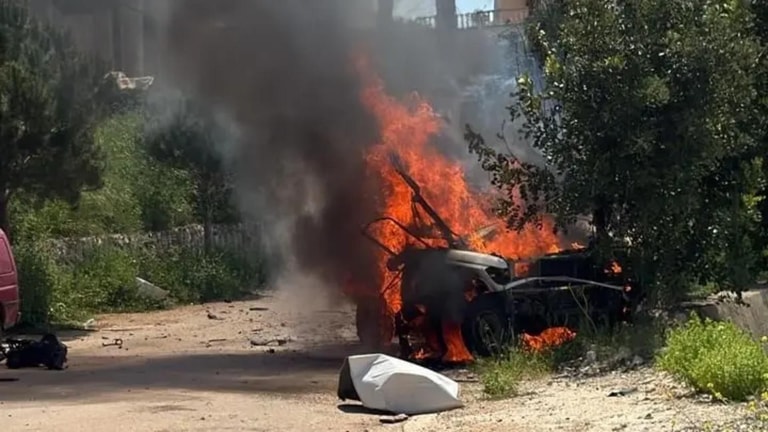 |
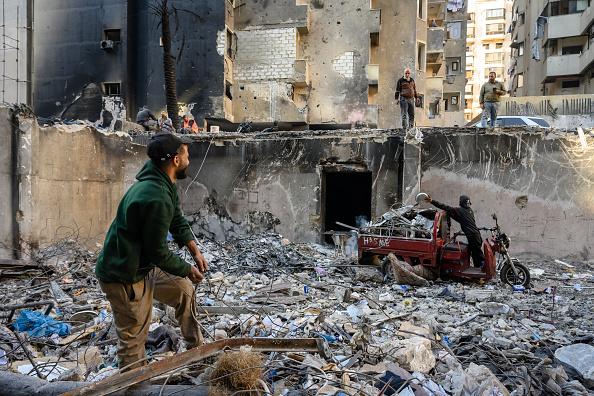
| Site of one of the Israeli air strikes on South Lebanon, which massacred 13 people and injured 30 others, on April 26, 2026 | Four Lebanese people were killed by the Israeli air strike on the southern Lebanese city of El-Nabatiyeh, as the Israeli occupation regime continues its strikes despite a the ceasefire with 'Hizbullah, on April 26, 2026. |
 |
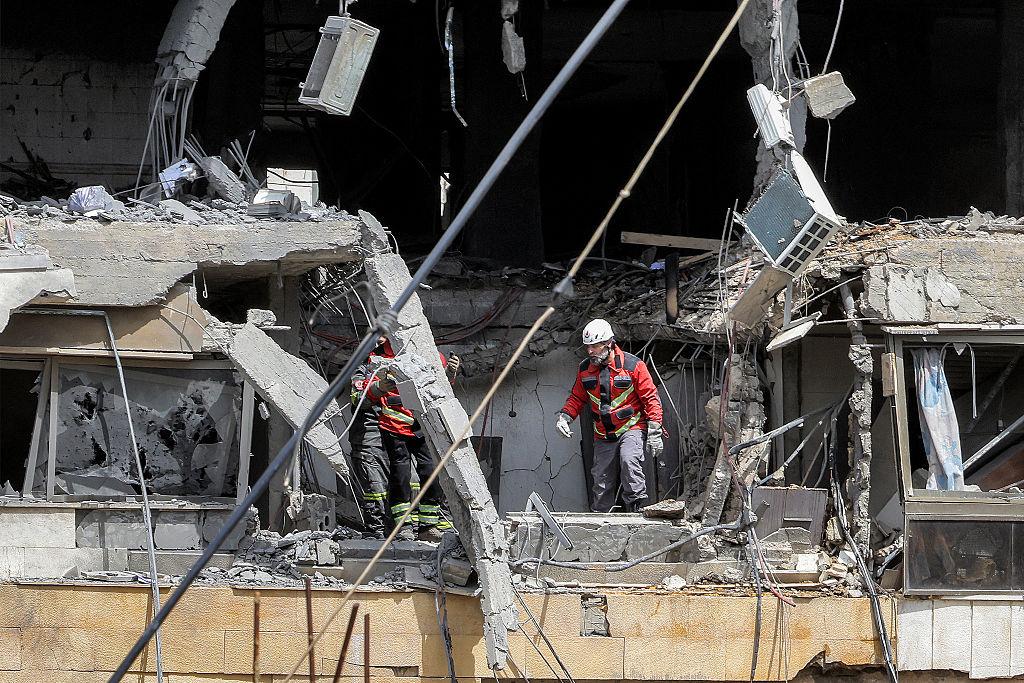 |
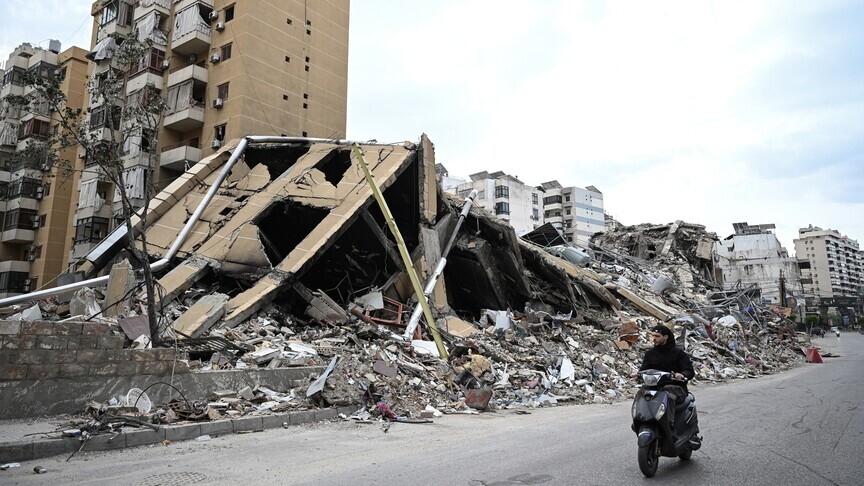
| The Israeli occupation forces continued airstrikes and ground attacks across southern Lebanon, despite a US-announced extension of the ceasefire, which applied so far only to Beirut, above, April 24, 2026. | 13 Lebanese people were massacred, 30 were injured by the Israeli air strikes on Southern Lebanon towns, which brings the Lebanese death toll to 2,509 and the injuries to 7,755, by April 26, 2026. |
|
13 Lebanese people were massacred, 30 were injured by the Israeli air strikes on Southern Lebanon towns, which brings the Lebanese death toll to 2,509 and the injuries to 7,755, by April 26, 2026 |
|
***
Israeli escalation in southern Lebanon Raises Death Toll to 2,509
Sunday 26-April-2026
BEIRUT, (PIC)
The Lebanese Ministry of Health reported on Sunday that the number of casualties from Israeli attacks over the past 24 hours has risen to 13 killed and 30 injured, bringing the death toll since March 2, 2026 to 2,509 deaths and 7,755 wounded.
At the same time, areas in southern Lebanon have witnessed a large wave of displacement among residents following widespread Israeli airstrikes, which came after directives by Israeli Prime Minister Benjamin Netanyahu to escalate military operations.
Meanwhile, the Israeli military announced the death of one of its soldiers and injuries to several others, including an officer, with varying degrees of severity, some of them serious, during ongoing clashes in southern Lebanon.
***
Four people killed in Israeli strikes in southern Lebanon
Saturday 25-April-2026
BEIRUT, (PIC)
Israeli attacks have killed at least four people in southern Lebanon's Nabatiyeh district, according to the state news agency, as the Israeli occupation regime continues its strikes despite a three-week extension of the ceasefire with 'Hizbullah.
Two Israeli strikes, one targeting a truck and another a motorcycle in the town of Yo'hmor El-Shaqeef, left four people dead, the Lebanese National News Agency (NNA) reported on Saturday.
The Israeli army also targeted today the areas of Qantara, Qusayr, Wadi 'Hasan, Yo'hmor El-Shaqeef, and 'Houla with artillery shelling, NNA said.
The attacks are the latest to have rocked southern Lebanon since US President Donald Trump announced a ceasefire extension on Thursday.
Meanwhile, in the city of Bint Jubail, in southern Lebanon, the Israeli occupation soldiers reportedly blew up buildings on Saturday morning.
Al Jazeera correspondents on the ground separately reported the detonation of homes and buildings in the city of El-Khiyam.
***
Israeli strike kills one person, injures others in southern Lebanon
Sunday 26-April-2026
BEIRUT, (PIC)
One person was killed and three others were injured in an Israeli strike in southern Lebanon on Sunday evening.
According to the National News Agency, an Israeli airstrike in the town of Burj Qalaouiyah in southern Lebanon killed one citizen and injured three others.
Efforts are reportedly underway to search for missing persons in the bombed area.
NNA added that the Israeli occupation army detonated today homes and infrastructure between the towns of Yaroun and Bint Jubail.
Following threats issued by the Israeli occupation army, thousands of displaced residents started moving away from the south, causing heavy traffic on the roads around Deir El-Zahrani, Zifta, and El-Msayleh, as well as along the Ghaziyeh highway towards Sidon.
Meanwhile, the Israeli army launched intensive aerial attacks on different areas of southern Lebanon in the evening.
***
Escalation in southern Lebanon threatens ceasefire as conflict exposes deeper fault lines
Sunday 26-April-2026
BEIRUT, (PIC)
Israeli military escalation in southern Lebanon has intensified, raising fears of a collapse of the fragile ceasefire announced by US President Donald Trump, as airstrikes, displacement, and broader political tensions converge on the ground.
Israeli forces launched a series of heavy air raids across southern Lebanon following directives from Prime Minister Benjamin Netanyahu to strike Hezbollah targets "with force."
The escalation has been accompanied by warnings issued to civilians, urging residents in several southern locations to avoid movement near sensitive areas, including the Litani River and surrounding valleys.
The strikes triggered a new wave of displacement, with residents fleeing villages south of the Litani toward the coastal city of Sayda (Sidon). At the same time, United Nations peacekeeping forces (UNIFIL) increased patrols across several towns amid rising tensions.
On the ground, dozens of airstrikes were reported within a single day, causing casualties and injuries, while Hezbollah responded with counterattacks, including drone strikes and the targeting of Israeli military vehicles, claiming direct hits.
Israeli bombardment also extended to multiple towns, including 'Haddatha, Zibqeen, Khirbet Silm, and El-Sultaniya, alongside artillery shelling in border areas such as El-Khiyam, where large-scale destruction has been reported.
The escalation has raised concerns among Israeli security officials that the current understandings could collapse entirely if the situation continues without external pressure, particularly from Washington.
Beyond the immediate military developments, the conflict reflects deeper structural tensions within Lebanon. An analysis published by The New York Times highlights how Israel's campaign risks undermining Lebanon's delicate social and religious fabric.
Historian Osama Maqdisi argues that the war extends beyond targeting Hezbollah, pointing to patterns resembling "collective punishment," with widespread destruction affecting various communities.
The conflict has already resulted in more than 2,300 deaths and displaced over one million people, according to the analysis, including hundreds martyred in a single large-scale airstrike on Beirut earlier this month.
Maqdisi warns that the current war risks exacerbating Lebanon's historically fragile sectarian balance, which has shaped its political system since its founding in 1920. That system, built on power-sharing among religious groups, has long been vulnerable to external shocks, including past conflicts such as the 1975 civil war and the 1982 Israeli invasion.
The article also links current developments to broader historical dynamics, including the displacement of Palestinians into Lebanon after 1948 and the emergence of Hizbullah following Israel's 1982 invasion.
Hezbollahs role remains contested domestically, with ongoing debate over its military presence, even as the Lebanese army resists calls to forcibly disarm the group due to fears of renewed internal conflict.
Politically, recent talks in Washington between Lebanese and Israeli representatives helped produce the current ceasefire arrangement. However, the agreement allows Israel to carry out military actions under the pretext of "self-defense," while Lebanon lacks equivalent leverage, and Hezbollah was not directly included in the deal.
According to the analysis, this imbalance reflects a broader strategy in which Israel seeks to pressure the Lebanese government internally while continuing military operations externally, effectively exploiting existing divisions.
As airstrikes intensify and displacement grows, the situation in southern Lebanon illustrates not only the fragility of the ceasefire but also a wider struggle over the region's future, between a model of imposed dominance and one rooted in pluralism and coexistence.
***
Ceasefire extended but violated as Israeli strikes continue, Hezbollah responds in Lebanon
Friday 24-April-2026
BEIRUT, (PIC)
Israeli occupation forces continued airstrikes and ground attacks across southern Lebanon on Friday, despite a US-announced extension of the ceasefire, raising concerns over the stability of the truce.
Lebanese state media reported that Israeli warplanes carried out multiple airstrikes and artillery shelling targeting areas including Soor (Tyre), Bint Jubail, and Marji'youn.
Residential buildings were reportedly demolished in Bint Jubail and Haneen, while additional strikes hit Majdal Zoun, Touleen, and Khirbet Silm. Overnight raids also targeted the Rihan heights in Jezzeen district.
The Israeli military said it had struck buildings it claimed were linked to Hezbollah, as it continued operations including demolitions of homes and infrastructure in southern Lebanon, despite the ceasefire taking effect the previous week.
The escalation comes as US President Donald Trump announced a three-week extension of the ceasefire between Israel and Lebanon, following talks in Washington involving senior officials from both sides.
Trump said discussions were "very successful" and expressed optimism about the possibility of reaching a broader peace agreement this year.
However, violations of the truce have persisted. Hezbollah said it carried out three attacks on Israeli military targets in southern Lebanon in response to what it described as ongoing ceasefire breaches.
In separate statements, the group said it targeted two gatherings of Israeli troops in the town of Taybeh, one using unspecified weapons and another with a drone attack, while also downing an Israeli reconnaissance drone over Majdal Zoun.
On the ground, Israeli forces reportedly continued to burn and demolish homes in border towns including Mays El-Jabal and El-Khiyam, further fueling tensions.
The ceasefire, first announced on April 17 for an initial 10-day period, includes a clause cited by Israel as allowing it to take action against perceived threats, which it has used to justify continued strikes.
The ongoing violations come ahead of continued US-mediated talks between Lebanon and Israel, aimed at reaching a permanent agreement to end the conflict.
Despite diplomatic efforts, the situation remains volatile, with daily exchanges of fire threatening to undermine the already fragile truce.
Before the ceasefire, Israel's offensive on Lebanon since March 2 had killed more than 2,400 people, wounded thousands, and displaced over one million, according to official figures.
***
Fair Use Notice
This site contains copyrighted material the
use of which has not always been specifically authorized by the copyright
owner. We are making such material available in our efforts to advance
understanding of environmental, political, human rights, economic,
democracy, scientific, and social justice issues, etc. We believe this
constitutes a 'fair use' of any such copyrighted material as provided for
in section 107 of the US Copyright Law. In accordance with Title 17 U.S.C.
Section 107, the material on this site is
distributed without profit to those
who have expressed a prior interest in receiving the included information
for research and educational purposes. For more information go to: http://www.law.cornell.edu/uscode/17/107.shtml.
If you wish to use copyrighted material from this site for purposes of
your own that go beyond 'fair use', you must obtain permission from the
copyright owner./font>
|
||||||||||||||||